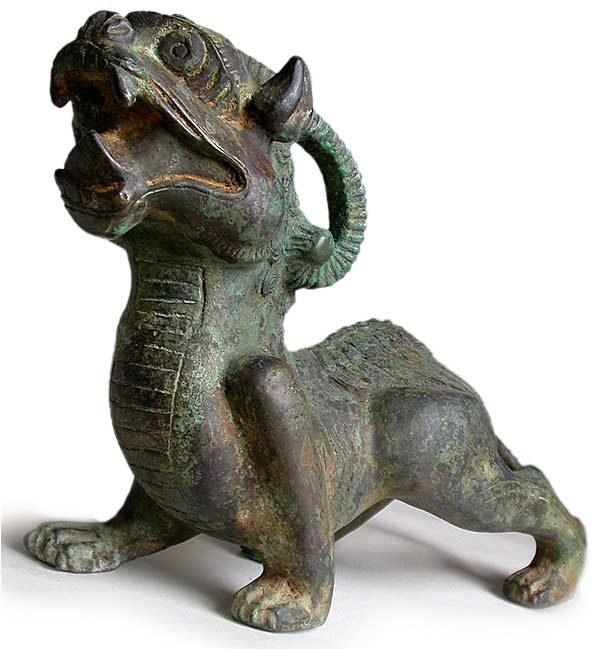
TIBETAN CHIMERA
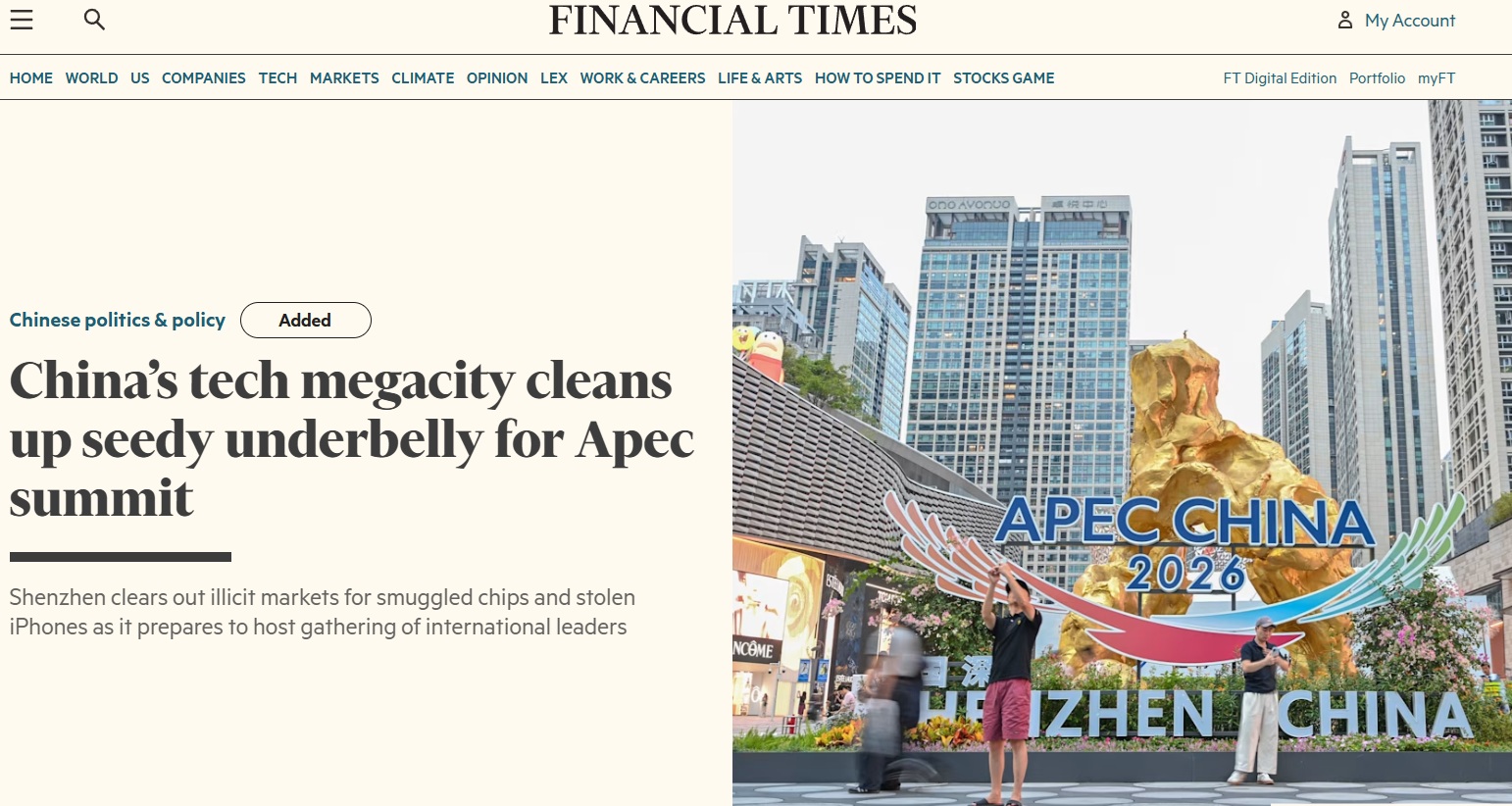
China chose Shenzhen as the location for hosting the 17 and 18 November APEC 2026 meeting, to showcase Shenzhen as the leading edge of entrepreneurial can-do, with statist Chinese characteristics.
At APEC 2026 in Shenzhen brings Donald Trump and Xi Jinping, Vladimir Putin and many other leaders in China’s sphere together. The APEC slogan is “Building an Asia-Pacific Community to Prosper Together, 建设亚太共同体,促进共同繁荣.” APEC is for deal making, away from media gaze. Trump is bringing with him as many as 1000 American business leaders, to do deals. This is his crowd, and China is one place he will be welcome.
Analysts speculate that APEC 2026 in Shenzhen could be the much-anticipated Grand Bargain in which China and the US resolve their many differences, settling on a new order for the two superpowers. Grand Bargains are the result of much bargaining, and China is the one country US has not bullied or bargained with. Even when Grand Bargains are announced, they may fail, like the consensus of a few years ago to deliver more humanitarian assistance to the neediest people worldwide, only to see funding halved while the number of extremely vulnerable doubled.
Of the many meetings China hosts, APEC is the ideal fit for Shenzhen, as the Asia Pacific Economic Cooperation is in no way a UN treaty or convention, nor is it overtly about politics. It is all about endless, accelerating economic growth. It’s a gathering of economies that also happen to be states.
APEC Shenzhen means deal making away from public gaze, deals we may find out about only much later, long after the win-win public messaging has come and gone. What do already know is that what happens in Shenzhen directly and immediately impacts Tibet.
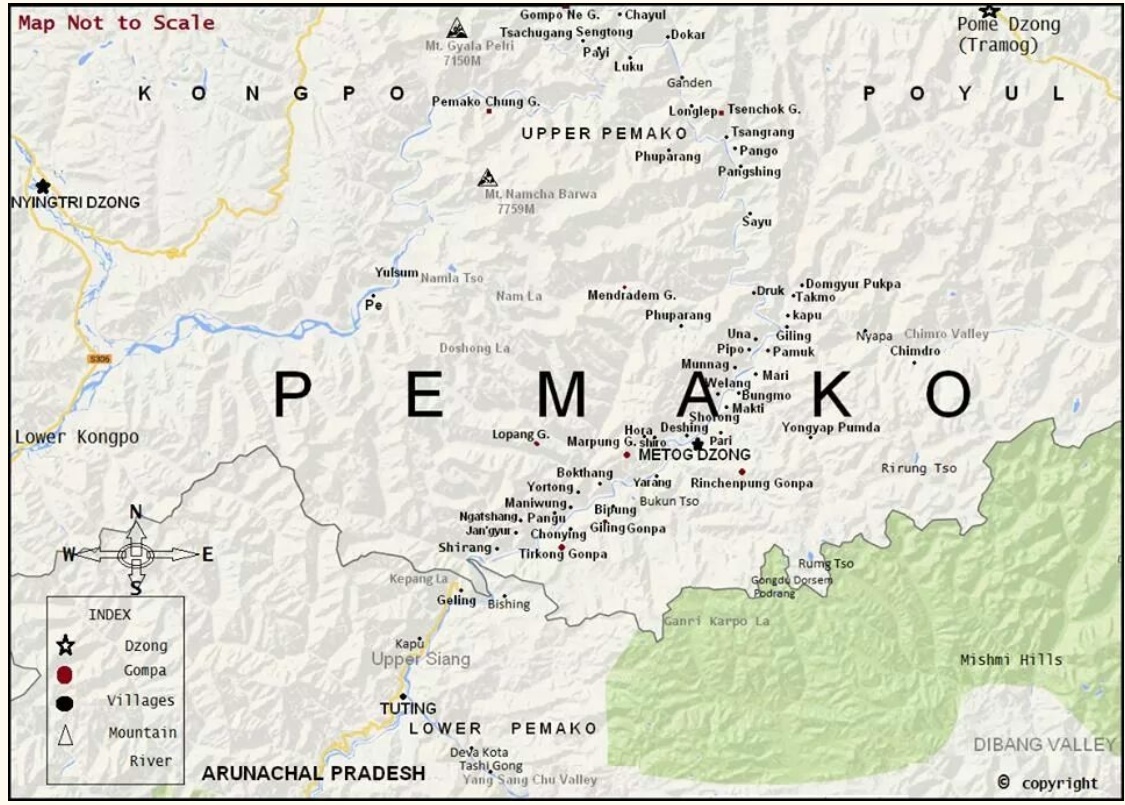
Will the massive Pemakő hydro project damming the Yarlung Tsangpo be built? Since the initial announcement late 2024 little has happened, other than ongoing removal of local Tibetan and Monpa communities, their relocation well away badged as part of “development-oriented resettlement” policy, “开发式移民”政策, sounds so benevolent.
Much remains unknown about the scale, design, cost, financing, feasibility of what seems to be the biggest infrastructure construction project in world history. The cost will be RMB 1.2 trillion, an imprecise estimate made several years ago, which sounds impressively precise when expressed as US$167 billion.
What we do know is that the planned Pemakő complex of dams, river diversion, tunnels and turbines is the pinnacle of a much bigger build that is on the way, with construction at maximum intensity, in Tibetan counties adjacent to the hydro megaproject. China packages this combination of hydro, solar and wind power as a single, integrated infrastructure instal, designed to combine several “green” technologies -with hydrogen to be added soon- to balance out the variability of sources of “green” energy.
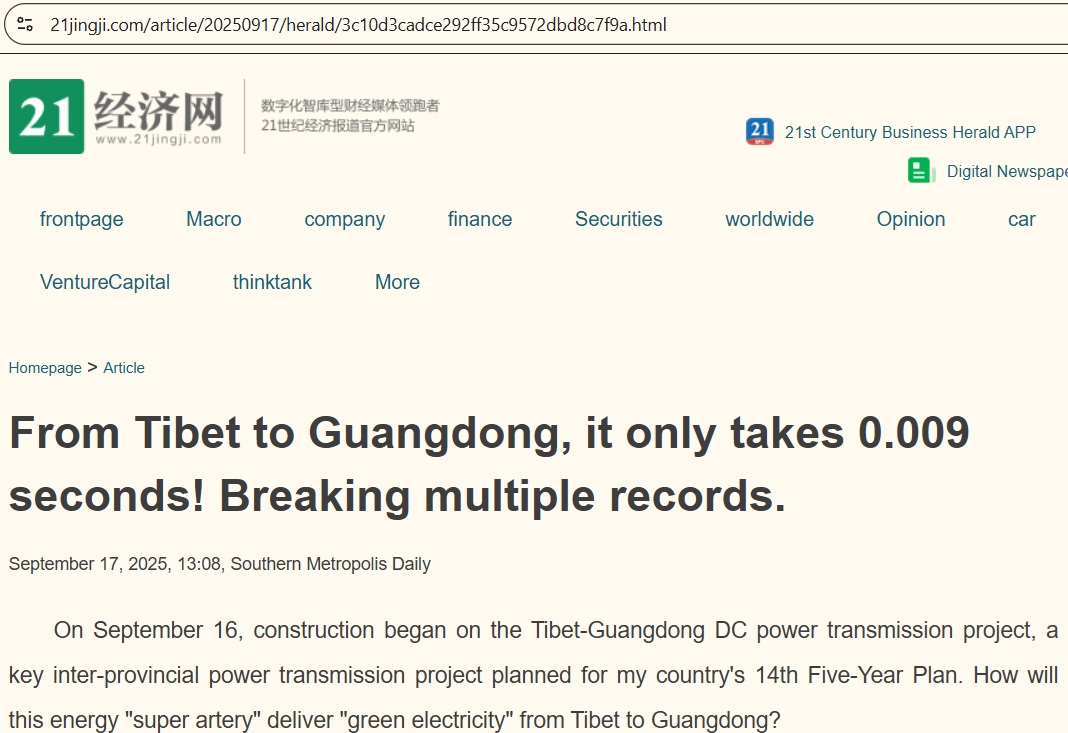
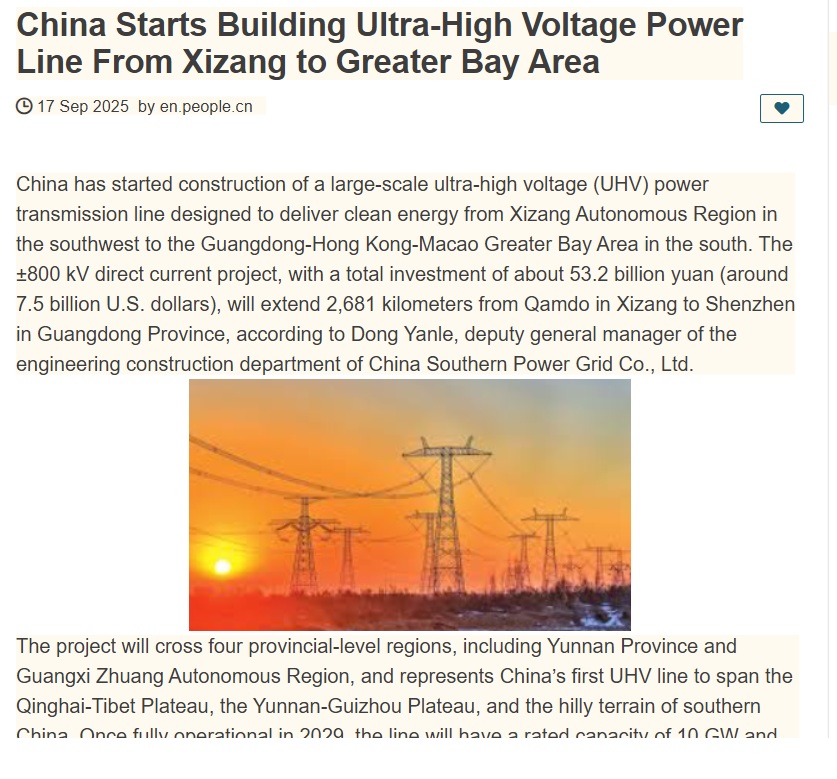
Pemakő should be seen as the culmination of a vast remake of a much bigger area, in the neglected eastern prefecture of Tibet Autonomous Region, rather than a one-off. While the Pemakő megaproject attracts headlines, it is not a one-off. All the lands currently appropriated for the solar-wind-hydro build, across Chamdo prefecture, feed ultra-high voltage electricity into the same grid, destined by decree for distant Shenzhen and adjacent Hong Kong. That grid is already partly built, with firm central planning target dates for completion.
Bundling the tech menu to make a meal that feeds electricity thousands of kilometres to the tech hub of Shenzhen, China’s centrally designated hub of entrepreneurial speed, the frontier of all the emerging industries that China calculates will dominate globally, and make the 21st century China’s.
The power grid that will soon further empower Shenzhen disempowers Tibet, depriving Tibetans of their lands and agency. The grid is an umbilical cord feeding Tibetan river flow, windy skies and sunshine to a city whose drone designers and sellers have transformed warfare both in Ukraine and the Persian Gulf, making the world far more dangerous as AI is embedded, ahead of civilian uses, in making the machinery of killing faster and deadlier. Shenzhen is the heart of this acceleration and intensification of ruin from the air, umbilically powered by Tibet.

We shift our gaze, from presuming a single mega dam, to a centrally planned systemic repurposing of Tibet, of China’s industrial system, and of wars delivering AI automated death. As we raise our gaze we discover China is rewriting the basic premises of economics, redefining the factors of production to insert a new layer at the top of the pyramid of productivity, key to China’s 21st century dominance. China is now in the grip of tech billionaires as surely as USA, and Shenzhen is their base. Their special status is confirmed by China rewriting the definition of productive forces, inserting AI engineers and drone designers as specially privileged “new quality productive forces” 新质生产力. Xi Jinping repeatedly says China’s future depends on them.
They shall have all the electricity they want, from Tibet over 2600 kilometres away, because all the new and emerging industries on China’s centrally planned tech list are intensive consumers of electricity, and demand for electricity is rising fast.
Under intense pressure from both the 45th and 46th American Presidents, Trump then Biden, China decided it must master all “green” energy tech, and all emerging industries, not only to ensure ongoing wealth accumulation but above all national security. Under Xi Jinping, in response to American containment strategies, industry policy has pivoted to national security as top priority.
In the name of securing the future, Tibet is fast becoming a sacrifice zone of green colonialism. This displaces Tibetans from their lands and homes, shunting them away from tech installations to distant frontier villages, except for a few local communities required to smile, dance and sing welcome to arriving bus and trainloads of Chinese domestic tourists, all planned, part of the 15th Five Year Plan package. This is development, with Chinese characteristics, centrally planned, manned and regulated by Beijing, with plenty of documentation.

HIGH IMPACT
The most impacted areas -Chamdo and Nyingtri- used to be prefectures explicitly designated as autonomous Tibetan prefectures, constituting the large portion of Kham attached to central Tibet, in Chinese Xizang, formerly Tibet Autonomous Region (TAR), centred on Lhasa far to the west.
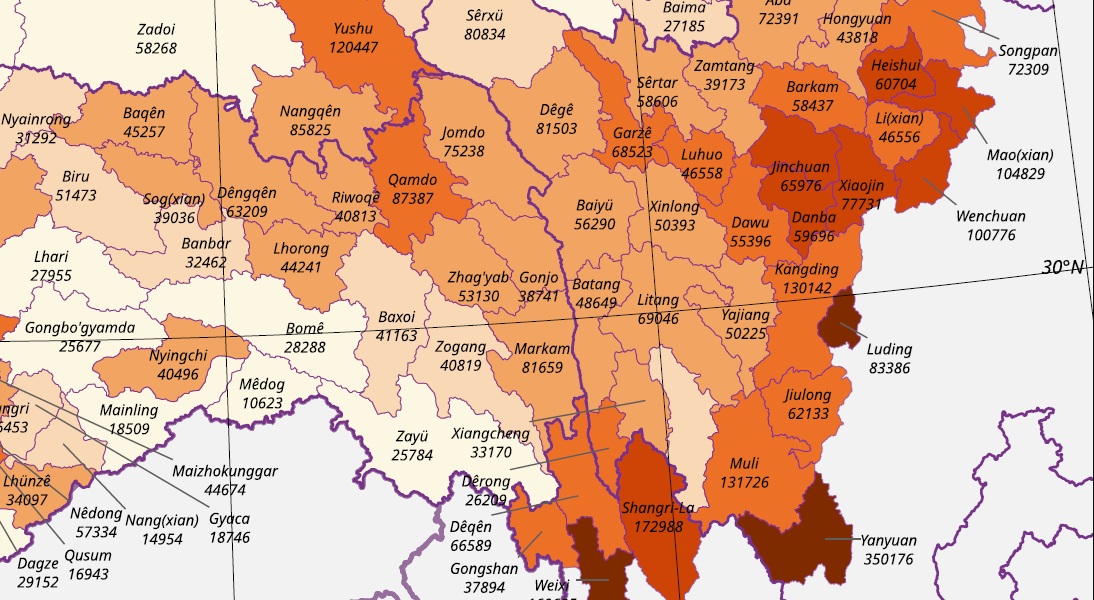
Kham is fragmented into four of China’s provinces, in each of them it is the neglected, upland rump. In Chamdo a massive deposit of copper, gold, silver and molybdenum, at Jomda Yulong, has attracted investment and extraction, requiring electricity supply to concentrate ores prior to shipping out to distant smelters.; a further reason for the current intensification of energy extraction that emplaces wind turbines and enormous solar arrays over prime Tibetan production landscapes.

Chamdo is 110,000 square kilometres of mountain ranges, incisive rivers, a rugged landscape of 11 counties. Like most Tibetan lands across the plateau, its legally mandated autonomy was quietly eliminated by redesignating the entire prefecture as a municipality, in which no nationality has special status. Chamdo, ཆབ་མདོ, chab mdo, also known in Chinese either Qamdo or Changdu 昌都remains rugged and rural, despite municipalisation, but now rapidly being repurposed as slave generator of electricity for export to Shenzhen.
Nyingtri is the large prefecture south of Chamdo, bordering India and the eastern Himalaya, even more remote and rural than Chamdo, yet now also a municipality, with Nyingtri city the hub of Pemakő hydropower mega build. Nyingtri is 116,000 square kilometres, the wettest and warmest landscape of the plateau, receiving heavy monsoon rains drawn inland from the Indian Ocean and Bay of Bengal. Nyingtri ཉིང་ཁྲི་གྲོང་ཁྱེར།, nying khri grong khyer), often Linzhi in Chinese: 林芝, has until now been the most remote portion of TAR, now drawing Han to the luxury villas, hotels and resorts of Nyingtri town.
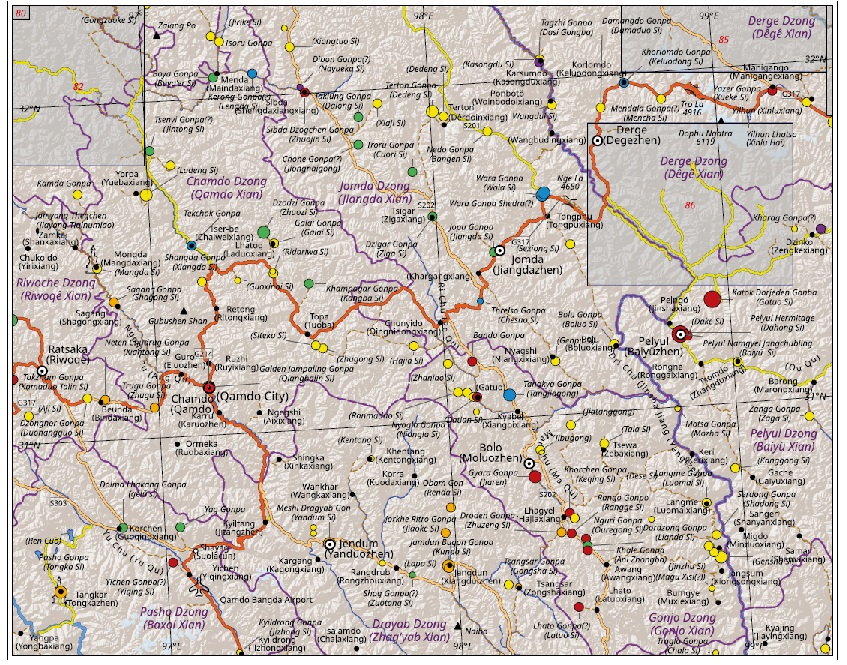
What on paper separates Kham Chamdo from the rest of Kham is the Dri Chu/Jinsha/Yangtze, with the right bank delimiting TAR, while the left bank delimits Sichuan; governmentally splitting Kham asunder. It is on the Jinsha that China’s hydro engineers are working their way steadily upriver into Tibet. This means the Pemakő hydro project is the final target of a build lasting decades that exploits all the rivers of eastern Tibet, for China’s consumption.
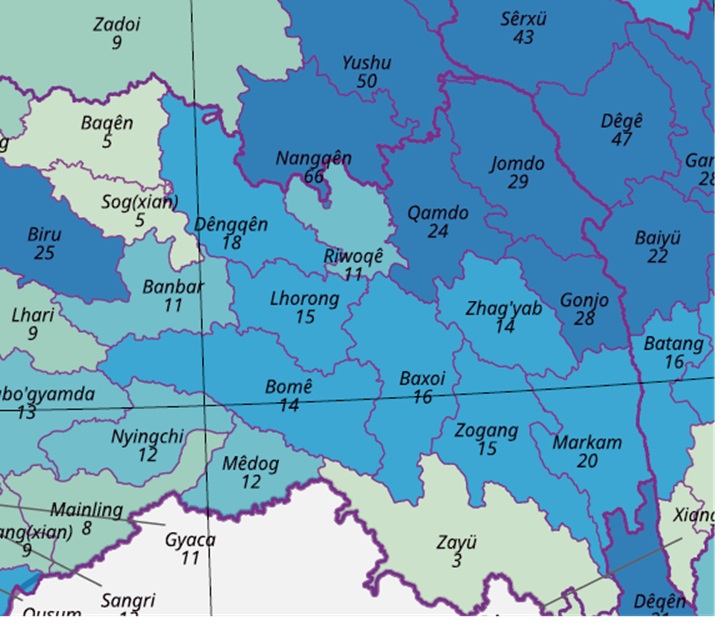
So Pemakő should not be seen in isolation. Whether you are horrified by damming the Yarlung Tsangpo, as most Indian geostrategists are, or admire China’s developmentalist nation building, as many green energy enthusiasts do, Pemakő may be China’s jewel in the crown, but it is a big crown, remaking two “municipalities” totalling 226,000 square kilometres, the size of Romania.
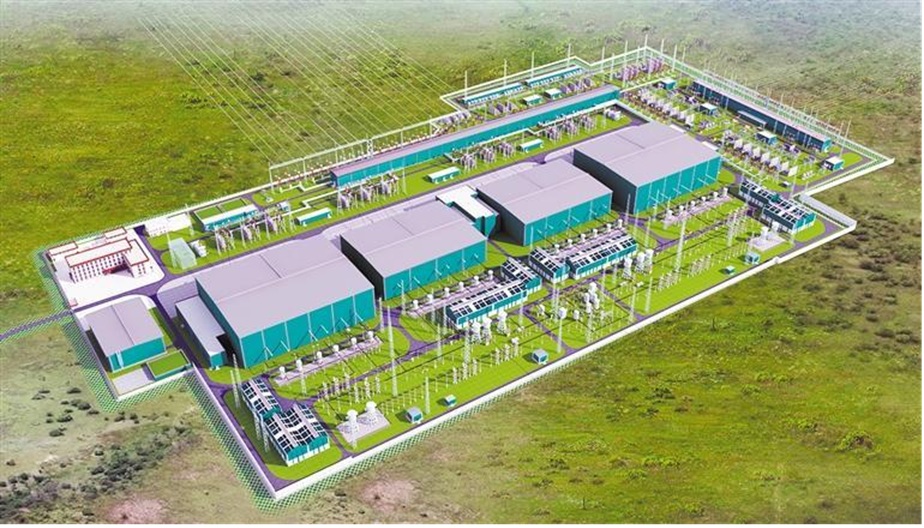
Extraction of electricity from Tibet for export is locked in as official policy of the National Energy Administration: “The National Energy Administration strongly supports the development of Tibet’s power grid infrastructure. The 14th Five-Year Plan for Power Development prioritises the construction of the Southeast Tibet to Guangdong-Hong Kong-Macao Greater Bay Area transmission project, 藏东南送电粤港澳大湾区工程 which has now received approval.”
In 2026 China’s State Council -China’s Cabinet of Ministers- issued an ambitious command for wholly integrating Tibet into a single national grid: “By 2030, a unified national electricity market system will be basically established. By 2035, a unified national electricity market system will be fully established. Inter-provincial and inter-regional, as well as intra-provincial, transactions will be organically integrated.”
FEEDING SHENZHEN’S INSATIABLE DEMAND
If we want to understand why the Pemakő megaproject on the lower Yarlung Tsangpo will go ahead, we need a broader perspective, travelling the ultra-high voltage umbilical cord all the way to Shenzhen, Hong Kong, Macao and Guangzhou cities.
Official media brim positive energy abundantly: “On September 16 [2025], the world’s largest clean energy base DC transmission project—the ±800 kV ultra-high voltage DC transmission project from southeastern Tibet to the Guangdong-Hong Kong-Macao Greater Bay Area—officially commenced construction. The Tibet-Guangdong DC power transmission line has been launched, unlocking world-class “power flash transmission.” Guangdong’s electricity consumption once again broke historical records, reaching 165 million kilowatt-hours. This marks the third consecutive year that Guangdong has broken historical records. Last year, Guangdong’s high-tech and equipment manufacturing industries alone consumed 174.6 billion kilowatt-hours of electricity, and the figure continues to grow. Emerging industries are rising, while traditional industries are transforming. This month alone, the total number of registered business entities in Guangdong Province exceeded 20 million. Among them, digital economy enterprises reached 167,600, a year-on-year increase of 25.41%. It’s important to understand that the digital economy, primarily driven by AI and supercomputing, requires strong support from a stable power supply. The “Tibet-Guangdong DC Transmission Project,” scheduled for completion in 2029, utilizes world-leading “ultra-high voltage multi-terminal flexible DC transmission” technology. It can flexibly schedule green electricity generated at different times and in different regions, transmitting over 43 billion kilowatt-hours of clean electricity annually, equivalent to half the annual power generation of the Three Gorges Dam. Its importance to the industrial transformation and high-quality development of the Guangdong-Hong Kong-Macao Greater Bay Area is self-evident. On one side lies the snow-covered plateau, brimming with boundless wind and light; on the other, the surging Greater Bay Area, undergoing transformation and upgrading.”
An October 2026 update on construction of what is now called the Green Energy Sky Road 绿色能源天路: “It is expected that by the end of this year, some sections of the Tibet-Guangdong DC transmission line project will enter the tower erection phase, with the entire project scheduled for completion and operation in 2029. This project leverages the abundant photovoltaic, hydropower, and wind power resources in southeastern Tibet, transmitting 100% clean energy.”
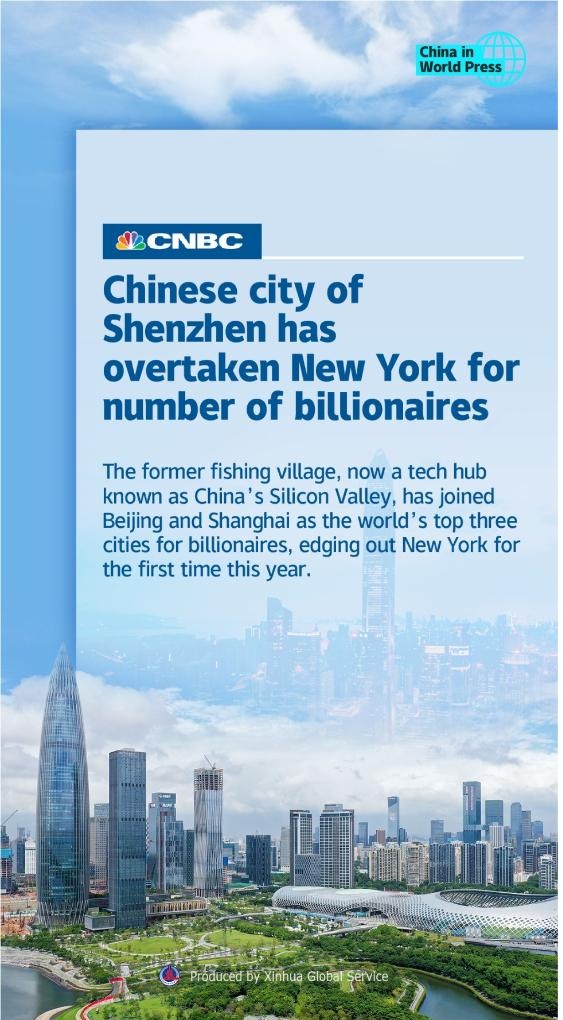
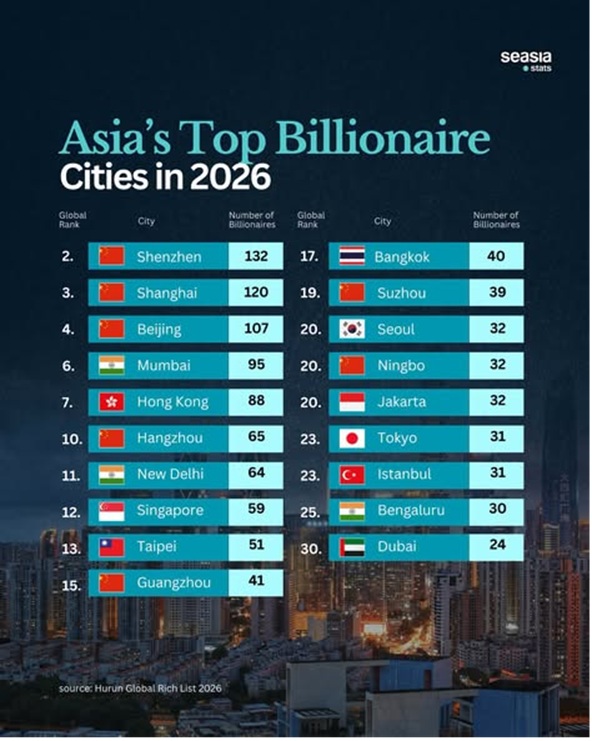
Adam Tooze, an influential admirer of China’s developmentalism, has recently analysed Shenzhen: “The history of Chinese wealth is recent. In 2003 there was probably no one in China worth one billion dollars. Over the following decade Chinese capital accumulation exploded. We clearly do live in a world in which this kind of oligarchic, capitalist ‘aristocracy’ matters more than it did in the age of corporate capitalism or even first stage financialization where the talk was of ‘shareholder value’. The rise of China’s billionaire wealth coincides almost exactly with Xi Jinping’s rise to power. But Xi is the first who has had to wrestle with the questions posed by an increasingly entrenched and powerful billionaire oligarchy.
“The geography of wealth in China is shifting: Shenzhen is now the main cluster of extreme wealth in China, with 177 individuals, up 30, on the back of its semiconductor, AI and robotics clusters. So-called ‘hard tech’ is the key to wealth formation in Shenzhen. This is the city of Tencent’s Pony Ma, BYD’s Wang Chuanfu and DJI’s Frank Wang; of Grace Wang, who started on a Foxconn assembly line and then founded Luxshare, Apple’s biggest assembly challenger; and of this year’s new fortunes in the AI supply chain — Wang Zhiyong of display-maker HKC and Cai Huabo of memory-maker Longsys, whose fortune more than tripled this year.
“Frank Wang Tao of DJI, the drone pioneer who has mentored much of Shenzhen’s robotics scene, remains the sector’s biggest fortune with US$16.4bn. Frank Wang Tao‘s DJI has led the world drone market since its first products. Robotics: ‘Embodied intelligence’ — AI with a body — entered large-scale commercial application this year, and this list is where you see it: 80 Hurun rich listers now make their money from robotics. The sensation of the year was Wang Xingxing, 36, of humanoid-robot maker Unitree, who debuted with US$10.3bn as the year’s second-highest new face after taking Unitree public in August — the stock jumped 629% on its first day, briefly valuing the company at US$66bn and Wang’s own stake at nearly US$20bn — his wealth has almost halved since that IPO peak, with the company settling around US$35bn.” AgiBot, AI2 Robotics, LinkerHand, Galaxea AI, Ecovacs and UBTech are other key players. An increasingly gigantic private economy is controlled by corporate governance, dispersed party cells, regulation, anti-corruption drives and broader instruments such as industrial policy and macroeconomic policy.”
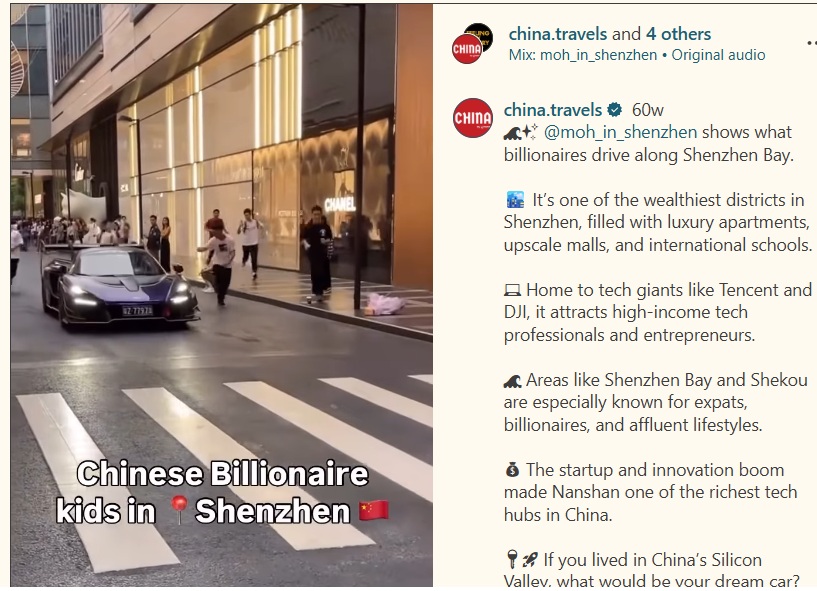
Shenzhen, its’ billionaires in command, demands to be fed by Tibet. Shenzhen is an unruly foetus, feeding hungrily from the umbilical cord stretching over 2000 kilometres to eastern Tibet. In return Shenzhen umbilically transmits to Tibet greed, a craving for wealth, accumulation, dissatisfaction with what is, competitiveness, worship of “new quality forces of production” 新质生产力, meaning tech billionaires.

TIBETAN CHIMERA
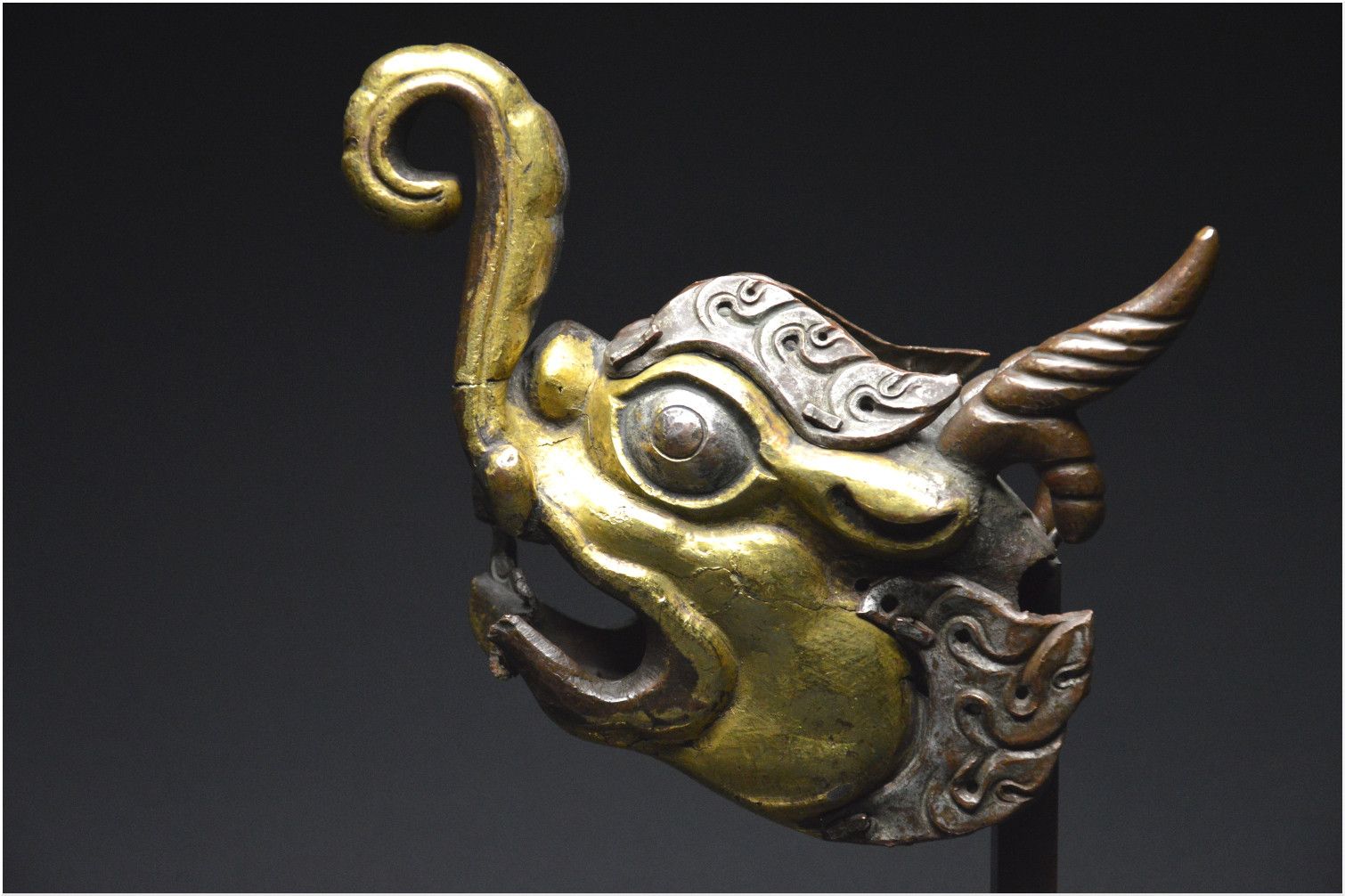
Tibet, by feeding Shenzhen, becomes a chimera, a hybrid creature of not only maternal tissue but now invaded by potent stem cells of foetal Shenzhen greed, that take up residence in the maternal body.
This foetal micro chimerism, as medical research calls it, triggers in the maternal body breast cancer, melanoma, rheumatoid arthritis and many more autoimmune diseases.[1]

Making Tibet China’s is much more than assimilationist propaganda and curricula. Tibet is being made over as a chattel, a chimera embodying Chinese cravings.
 ELECTROSTATISM

Of the many Shenzhen billionaire factories, the world’s biggest electric car maker, BYD, stands out as boasting, as long ago as 2009, that it had contracted exclusive access to lithium salt lakes in far western Tibet. Long before the electric car market boomed, BYD, with enthusiastic support from Warren Buffett and Bill Gates, announced their lock on Zabuye salt lake in upper Tibet, as an investment that ”philanthropically benefits Tibetans.”
Extracting lithium from the pure lithium salts of the briny lakes of upper Tibet is cheap and easy. All that is needful is to bulldoze low walls across the shallow lakes and evaporation gradually removes the water, leaving pure lithium to be scooped up. But the distance is far greater than the Chamdo to Shenzhen ultra-high voltage power grids, it’s an added 1000 kilometres of diesel trucking right across the Tibetan Plateau, in the name of saving the world from fossil fuel emissions. But exclusive access to remote Tibetan lithium rich lakes, part of BYD’s vertical integration strategy, is one reason BYD is now globally dominant.
Dan Wang: “At the start of reform and opening, Shenzhen absorbed the shock troops of Chinese entrepreneurialism. Although Shenzhen is less fun than Shanghai, its region is probably the most dynamic and forward-looking part of the country today. A gallery artist said that clients in Shenzhen rarely comment on the art that they plan to buy. Instead they ask only its expected price in five years. The ideal company is led by a Beijinger, who would provide the vision, leadership, and government-relations savvy; its finances would be led by someone from Shanghai, and its operations managed by someone from Shenzhen (who would hire people from Sichuan and Anhui to do the actual work).”
The energies of subcontracted rural labour from inland Sichuan point us to the extracted energies of Tibetan rivers, winds and sunshine, all transmitted by ultra-high voltage power grids made of Tibetan copper, from Tibet to Shenzhen in less than a second, more than 2000 kilometres. “China’s grid spending hit a record last year [2025] and is set to rise steadily through 2030, underscoring Beijing’s push to ease transmission bottlenecks. Grid investment climbed 5% to 639.5 billion yuan ($92 billion) in 2025, according to data from the China Electricity Council. China’s dominant state-owned grid operators — the State Grid Corp. of China and China Southern Power Grid Co. — have steadily lifted their spending in recent years. Their combined budgets are set to reach nearly 1 trillion yuan this year and grow further through the end of the decade.”
LETTING RIP
In Dan Wang’s wildly popular 2025 book, Breakneck: “In 1980, when Deng Xiaoping christened Shenzhen a ‘special economic zone,’ the city had little to recommend it other than its location directly abutting British-ruled Hong Kong. Deng wagered that success in Shenzhen could tear down the socialist strictures on China’s economy that the rest of the leadership had been hesitating to dismantle. He lavished the city with supportive policies and penned editorials to beckon the ambitious to move there.

“Deng Xiaoping, with the help of other reformist leaders, made Shenzhen into a hothouse of capitalism. What does capitalism need? A stock market, which Shenzhen established in 1990. What else? Belching factories with dismal labour conditions. That it had aplenty. Walmart invested deeply in that region to source goods: socks, toys, lighting, and nearly anything else that consumers wanted in a supercentre. In 2002, Walmart moved its global purchasing centre from Hong Kong, a financial hub, to Shenzhen, which was closer to the factories. By that point, Shenzhen’s factories had started to produce goods more sophisticated than socks. They had become proficient at developing all sorts of electronics components: small batteries, cable connectors, and display screens.
“If an engineer in Shenzhen has an idea for a new product, it’s easy to tap into an eager network of investors. Shenzhen is a community of engineering practice where factory owners, skilled engineers, entrepreneurs, investors, and researchers mix with the world’s most experienced workforce at producing high-end electronics. Low-wage ecosystems like Shenzhen became a giant magnet for US process knowledge.”

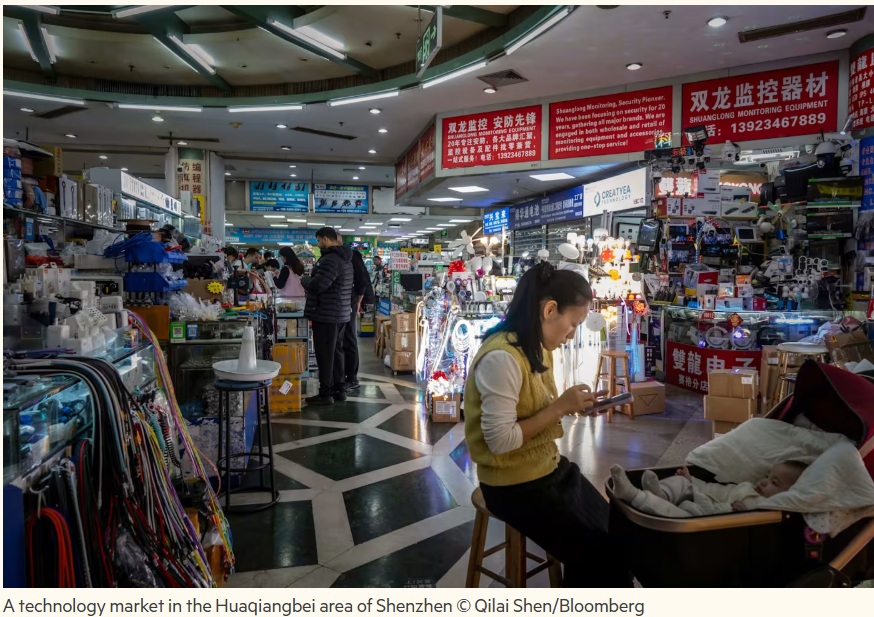
Preparing for APEC 2026 in Shenzhen the worst aspects of capitalism with Chinese characteristics have been cleaned up. The marketplace for iPhones stolen from the hands of Londoners and New Yorkers is now closed.
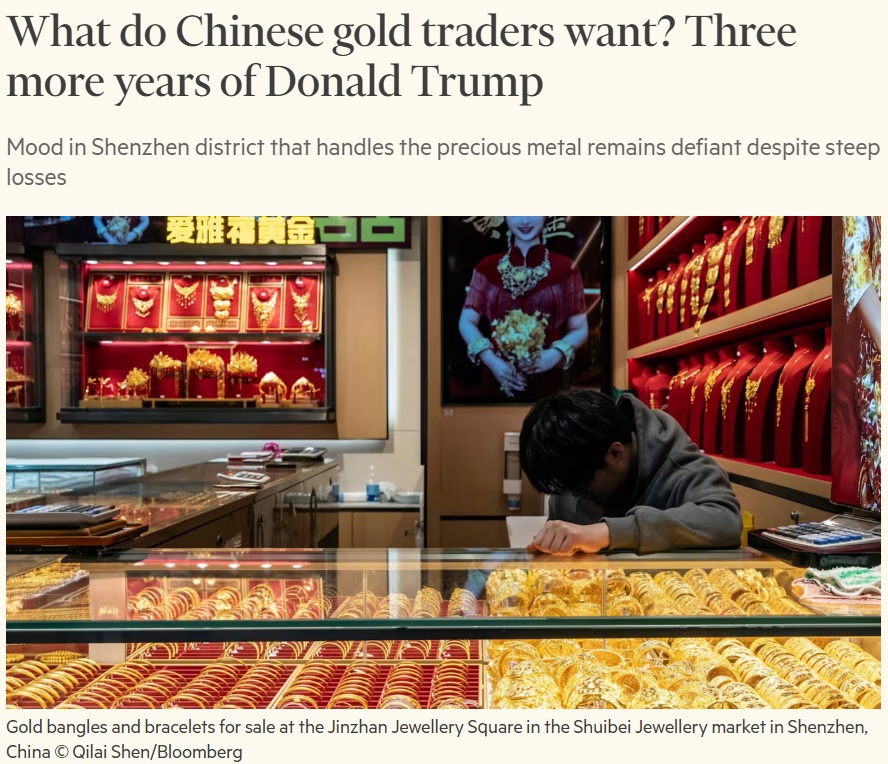
Financial Times took a close look. “One of China’s biggest cities, home to a sprawling illicit trade in products from iPhones to knock-off Prada handbags, is engaged in the clean-up job of a lifetime as it prepares for a summit that will bring unprecedented international scrutiny. Shenzhen is also crammed with illicit markets selling smuggled computer chips and stolen iPhones to dual-use drones and fake handbags. Authorities are keen to keep such activities out of sight.
“Since Shenzhen was made one of China’s first Special Economic Zones in 1980, it has grown from a motley collection of fishing settlements and towns into a city of 18mn people with gleaming tech manufacturing districts and high-rise residential neighbourhoods as well as seedier markets in its densely packed commercial areas.”
EXTRACTIVIST SIPHONING
Major hubs such as Shenzhen driving China’s vision of tech mastery in all emerging industries have the capital, the tech, the engineers, billionaires and the political connections to siphon to them whatever is needed, at the lowest prices. Today it is solar and wind power from Tibet, and raw materials including Tibetan lithium and copper, essential to the DJI drone manufacturer based in Shenzhen, with a global market selling the drones and drone components that are transforming warfare in Iran and the Gulf, in Ukraine and Russia. What starts in Tibet doesn’t stay in Tibet, nor Shenzhen, it is frontline warfighting tech in demand worldwide.
Drones made in Shenzhen are sold to war fighters in Europe and Mideast, and also to policing of Tibet. “DJI drones are in police hands. In 2017 police in Maldro Gongkar county, east of Lhasa, were given a DJI Phantom 3 SE. In July 2025 police in Tingkye trained with a DJI Mavic 3 Pro. In 12 government purchase records, DJI equipment is named in the award or in the itemised list of goods, along with the buyer, the date, the supplier and, in most cases, the price paid for each item. Together, these records show that security and government bodies in Tibetan areas bought DJI equipment again and again between 2020 and 2026, through dealers and system integrators, in orders with a combined published value of about ¥24.8 million.
“In spring 2025 Derge County police (德格县公安局) bought four autonomous DJI Dock 2 stations, four DJI drones and DJI’s FlightHub 2 fleet-control software for the county’s police checkpoint on the Sichuan–TAR border, as part of a ¥4,429,553 contract to upgrade the checkpoint’s surveillance systems. The Kamtok dam straddles the Drichu, the river that forms the border here, between Derge and Jomda (Jiangda, 江达) county in the TAR, and takes its name from Kamtok (岗托), the TAR township on the Jomda bank. In September 2025 Jomda County Public Security Bureau published a procurement for all-terrain, all-weather drone reconnaissance and countermeasure equipment. Within 20 months of the protests, the police on both sides of the river had moved to acquire persistent aerial surveillance, and the Jomda package includes the means to stop anyone else flying.”[2]
The circle is complete. Beginning with extraction of copper from Tibet for power grids, lithium from Tibet for drones, and electricity from Tibet for Shenzhen factories, the drones they make are sold to police in Tibet patrolling Tibetans protesting the dams of green colonisation in Chamdo Jomda and Derge.
TIBETAN VOICES
Do Tibetans have a say in any of this? Do Tibetan communities benefit from their lands and lakes remade as extraction zones? Do Tibetan pastoralists and farmers receive royalties when their production landscapes are requisitioned for extraction and export of electricity, lithium, copper and much more? Not only are there no royalty payments, or prior consent, landscapes zoned extractive are routinely depopulated, local communities shunted off to distant frontier villages, their intimate knowledge of the grasslands not only null, but treated as if it never existed.
Extraction worldwide, in the name of “green” energy, disempowers local communities, but they can organise, and resist, sometimes successfully. Not so in China, where protests against extraction have been ruthlessly crushed as quickly as possible.
Tibetan villagers in infrastructure construction zones are silenced. If they do protest, they are quickly detained, beaten, interrogated, tortured and sentenced to many years in prison. This is well documented. [3]
The lands of the Tibetan, Monpa and Lhoba nationalities are now nationalised, as prerequisite for nation building dams, tunnels and turbines in Pemakő. The lower Yarlung Tsangpo and its beyul hidden land Tibetans call Pemakő, is about to be hydro engineered into China.
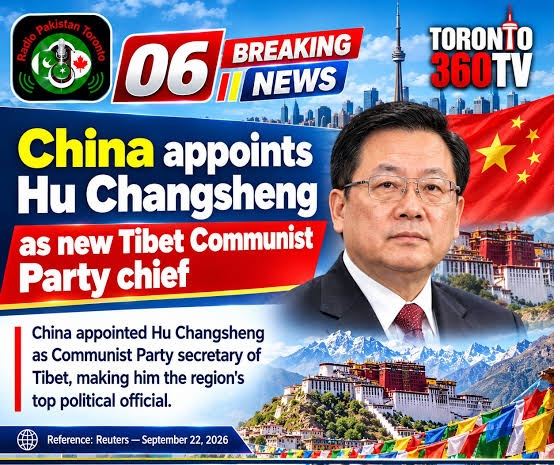
Even the most powerful man in Tibet, when inspecting construction sites of major national projects 国家重大项目建设现场can say little, other than to urge local communities to obey Beijing’s commands. In November 2026 Hu Changsheng, newly appointed Secretary of the Autonomous Region Party Committee, visited the sites of the Pemakő mega build: Bomi County, Mêdog County, and Mainling City in Nyingchi City. Not only are ordinary people silenced, he had little to say, other than command obedience.
According to the official report in Tibet Daily, “During his visits to Gongri Village in Damu Lhoba Ethnic Township, the Zhuomala Mountain area in Medog Town, and the Yarlung Tsangpo “Mother” Square in Beibeng Township—all located in Medog County—Hu Changsheng listened carefully to reports regarding territorial spatial planning and urban development. He emphasized the need to adopt a mindset that prioritizes long-term goals over personal credit. He called for a systematic and forward-looking approach to urban planning, which includes strengthening the monitoring and prevention of geological hazards, crafting meticulous master plans, and rationally allocating space for production, daily life, and the ecosystem. He urged the county to base its development on its unique realities and future needs—prioritizing ecological preservation, energy development, and tourism-driven prosperity—while integrating urban construction with the cultural tourism industry to pursue a path of green, low-carbon development. At the construction sites of major national projects, Hu Changsheng inspected the progress of construction, the operation of equipment, and safety protocols. The goal is to ensure that these projects are developed in an orderly and effective manner, ultimately becoming exemplary, safe, eco-friendly, innovative, and integrity-driven projects.”
Political science professor Thea Riofrancos, in her 2025 book, takes us to those local communities where lithium extraction drives the new green colonialism, and locals push against it.[4] She explains: “Amid all this market turbulence, some car companies are reviving an old approach: vertical integration. In January 2023, General Motors invested $650 million in Lithium Americas to help develop the Thacker Pass project in exchange for “exclusive access” to the mine’s phase 1 production and the “right of first offer” to phase 2 production. 22 In October 2024, GM deepened its relationship with the lithium miner, establishing a joint venture that gives the car company a direct ownership stake in Thacker Pass.
“These moves escalated a trend that had been a few years in the making, with automakers taking increasingly aggressive moves to secure their lithium supply. Their tactics ranged from establishing long-term offtake agreements with lithium companies to direct equity investments in mining projects. Automakers engaging in these practices hope to ensure their access to minerals and to reduce their exposure to the volatilities of commodities markets, even as they tie their fates more closely to the output of specific mines.
“The return of vertical integration is a curious development. For decades, major multinational corporations have focused on untangling their core operations from the mines, mills, and feeder factors gobbled up by their predecessors. The approach feels like a throwback, harkening back to Henry Ford’s investments in steel mills and coal mines to supply the raw materials for his sprawling auto empire. 155 In this arrangement, lithium firms claim to be “green”.[5]
Vertical integration makes the source of raw materials -minerals and electricity- into remote locations with no power to refuse, no opportunity to sell to a higher bidder, merely an anonymous producer of what is vaguely called producer goods, of no interest to consumers until made into electric cars or drones, in Shenzhen, for global marketing. Tibet and Tibetans have no say at all in whether their natural endowment is extracted, nor the price, nor the end product and its uses. Tibet is the slave.
“Another driver of China’s tech convergence is a desire for greater control and efficiency, particularly by making core components in-house. Some of China’s most successful tech firms are renowned for their aggressive vertical integration.
BYD makes its own batteries, electric motors, and power semiconductors. This vertical integration helps drive down costs by cutting out margins that would otherwise go to third-party suppliers.”
Electrical engineers based in Nyingtri and Wuhan have deployed master-slave game theory to adapt mining in Tibet to the fluctuating electricity demand of distant urban masters in Shenzhen, along with fluctuating supply of electricity, in the 24-hour daily cycle, depending on the availability of wind and sun.[6] Tibet is the slave, adapting ore extraction hour by hour to accommodate Shenzhen.
PRICE TAKER, PRICE MAKER
Corporate vertical integration moves up the commodity chain to the mine, or dam, to capture and control, transferring profit to the processor and manufacturer. Vertical integration also moves down, enabling manufacturers to control markets, sales, maximising revenue and profit. This is what US and EU regulators complain loudly about.
Economists call this transfer pricing, which means that not only is electricity transferred from Tibet to Shenzhen, so too the price accumulates in Shenzhen, not in Tibet, as even the biggest hydro dam operators are commanded by Beijing to keep electricity prices as minimal as possible, to maximise profit for industrial consumers.
BY DECREE
Enthusing about Shenzhen didn’t end with Deng Xiaoping or the tech bro romancing of Dan Wang. An October 2026 decree from the Ministry of Science and Technology (MOST) demands Shenzhen, plus next door Hong Kong and Macao get all the investment finance they seek: “deepen supply-side structural reform in finance and support the Guangdong-Hong Kong-Macao Greater Bay Area [including Shenzhen] in developing their international science and technology innovation centres into leading hubs for the coordinated development of science, technology, and finance. By 2030, the financial services system supporting the entire science and technology innovation chain should be more robust, the share of direct financing should increase markedly, and an integrated regional financial-services structure should largely be in place. The Guangdong-Hong Kong-Macao Greater Bay Area International Science and Technology Innovation Centre will build an open science and technology finance system and strengthen high-standard financial interaction and regulatory alignment among Guangdong, Hong Kong, and Macao….. using high-quality financial services to support the construction of international science and technology innovation centres and provide strong support for building China into a leading country in science and technology and a financial powerhouse. The Guangdong-Hong Kong-Macao Greater Bay Area International Science and Technology Innovation Centre should advance financial reform and opening-up, deepen connectivity between the mainland and Hong Kong financial markets, promote the formation of a science and technology financial-services system featuring effective alignment of rules, free flows of factors, and deep ecosystem coordination, and make orderly progress toward becoming a global science and technology innovation hub and an important source of emerging industries….. promote the Shenzhen Stock Exchange’s accelerated development into a global asset-allocation platform.”[7]
Tibet is now an asset, no longer a cost centre swallowing Beijing finance for little result. Tibet’s assets are not its people, history or culture. What China values is watersheds, hydro, sun and wind- all allocated to feed electricity to Shenzhen and several other industrial provinces, with further intensification imminent.
In return, Tibet becomes a chimera, inflamed by China’s anxieties, neuroses, cravings, dissatisfactions. Tibetans have a word for this: ramalug, neither sheep nor goat, a mangled mingling of both.
[1] Fjeldstad HE, Johnsen GM, Staff AC. Foetal microchimerism and implications for maternal health. Obstetric Medicine. 2020 Sep;13(3):112-119. doi: 10.1177/1753495X19884484
Shrivastava S, Naik R, Suryawanshi H, Gupta N. Microchimerism: A new concept. J Oral Maxillofacial Pathology. 2019 May-Aug;23(2):311. doi: 10.4103/jomfp.JOMFP_85_17
[2] Eyes Above the Plateau: Drones, DJI and aerial architecture of control in Tibet, Tibet Watch, September 2026
[3] https://savetibet.org/report/hydropower-development-on-the-tibetan-plateau/
Environmental defender and popular singer released amid climate of fear
Mass detentions and violent interrogation follow peaceful protests against gold mine in Tibet
Twenty Tibetan villages face displacement as China plans major new hydropower dam on Machu River
[4] Thea Riofrancos, Extraction: The Frontiers of Green Capitalism, W.W. Norton, 2025
[5] Riofrancos 22-24, 153-4
[6] Shiting Cui , Hongkun Chen , Jun Wu, Wenqiang Tao, Ruijin Zhu, Demand response strategy for high altitude smart flexible mining zones: Integrating production, residential, and transportation, Tibet Agriculture and Animal Husbandry University, Linzhi/Nyingtri, Renewable Energy 259 (2026) 125101
Han, Aiping;Ge, Jianping;Lei, Yalin, Vertical vs. horizontal integration: Game analysis for the rare earth industrial integration in China, Resources policy, 2016-12, Vol.50, p.149-159
[7] Ministry of Science and Technology, PBOC [People’s Bank of China], MOST and Other Departments Issue Guiding Opinions on Financial Support for International Science and Technology Innovation Centers in Beijing (Beijing-Tianjin-Hebei), Shanghai (Yangtze River Delta), and the Guangdong-Hong Kong-Macao Greater Bay Area, October 20, 2026, https://www.most.gov.cn/kjbgz/202610/t20261020_197532.html