CAMPAIGNING TO OVERWHELM TIBET AND BEDAZZLE THE WORLD
China’s plan to capture the greatest rivers of Tibet is the direct outcome of the US/China breakup. The Yarlung Tsangpo is being turned into an extraction enclave because China plans to use far more electricity, in order to outpace the US. A megaproject that for decades languished, too big, too distant, too risky is now top of China’s campaign agenda.
“China’s leaders have become increasingly public about emphasizing the self-reliance drive. It took a prominent place at an annual gathering of the Communist Party’s Central Committee last month, when the country’s top officials laid out a sketch of China’s next five-year plan. ‘We must first and foremost intensify efforts toward achieving greater self-reliance and strength in science and technology,’ Mr. Xi said in a speech. Central Committee ordered that China would, starting next year, double down on its emphasis on advanced manufacturing. The plenum document ordered government and business to ‘work faster to boost China’s strength in manufacturing, product quality, aerospace, transportation, and cyberspace.’ The plenum’s closing statement said, ‘We must consolidate and expand our advantages, break through bottlenecks and constraints, and strengthen our shortcomings and weaknesses.’”
“A comprehensive industrial system benefits the enhanced resilience of supply chains,” Tian Peiyan, one of Xi Jinping’s senior policy advisers, wrote, asserting a very broad industrial base could create “a bulwark of economic security.”
China is officially in campaign mode throughout the coming Five-Year Plan that ends in 2030. As in a military campaign this is pitched as a win/lose existential battle, Xi Jinping says; in no way a time to relax or recalibrate the economy to share more with the poor and precarious.
Although China boasts it is “the world’s most complete industrial system”, 世界上最完整的工业体系, that system always has new frontiers to conquer, and recently conquered hinterlands to consolidate, new landscapes to requisition. Tibet to the fore, sacrificed to feed China’s commodity chain.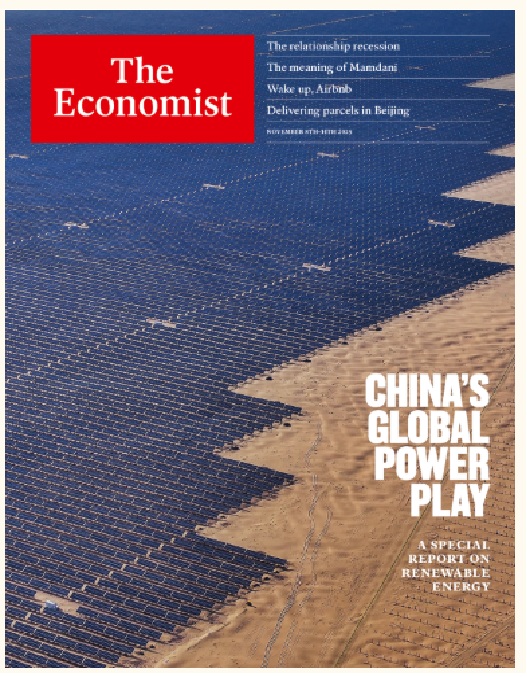
Officially, productivity must increase, economic growth must continue, newly invented “high quality forces of production” 高质量的生产力量must be fostered. The basic concepts of economics redefine what the forces of production are. Emerging industries at the leading edge of future prosperity must be guided by the statist managerial wisdom of the Party. This will be an arduous struggle in which everyone, including all ethnicities, must contribute.
The party-state, having engineered decades of wealth creation, warns all citizens to brace for a high tech future which will accelerate electricity use sharply. That means ongoing building of coal-fired power stations, a big turn to fossil fuel gas, nuclear fission and fusion, and the world’s by far biggest hydro project, in Tibet, on the Yarlung Tsangpo river just above it becoming the Brahmaputra of India. China wants it all.
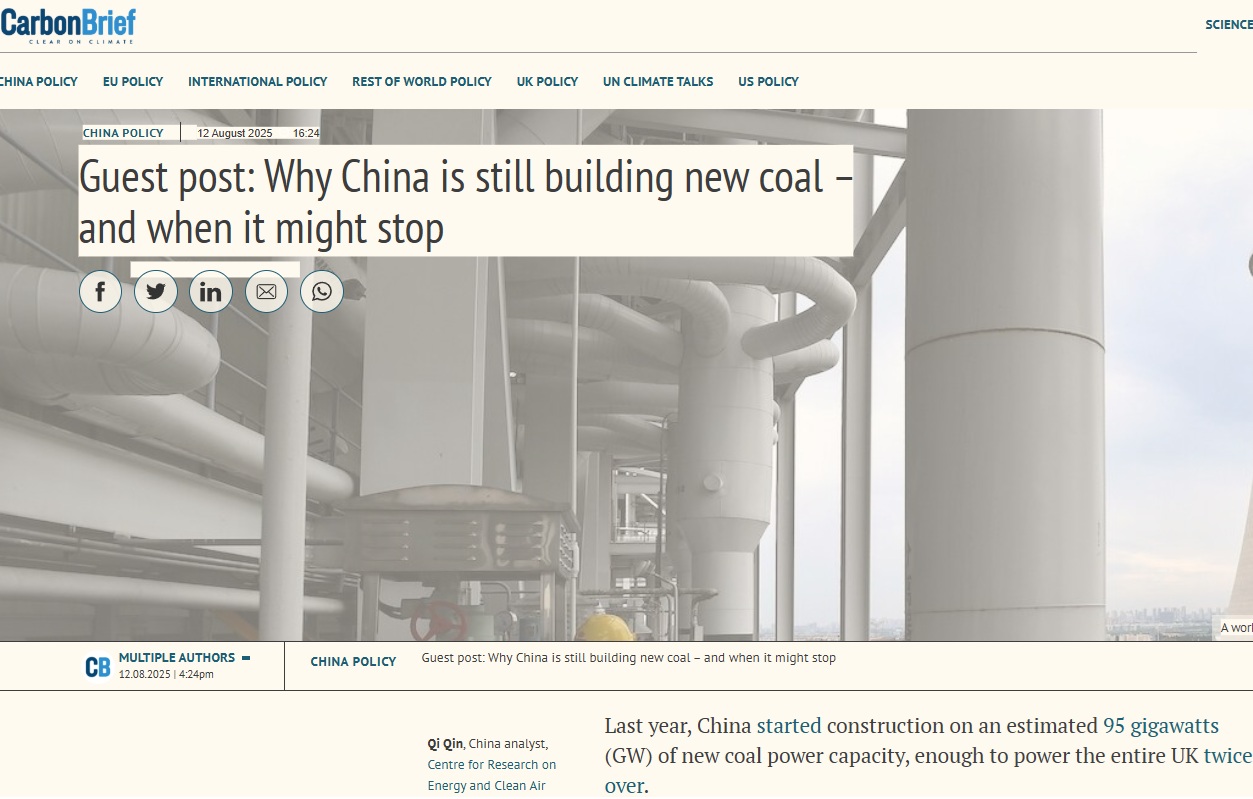
The 15th Five-Year Plan demands everyone works to fulfil the targets, including all officials at provincial and local levels, whose loyalty to campaign-style mass mobilisation must be active, not lip service formalism.
The big builds of the 15th Plan impact Tibet in many ways; not only the Yarlung Tsangpo hydro but high-speed rail Chengdu to Lhasa, also high-speed Chengdu to Xining via iconic nature gems, due for completion within the 15th Plan.
CHINA’S GRAND BLUEPRINT
On 29 October 2025 the CCP Central Committee revealed its master plan for intensifying energy production and transmission in the coming Five-Year Plan, racing to keep up with the accelerating electricity demand of the new industrial revolution. The CCP calls this “China’s grand blueprint for energy transition”, 规划勾勒了中国能源转型的宏伟蓝图. It is a classic party-state accelerating campaign plan.
“China must increase the share of non-fossil energy consumption from around 15% at the end of the 14th Five-Year Plan period to over 20% by 2025, and strive to reach over 25% by 2030. During the 15th Five-Year Plan period, China will pursue large-scale development of renewable energy. The plan proposes advancing the upgrading and transformation of coal-fired power plants.
“Accelerating the Development of a New Energy System: Develop clean energy bases, such as wind and solar power in the northwest, hydropower in southwest in Sichuan. Accelerate infrastructure development for smart grids, energy storage, and pumped storage hydroelectricity to ensure the transmission and consumption of green electricity, enhancing grid dispatch capabilities and resilience. Guarantee that “green electricity” can be “generated, transmitted, and utilised:, enhancing cross-regional grids alongside a national integrated computing power network.
“Accelerating Ultra-High Voltage Development: The Proposal advocates optimising energy backbone corridors and accelerating the construction of new energy transmission facilities. Ultra-high voltage (UHV) transmission has thus become a strategic hub connecting large-scale wind, solar, and hydropower resources in the west with load centres in the east. UHV has become the backbone network supporting the outward transmission of new energy. By 2024, State Grid Corporation of China had completed and commissioned nearly forty UHV projects. Construction and approval processes for new corridors will accelerate further between 2024 and 2025 to facilitate the launch of key transmission routes.
“Concurrently, UHV construction faces challenges including substantial investment scale, extended project timelines, ecological and social impact management along transmission routes, and insufficient terminal consumption capacity…… coordinated efforts in cross-regional dispatch and carbon market mechanisms, ultra-high voltage will become the backbone infrastructure underpinning the “carbon peak and carbon neutrality” objectives.
“This signals the plan’s ambition to spearhead an energy revolution through breakthroughs in core technologies. Such emphasis aligns with the 14th Five-Year Plan’s new energy framework, underscoring China’s prioritisation of energy technological innovation. Green power generation is not solely a supply-side task but will also be integrated into key sectors like manufacturing and transportation.
“Energy Security and Strategic Reserve The Proposal incorporates “energy resource security” into the national security framework.”,
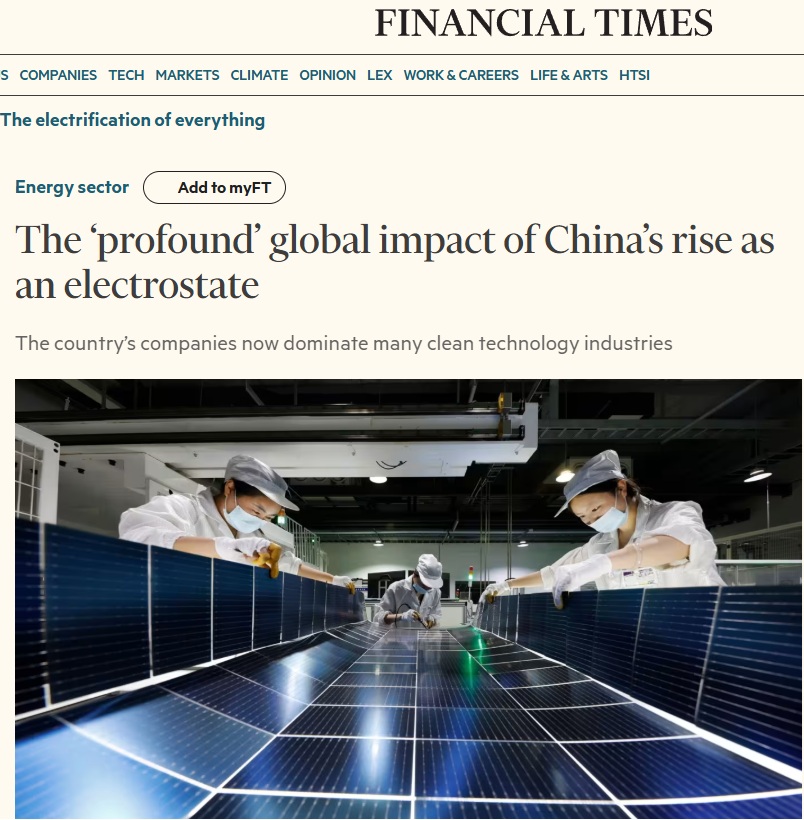
This is the language of a campaigning party-state, urgently extracting and siphoning the energies of Tibet, to electrify China’s electrostate, ensuring China dominates the 21st century, as the US did the 20th century. Tibet is front and centre of that ambition. The speed of China’s hydro-solar-wind land grab across Tibet is, in colloquial Chinese, a killer move, 杀手锏 shā shǒu jiǎn.[1]
SPEEDING, REVOLUTIONISING
The deepest fear of the Chinese Communist Party is a revolution, from below, a popular upwelling of discontent, disillusion with a regime that promises wealth but leaves hundreds of millions precarious, stuck in gig work, no security, no rights. A party that rose to power through revolution abhors the possibility that the 1949 revolution sets a precedent legitimating a “colour revolution” from below. Very early in Xi Jinping’s regime a decree was issued specifically forbidding anything that might encourage a colour revolution.
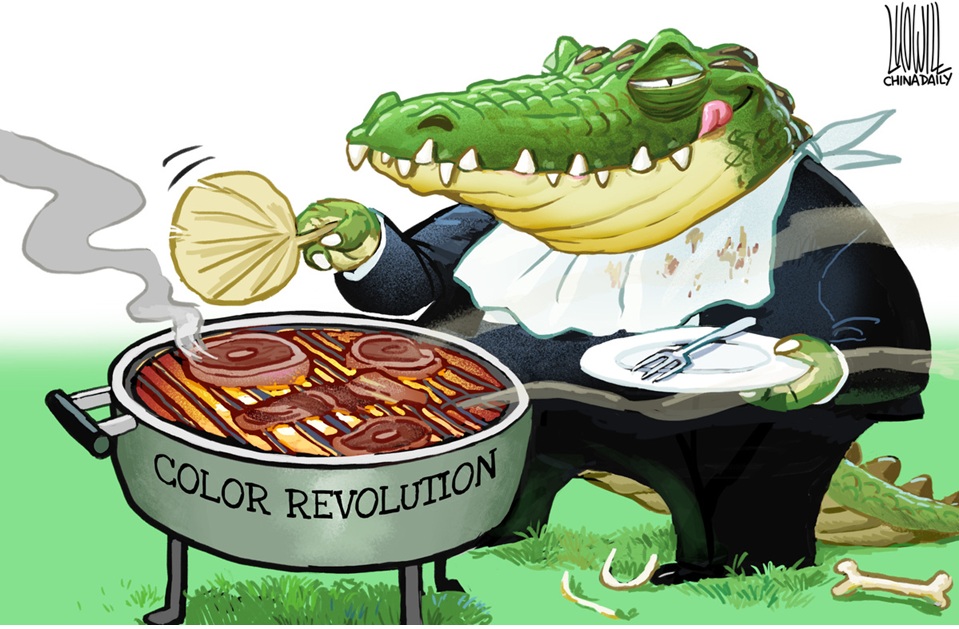
“Western anti-China forces pressure for urgent reform won’t change, and they will continue to point the spearhead of Westernizing, splitting, and ‘Colour Revolutions’ at China. In the face of these threats, we must not let down our guard or decrease our vigilance.”[2]
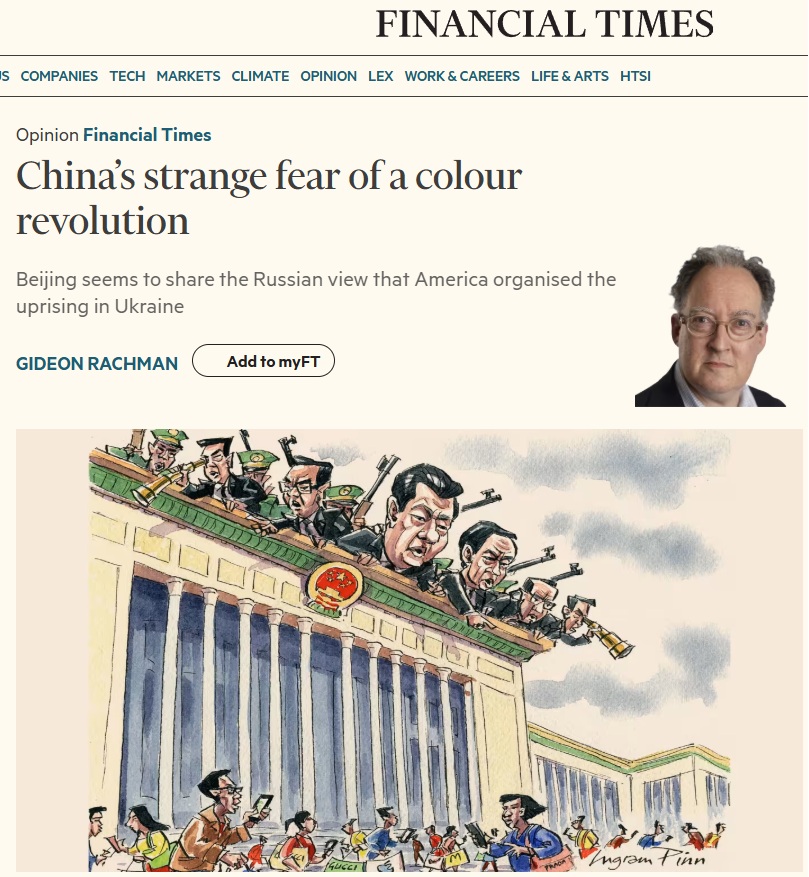
The CCP has captured the state so completely and overtly that nearly all policies and plans are announced jointly by the ruling party and the state.
CAMPAIGN MODE
Yet aspects of a revolutionary party mobilising the masses persist. Despite full control of the state, the ruling party continues to deploy high energy campaigns to sweep change, accelerate achievement of goals, eliminate dissent. Campaign style mobilisations 运动式治理 aim to whip up momentum, accelerate implementation, sweep bureaucrats beyond comfort zones, and often dazzle the wider world with China’s can-do speed and accomplishment.
Complete CCP control over media, and quick censorship of divergent opinion, enable mass mobilisation campaigns, clothed in patriotism, to generate a sense of common purpose and glorious results.[3] Campaigns generate the warm glow of communitas, of shared purpose, of speeding to success, simplifying goals and methods, shunting aside all doubts and complications. Acceleration is inherent to the way mass mobilisation campaigns work.
Acceleration is not unique to the CCP, it is inherent to modernity. In the US the Trump administration deploys speed to sweep aside accountability to Congress and the courts. Sheer momentum leaves dissenters struggling, on the fringes, to effectively raise concerns.
FALLING IN LOVE AGAIN
The speed with which China is carpeting Tibet with solar, wind and hydro tech is a calculated campaign. The extraordinary intensity of installations, and speed of implementation, leaves Tibetans bewildered, and the wider world awed by China’s resolve to decarbonise quickly, while the rest of the world dithers and prevaricates. Admiration for China’s campaigning speed is widespread.
Influential analyst Adam Tooze: “It is China’s story, more than any other, that defines our current horizon of expectation and the scope of our current possibilities. In 2024 China turned on a dime. What experts are now debating is whether we may be witnessing the moment at which emissions in China peak. If so, it would mark a true turning point in global climate history. The optimistic case hinges on dramatic developments in the Chinese green energy space in the last few years. In 2023 China added 293 GW of new wind and solar power capacity, just shy of the total solar and wind capacity installed in the USA, in new installation in a single 12 month period. Estimates suggest that even more renewable capacity will be installed in 2024. For two years in a row, China will install more green energy capacity than the rest of the world put together.”
Influential environmentalist Bill McKibben: “one superpower is going to be helping and the other isn’t. China first. Remarkable new details of a trend we’ve been talking about for years: the rapid spread of clean energy and its associated appliances not only in China but in all the countries increasingly in their sphere. Chinese firms have pledged at least USD 227 billion across green manufacturing projects. A high-end estimate approaches USD 250 billion. This surge of overseas green manufacturing investment is unprecedented; it now surpasses the USD 200 billion (in current 2024 dollars) invested by the US over four years of the Marshall Plan, at a time of similar American dominance of manufacturing in key industries. Right now, Beijing is offering cheap, clean power, employment, trade and a route to prosperity. Washington is offering tariffs, policy chaos, White nationalist memes and South Korean workers in shackles after a raid on an EV battery factory. This is no way to win the grand strategic contest of the 21st century. The atmosphere cares only about the concentration of carbon dioxide, and by that metric the Chinese equivalent of Sputnik and the Marshall Plan combined is clearly good news.”
There has been plenty of academic and policy thinktank enthusiasm for China’s green energy speed.[4]
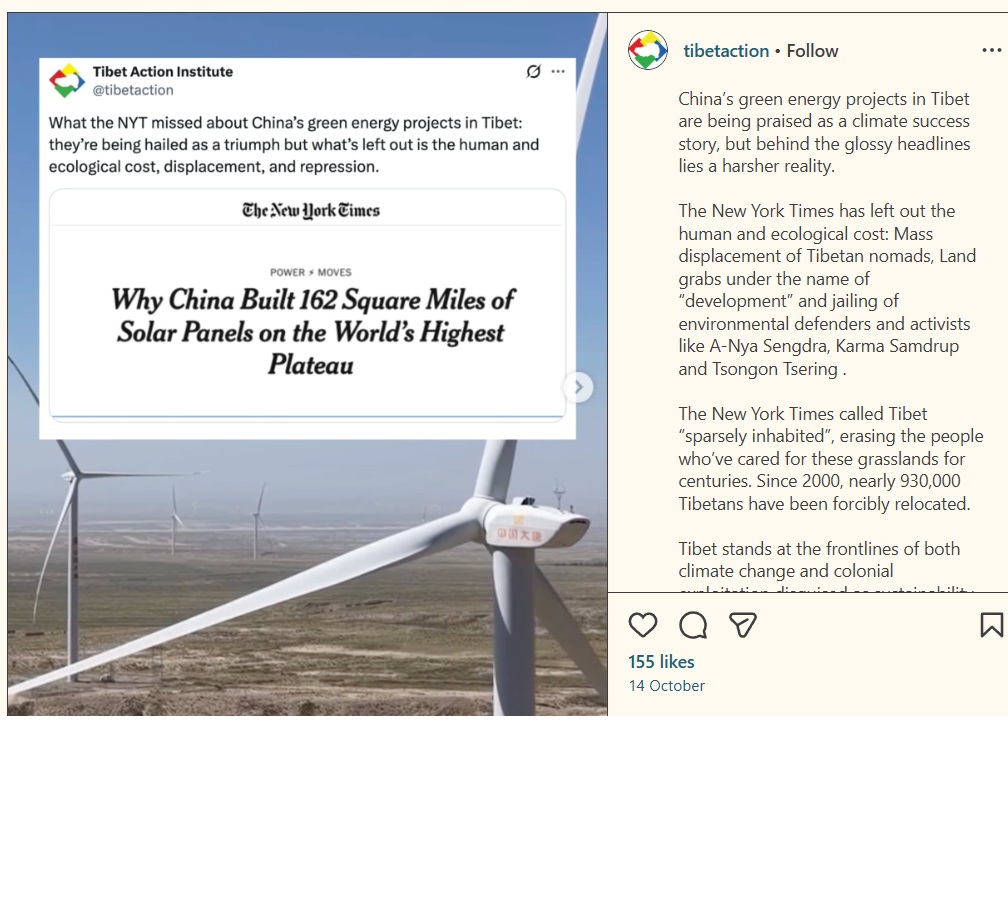
This enthusiasm for China’s crash campaign to cover Tibet in leather, actually in solar panels, wind turbines, hydro dams and ultra-high voltage power grids, in turn prompted journalists to report uncritically on those massive installations. In the NY Times Keith Bradsher wrote admiringly: “On the Tibetan Plateau, nearly 10,000 feet high, solar panels stretch to the horizon and cover an area seven times the size of Manhattan. They soak up sunlight that is much brighter than at sea level because the air is so thin. Wind turbines dot nearby ridgelines and stand in long rows across arid, empty plains above the occasional sheep herder with his flock. China is investing in cheaper solar and wind technology, along with batteries and electric vehicles, with the aim of becoming the world’s supplier of renewable energy and the products that rely on it. The main group of solar farms, known as the Talatan Solar Park, dwarfs every other cluster of solar farms in the world. It covers 162 square miles in Gonghe County, an alpine desert in sparsely inhabited Qinghai, a province in western China.”
Tibet Action Institute reframed this admiration, pointing out that “the New York Times has left out the human and ecological cost: Mass displacement of Tibetan nomads, Land grabs under the name of “development” and jailing of environmental defenders and activists like A-Nya Sengdra, Karma Samdrup and Tsongon Tsering . The New York Times called Tibet “sparsely inhabited”, erasing the people who’ve cared for these grasslands for centuries. Since 2000, nearly 930,000 Tibetans have been forcibly relocated. Tibet stands at the frontlines of both climate change and colonial exploitation disguised as sustainability. True climate justice means Tibetans – experts on their own land – must have the power to decide what development looks like. Green energy without justice isn’t progress.”
ACCELERATING TIBET, CAMPAIGN STYLE
China’s orchestrated mobilisation speed has a logic, honed in recent decades in similar campaigns for global domination of manufacture of electric cars, solar photovoltaics, wind turbines, power grids and hydro dams. Each of these campaigns not only mobilised media and officials at all levels, national and local, they also orchestrated private enterprises to grow into national champions capable of global domination.
This is the special strength of the party-state, fully deploying its entrepreneurial pursuit of glorious wealth generation, combined with developmentalist central planning for speedy campaigns to dominate each and every industry of the new industrial revolution.
The many who are fascinated by China’s orchestrated speed, planned at the highest level by party-state top level designers, fail to understand how and why China moves with such speed, including the engineered ”overcapacity” that floods not only China’s massive domestic market but markets worldwide, ruthlessly undercutting the prices of any and all competing manufactures, resulting in China’s monopoly market power dominance. Speed is of the essence. Coherent pushback is slow to get going, too late to be effective.
Enthusiasts for China’s green energy big build seldom look into how and why China launches campaign after campaign to wholly own green tech and thereby make China’s century, owning the Fourth Industrial Revolution.
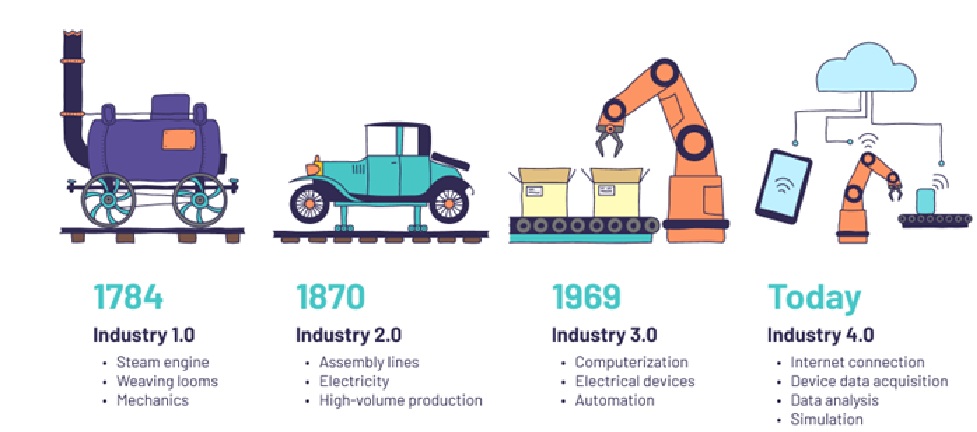

When Americans do look, they tend to assume China’s central party-state has failed, misguidedly overspent, over-subsidised key industries, especially solar panel production, because states should not and cannot pick winners; markets should be left to their own exuberance to decide how and when to invest. Not so. What the world labels China’s “over-capacity” is a feature of party-state campaigns, which grow into world dominance not only by investing in tech but also running price wars to grab market share, that drive German carmakers, American steel mills, Australian smelters into going broke. That is what campaigning achieves.
Tibet and Xinjiang are integral to these campaigns, obviously because they are large landscapes abundant in sunshine, wind, water (in Tibet) and coal (in Xinjiang); but less obviously because a rapid campaign overwhelms any dissent, rapidly makes frontier districts Chinese, as never before. This is especially so in central Tibet, which has never been securitised by mass Han Chinese settlement, willing to colonise what China sees as waste land.
National security is China’s explicit goal, ahead of energy security, for the massive capital expenditure required for the lower Yarlung Tsangpo hydro megaproject. Gone are the days when China tried to recruit Tibetans to the ranks of the CCP, or persuade Tibetans that China benevolently cares for their welfare. Three decades of the “aid-Tibet” program of pairing wealthy Chinese provinces and state-owned corporations with poor districts of Tibet, to foster industrial development, failed to achieve much.
The top ideologues of the party-state, such as Wang Huning and Pan Yue, are haunted by the fear that Tibet has never been secured and still remains largely beyond the frontier. In a worst-case scenario, extrapolated from a {faulty} reading of how the USSR disintegrated, Tibet’s potential as a security barrier is threatened, by following Soviet history, demanding independence. Chaos.
CAMPAIGN URGENCY
The situation, as seen from Beijing, is now urgent. China has achieved so much, and has so much more to protect, and grow further. Urgency generates campaigns. Campaigns move fast and break things, not by accident but by design. For over 80 years this has been more politely known as creative destruction, a familiar example being AI destroying so many repetitive jobs, both on the factory floor and in the office.

China has mastered creative destruction, unhindered by legacy industries that built products the old way, such as internal combustion car engines. China makes the 21st century China’s century, through creative destruction of the European Old World and the US New World.
Tibet is integral to these party-state top-level design goals. Obviously, Tibet has plenty of space, as the Plateau is the size of Western Europe; it has intense sunshine, abundant rivers, super large deposits of critical minerals, plenty of wind that blows through Himalayan gaps; all that is needful to ensure China’s insatiable high tech hubs get as much electricity as they will need.
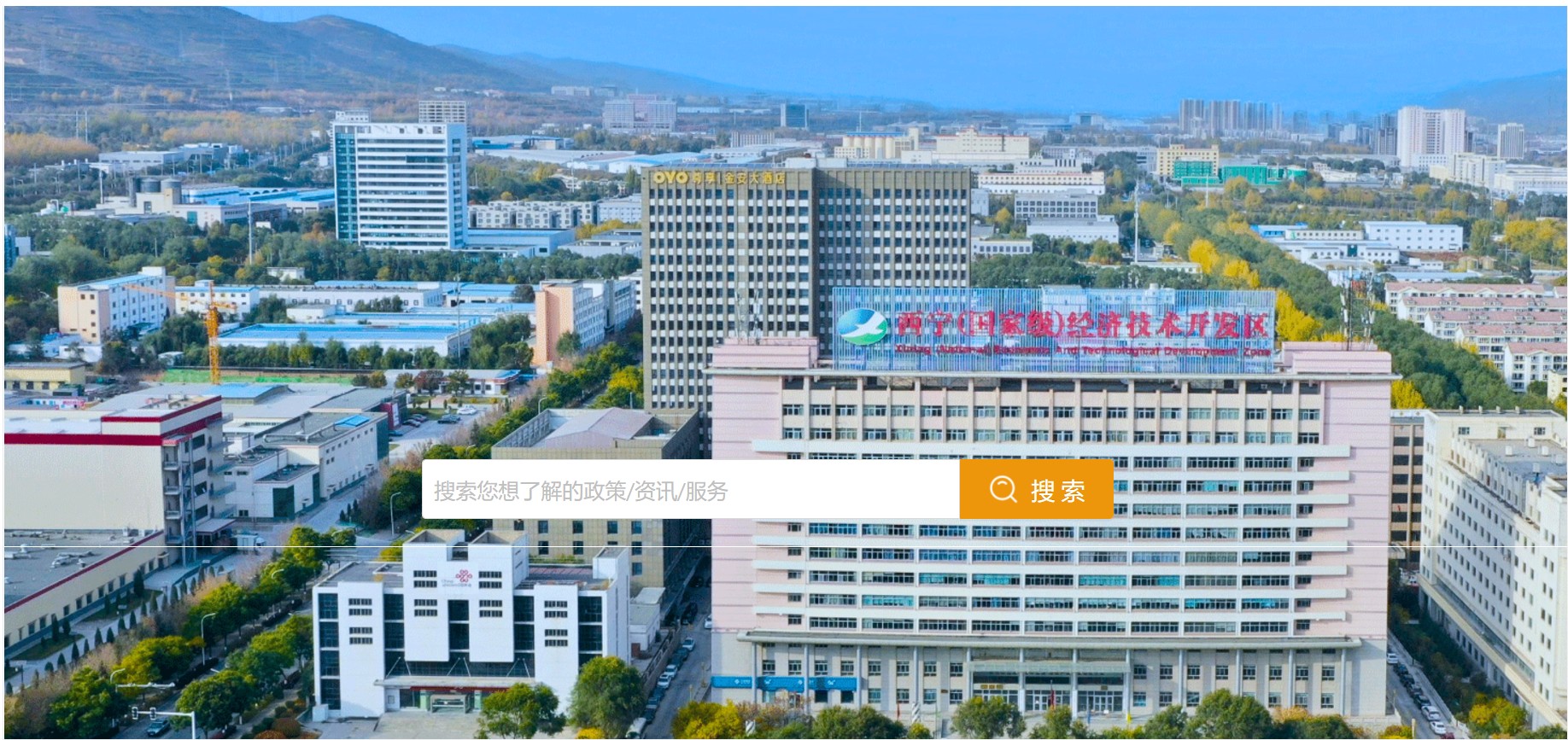
Less obviously, Tibet showcases China’s capabilities for conquering nature. Tunnelling, long-haul power grids, high speed railways and expressways, massive hydropower installations are among the masteries China displays in Tibet, admired by not only journalists but delegations from Global South hoping for similar nation-building projects. Speed is part of China’s unique selling proposition. If it can be built in Tibet it can be built anywhere.
ALL WE NEED IS DECARBONISE
China’s 15th Five-Year Plan is firmly committed to further intensifying China’s dominance of the full spectrum of new industries that creatively destroy the entire fossil fuel economy and their petrostates. China’s new electrostate is being engineered at campaign warp speed, further boosted by the “civil-military fusion” policy.
Fans of China’s speed usually focus on the headlines of green energy installation numbers, as they rise. They fail to notice China’s carbon emissions also continue to rise, not fall, and China has no plans to reduce emissions until 2030, the final year of the 15th Five-Year Plan. Fail to recognise China persists in building more coal fired power stations, often built, owned and operated by the same state-owned corporations doing the headlining green energy instals in Tibet. Failing to notice China persists in burning more coal than the rest of the world combined, Failing to notice that China’s role of the world’s biggest polluter directly drives the melting of Tibet’s widespread permafrost, which releases into the atmosphere huge amounts of methane, a gas that heats the planet far more than carbon dioxide.
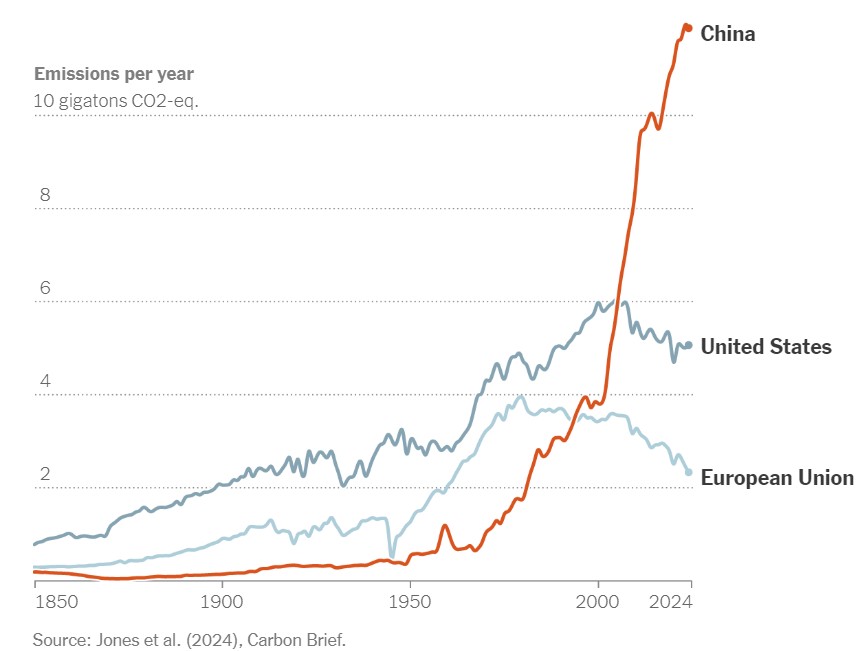
Enthusiasts for green energy fail to see a fundamental contradiction between energy consumption rising and rising at an astonishing rate, and the green build that will supposedly save us all from climate overheating. They fail to see China’s renewed commitment, in the 15th Five-Year Plan 2026 – 2030, to accelerating industrialisation, as contradicting green energy salvation. They fail to see endless growth, endless wealth accumulation, as a greater threat, that requires more than switching from coal to hydro.
COMPUTING POWER & SHOE LEATHER
The scale of China’s accelerating solar/hydro/wind/grid build (soon supplemented by pumped hydro and hydrogen) is so big it looks like covering the world, especially in Tibet, in leather.
Tibetans, as a civilisation, made the decision centuries ago that the solution to problems, obstacles and pain is not to cover the world in leather to protect feet from prickles, more practical is to train the mind to adapt to a prickly world, to learn the inner strength to handle the prickles and keep going.
With Tibet locked into China’s soaring electricity demand, China aims to beat the US in their locked race to dominate all new industries, especially AI. How do the Americans plan to tackle their soaring electricity demand? According to a Financial Times analysis: “So what is the total so far? With OpenAI’s Michigan project they now total 46 gigawatts of computing power. This seems a bit mad. These centres will cost $2.5tn to build, according to Barclays, to service an industry that still doesn’t turn a profit. But the maddest bit arguably is how much energy they will require once completed. Using Barclays’ 1.2 “Power Use Effectiveness” ratio, all these data centres — if they are all completed — would need 55.2 gigawatts of electricity to function at full capacity. If we also use Barclays’ rule of thumb that 1 gigawatt can power over 800,000 American homes, it means that these data centres will consume as much energy as 44.2mn households — almost three times California’s entire housing stock. So where is the energy all coming from? An AI factory operates as a single, synchronous system. When training a large language model (LLM), thousands of GPUs execute cycles of intense computation, followed by periods of data exchange, in near-perfect unison. This creates a facility-wide power profile characterized by massive and rapid load swings. Synchronized GPU workloads can cause grid-scale oscillations. The power draw of a rack can swing from an “idle” state of around 30% to 100% utilization and back again in milliseconds. This forces engineers to oversize components for handling the peak current, not the average, driving up costs and footprint. When aggregated across an entire data hall, these volatile swings — representing hundreds of megawatts ramping up and down in seconds — pose a significant threat to the stability of the utility grid, making grid interconnection a primary bottleneck for AI scaling. That’s presumably why the likes of the Michigan Stargate project will include lots of energy storage.”
SOLARISATION IS DEATH
In modern capitalist agribusiness commercial crops such as strawberries are grown on massive scale by first wrapping entire landscapes in black plastic, in winter, months before the crop is planted. Sunshine heats the black plastic so hot all organisms in the soil are killed, guaranteeing a sterile soil ready for planting. Each year a new layer of plastic must be laid. In agribusiness this is called solarisation.

Tibet is being solarised. The solarisation of Tibet, so admired by so many, rids Tibet of Tibetans. They are removed to distant frontier villages, shunted aside as incidental collateral damage, redundant, surplus to requirements. In China’s official media solar arrays are pictured with sheep grazing beneath as if drogpa pastoralist livelihoods are entirely compatible with China’s electrostate ambitions. In reality a few herders are employed to occasionally mow the grass with sheep, cheaper than mechanical mowing. Goats are not allowed, as they need labour intensive supervision to make sure they don’t eat too much. Yaks are not allowed: they are too big for the height of the solar panels.
Displacement of Tibetans from their lands is not new. For decades, in the name of watershed protection, biodiversity, national parks, poverty alleviation, efficiency, development and modernity Tibetans have been herded off their lands, bussed to prefabricated villages under intensive surveillance.
What is new is the pace of displacement, as the hydro projects, power grids, high speed railways, solar and wind farms grab much more prime production lands. This is the speed of campaign mode, to finally make Tibet China’s, locking Tibet into China as provisioner of water, electricity and minerals, all extracted, owned and priced by China.
For solar panels to electrify the world, solar installations would need to cover 450,000 square kilometres of land. If, as China plans, half of those instals are in Tibet, that means plastering half of the entire Tibetan Plateau with solar arrays, plus hydro dams, plus wind turbines, plus plus plus.
SIMPLE SOLUTIONS
As usual, we need to look beyond the headlines, beyond simple solutions to complex problems. The world has many problems, including carbon emissions. Tibet has many problems, including accelerating depopulation, widespread loss of land tenure, and permafrost melt.
Campaigning bedazzles with its velocity, that driving kinetic energy that gets stuff done. So unlike the endless argument, in the democracies, as to what might be done. Hence the admiration.
But mass mobilisation campaigning is not sustainable, and already, in planning the 15th Plan, the current spurt of construction will wind back mid-Plan.
If all that matters is that solar, wind and hydro replace coal as fast as possible, and all will be well, no other complications or longer-term consequences, then we can admire, even envy China’s campaign style. Yet the tension between short and long term reveals the core contradiction.
If we take a slightly longer term perspective, we see the reason for the campaign to pave Tibet and Xinjiang is the soaring electricity demand from the emerging industries that will dominate our lives, and enable China to dominate the global commodity and logistics chains.
STRATEGIC SILENCES
We think we know China’s propaganda, yet seldom notice that sometimes telling China’s story well 讲好中国故事 -China’s definition of propaganda-works so well it sparks fear and resistance. China stopped talking up its Made in China 2025 slogan for industrial dominance, because it scared too many, caused a backlash. Did the cancellation of the slogan cancel the program of dominating each of the industries of the new economy? Not at all.
China also quietly dropped as its goal Industrial Revolution 4.0; again it was too confronting for unipolar superpower USA when faced with its falling behind. Does this mean China no longer aims to make this China’s century, based on the economic strength of being “the world’s most complete industrial system.” 产业体系完备?

The 15th Five Year Plan is clear. Chin’s dominance of the industries that drive unending growth, productivity and wealth concentration must be -will be- made in China. If that requires intensified extraction from Tibet, that benefits all, including the Tibetans, while securing China from dangers and risks. Until the 15th Plan ends, China’s emissions will continue to rise, since any and all sources of electricity are needed to keep pace with demand.
SALVATION?
Short term thinking oversimplifies. Despoliation of Tibet is ignored. Breakneck paced electrification may not achieve the single objective of those fixated on decarbonisation as the sole goal. China’s campaign to plaster Tibet with PV, wind, hydro, pumped hydro, hydrogen and grids, no matter how fast it is done, is already too late to stop climate heating from tipping into its own uncontrollable speed, accelerating beyond human control.
That is what UN Secretary-General Guterres tells us, in October 2025: “Humanity has failed to limit global heating to 1.5C and must change course immediately. It is now inevitable that humanity will overshoot the target in the Paris climate agreement, with devastating consequences for the world. Let’s recognise our failure. The truth is that we have failed to avoid an overshooting above 1.5C in the next few years. And that going above 1.5C has devastating consequences. Some of these devastating consequences are tipping points, be it in the Amazon, be it in Greenland, or western Antarctica or the coral reefs.”
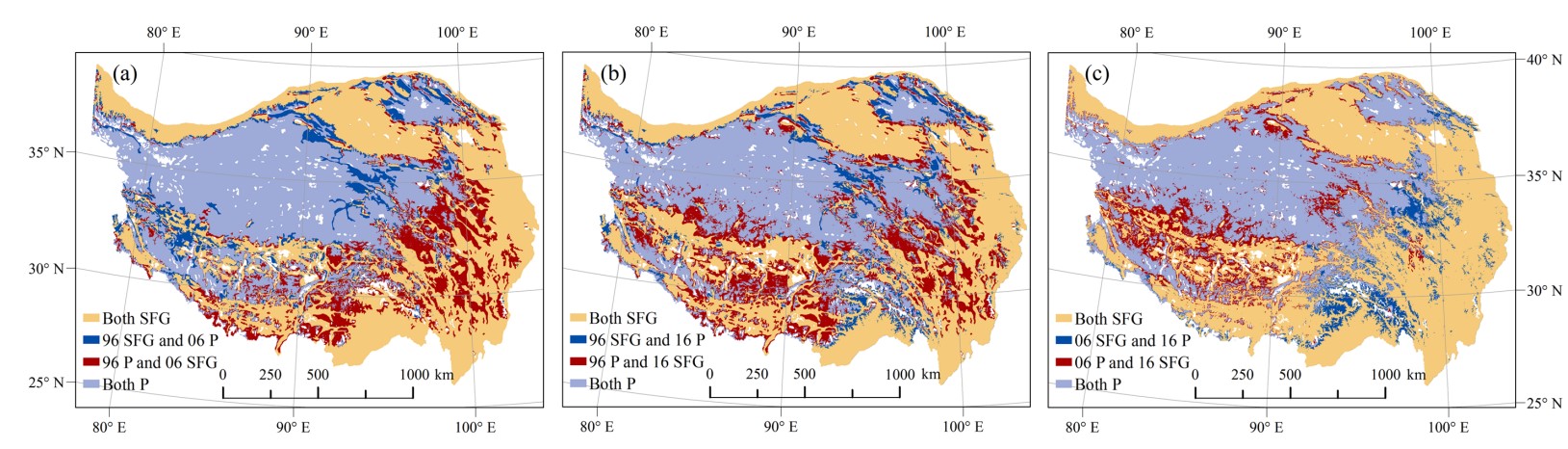
Even if Guterres is wrong, simplistic solutions to complex problems are seldom right. If decarbonisation is all that matters, we ignore the core contradiction. China will remain the world’s biggest polluter, for decades to come, with no plan to achieve net zero emissions until 2060. China continues to build coal fired power station, invests heavily in fossil fuel gas, nuclear power and turning dammed Tibet rivers into batteries. As the world’s biggest emitter China is directly responsible for the melting of Tibet’s glaciers that regulate and provide water year-round, for most of Asia. As emissions persist, the permafrosted areas of Tibet -twice the size of France- are melting away, which then emits methane to the air, a gas far worse in its climate impacts than carbon dioxide.
Complex problems need complex solutions, which include Tibet, now chained more than ever to China’s commodity chain. Guterres names the Amazon, Greenland, Antarctic and coral reefs as tipping points. If/when Tibet’s vanishing glaciers and permafrost emit methane at a rate that nullifies all the efforts of Europe to reduce emissions, we have a planetary tipping point. Electrification tips into electrocution, caused by “the world’s most complete industrial system.”

[1] https://www.sinicapodcast.com/p/killer-move-phrase-of-the-week
[2] Communique on the Current State of our Ideological Sphere, Notice from the General Office of the Central Committee of the Communist Party of China, April 22, 2013
[3] Tyrene White, “Postrevolutionary Mobilization in China: e One-Child Policy Reconsidered,” World Politics, Vol. 43, No. 1 (1990), pp. 53–76;
- Elizabeth J. Perry, “From Mass Campaigns to Managed Campaigns: Constructing A New Socialist Countryside,” in Mao’s Invisible Hand: The Political Foundations of Adaptive Governance in China, edited by Sebastian Heilmann and Elizabeth J. Perry (Cambridge, MA: Harvard University Press, 2011), pp. 30–61; Kevin J. O’Brien and Lianjiang Li, “Campaign Nostalgia in the Chinese Countryside,” Asian Survey, Vol. 39, No. 3 (1999), pp. 375–393;
- Kristen E. Looney, “China’s Campaign to Build A New Socialist Countryside: Village Modernization, Peasant Councils, and the Ganzhou Model of Rural Development,” The China Quarterly, No. 224 (2015), pp. 909–932
- Huarong Ch, Campaigns, Bureaucratic Cooperation, and State Performance in China, T he China Review, Vol. 21, No. 3 (August 2021), 55–87
- Haoyue Zhou & Jing Vivian Zhan, Repenetrating the Rural Periphery: Party Building Under China’s Anti-Poverty Campaign, Journal of Contemporary China, 02 Oct 2023
- Yue, Jiahua, The Logic of Ideological Campaigns Under Authoritarianism: Evidence from China (August 25, 2017).: https://ssrn.com/abstract=2772497or http://dx.doi.org/10.2139/ssrn.2772497
[4] Ligang Song Yixiao Zhou eds, The Great Energy Transformation in China, ANU Press 2026
Dan Wang, Breakneck: China’s Quest to Engineer the Future, 2025
Barbara Finamore , Will China Save the Planet? Polity, November 2018
China Council for International Cooperation on Environment and Development (CCICED), Promote High-Quality Development with Circular Economy, SPS Report 2025