CHINA’S HOME ON THE RANGE

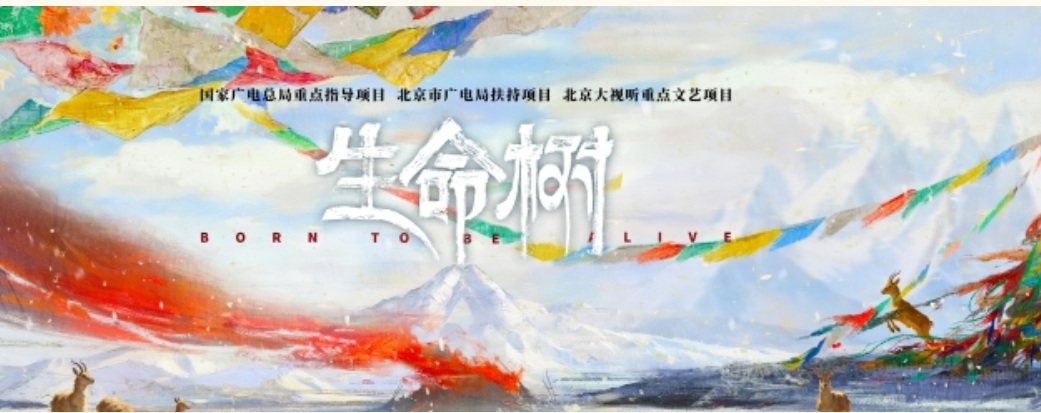
40 enchanting, addictive, dramatic episodes set in remote Tibetan lands have been a 2026 big hit on TV in China. Tree of Life/Born to be Alive -both titles are used in English- has it all -a feisty heroine, violence, justice, adorable wildlife, stoic Tibetans, a big Han Chinese cast including very famous actors, plotlines driving forward, the triumph of good party-state over evil corruption and murderous poachers. Above all it has drone cam gliding across the “no-man’s land” 无人区of Achen Gangyab, where TAR, Qinghai and Xinjiang meet. Tree of Life 生命树 / Sheng Ming Shu with its curvaceous landscapes was broadcast on TV and binge watched on the iQiyi streaming platform. But basically it is a police procedural, spread over 18 years.
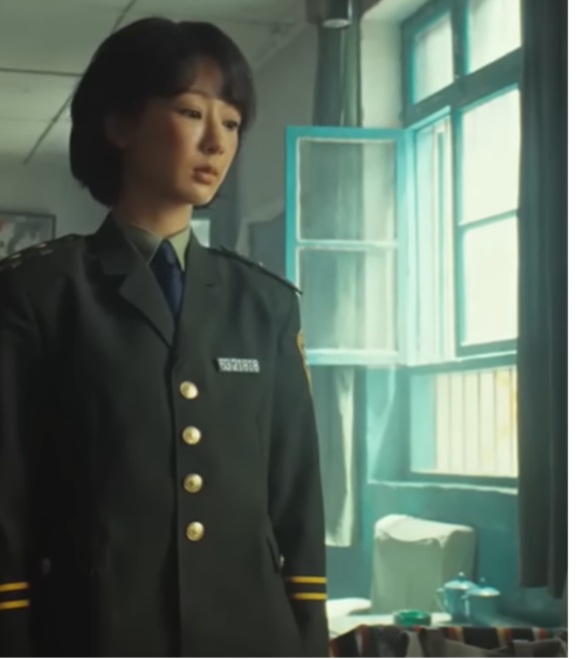
Tree of Life /Born to be Alive, is the one with the lot, a refreshing break from the torrent of Core Leader slogans, so many they get bundled into the “two unwaverings”, “four critical deficits”, “Four Comprehensives’, “Five in One”, etc.
Now all 40 eps are accessible worldwide on YouTube. with English subtitles. Already, among Chinse audiences, it has triggered strong emotional bonds with the fast flowing, nimble chiru antelopes racing to their wolf-free birthing grounds. A tourism boom, engineered by party-state propaganda, is imminent. Tourism may seem a personal choice, but in China is designed top-down as integral part of the ethnic unity assimilation campaign.
Tibet is reborn in Chinese eyes, especially the highest, coldest, barest of Tibetan landscapes; reborn as desirable, consumable, home to the cutest critters you ever did see. Such a big hit with audiences Tree of Life now spins out a stream of further product, more storying, more imitations, more destination management upgrades, more behind the scenes making-of docos, more merch. Adorable antelopes are transforming remote alpine deserts into new forms of colonisation, even though the hordes of tourists the Qinghai government now expects are unlikely ever to see any actual chiru, too fast, too nimble for the scenic shot.

The star is Yang Zi, so famous she has more than 60 million followers on Chinese microblogging platform Weibo. Her topic on Douyin has exceeded 150 billion views making her the first and only post-90s actress to do so. She started her acting career at the age of six.
RUPTURE TO RAPTURE
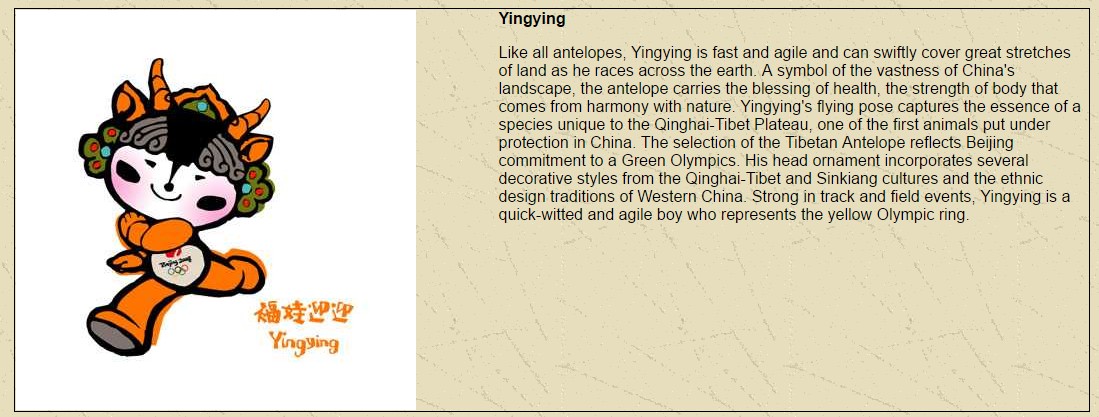
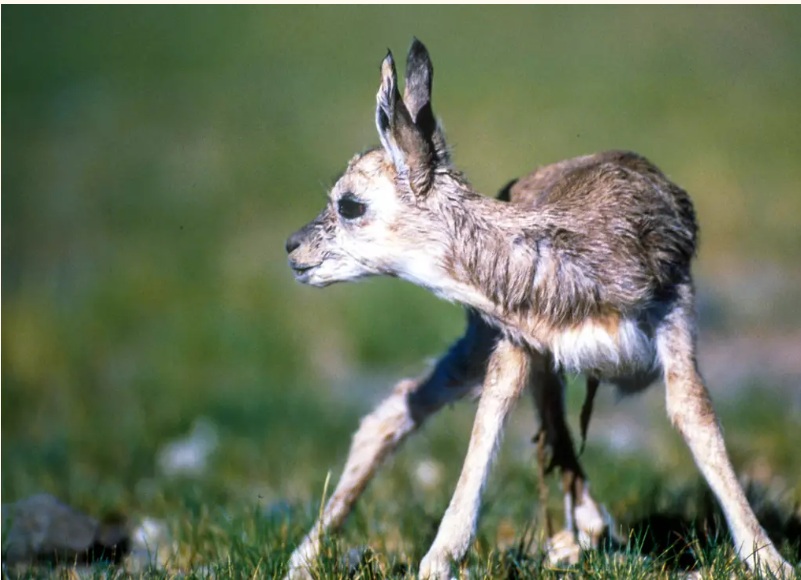
Throughout the saga the actual driver moving the story forward, transforming an obscure alpine desert into a worldwide campaign of salvation, is deep emotional connection, a transcendental identification with the nimble pregnant chiru གཙོད་, migrating far westwards to safely give birth. The newborns still wet from mother’s womb, their soulful eyes, on the ground struggling on weak legs to stand and suckle: these are the images that went global, along with the piles of butchered chiru skinned, carcasses picked over by predators animal and human.
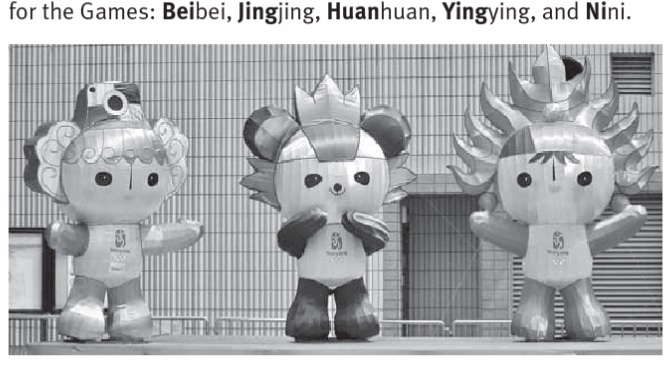
These were the images that went viral, and halted the shahtoosh trade, made the chiru the iconic animal of Tibet, so much so that a cute cute cute Ying Ying meme became one of the brands of China’s Olympics, staged in 2008.
Colonisation by mass tourism, bringing tens of millions of Han domestic tourists to witness historic places, as pilgrims honouring heroes of the past, is not new in China, but in Tibet until now it is only in Lhasa -63 million domestic tourist arrivals in 2025- that is overwhelmed by tourists. Now Tree of Life directs the tourist pilgrim gaze deep into the no-man’s land, to the Tibetan red heroes who so manfully saved the antelopes from being rapidly slaughtered to extinction.
At the heart of this dramatic rebirth is how Tibetans are depicted, how the actual events of the 1980s and 1990s are rewritten to retrospectively make the state the actual protector of charismatic wildlife, the Tibetans merely agents of state power. Take a look.[1]
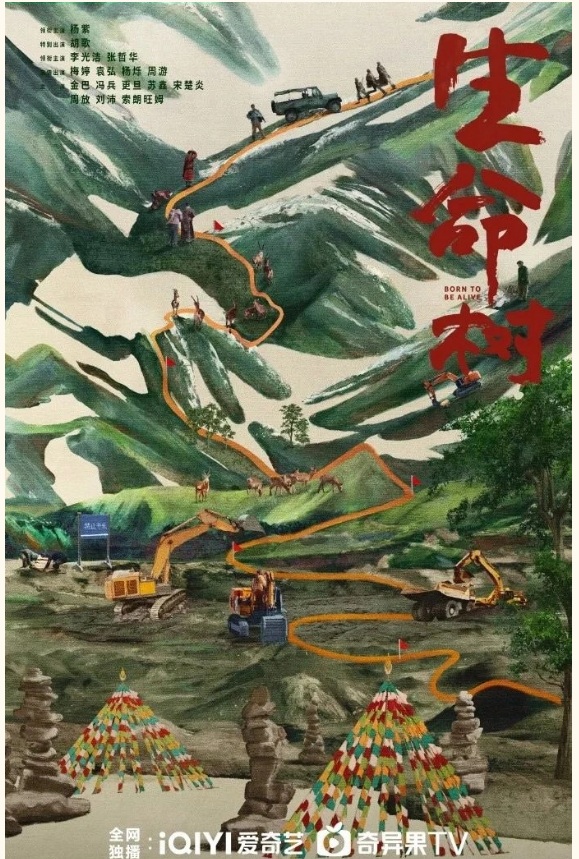
“Telling China’s story well”, 讲好中国故事 -the core definition of propaganda- can successfully attract mass audiences in China, triggering mass tourism, which then populates “no-man’s land” with hospitality industry infrastructure and employment. The Tibetans murdered for protecting chiru གཙོད་ antelopes are remade as saints of red gene patriotic tourism, their shrine a destination for patriotic pilgrims.
The problem, for the propagandists who generated Tree of Life/Born to be Alive, is how to embrace the passionate global concern for the endangered chiru གཙོད་ while downplaying the agentic heroism of the Tibetan chiru protectors, who risked their lives, during the absence, in the critical decades of chiru endangerment, of any party-state interest in wildlife protection beyond bureaucratic formalism. Negotiating this contradiction is tricky.
The villains -the poachers- remain largely faceless, brutal but fleeting; questions of their desperate poverty or their ethnicity unnamed. But the heroes cannot be effaced. However on screen many supportin actors are wai, nonHan outsiders, Tibetans, and thus cannot simply be made China’s heroes. How to depict these hard men who implement what women worldwide yearn for: halting the slaughter of chiru, tsǿ,?
Forty episodes make it an epic. By now, this epic story has been told many times, by movie directors, journalists and passionate wildlife advocates. Telling the story of these competing story tellers makes this post epically long, not only to untangle competing narratives but to reflect on contemporary China’s strategy, designed and implemented from above, of kindling desire, among China’s urban masses, to become authentic individuals by embracing Tibet. Much unpacking ahead.
ENGINEERING PASSIONATE IDENTIFICATION WITH ADORABLE WILDLIFE
China’s propaganda machine understands it is in the business of engineering emotions, but it is much easier to generate negative emotions, hatred of enemies within and without. Hate Japan. Contempt for the failing US of A. Wolf warrior nationalist fury is easy to stir up, harder to damp down.
What prompts the long upcountry annual migration of the female chiru གཙོད་, gtsod, pronounced tsǿ, is the presence of wolves in the lower pastures, far fewer in the frozen upcountry. However, since the 1980s human wolves -gold miners and hunters- have followed the chiru, circling them by jeep, then by night shooting as many as possible. If, as audiences worldwide so fervently hope, the chiru are to be rescued from massacre, negative emotions achieve nothing. So the Tibetan heroes of chiru protection remain heroes.
Harnessing the emotions of protectiveness, eliding statist power with protection of vulnerable baby animals, is hard work, little wonder it took 40 episodes, a big budget and seven years to complete. Perhaps these days it could be done much quicker by AI?
Sparking positive emotions and the “positive energy” required of all media, is readily achieved in short online videos, the prominent digital format of deeply moving 深受感动 gandong-themed short videos 短视频duan shipin.
Seldom has this been engineered at length, 40 episode length. But if the objective is to convert love of mother and baby chiru གཙོད་, gtsod, pronounced tsǿ, into love of nation-state, while all the historic heroes are Tibetan, this takes a great effort. Enter the pistol packing all-Chinese heroine in police uniform, the star of all 40 episodes.
C-DRAMA: CHINA’S TELENOVELA INDUSTRY
In C-dramas, 40 episodes each 45 minutes, are not unusual. Chinese television dramas 中国电视连续剧; zhōngguó diànshì liánxùjù or simply C-dramas, attract enormous audiences. Wikipedia: “China produces the most television drama episodes per year and has the largest number of domestic television viewers in the world.”
Most C-dramas are set in an idealised past, lots of cosplay, gorgeous Hanfu costumes. Tree of Life is different: this is the gritty reality of China just yesterday, over a period of 17 years.
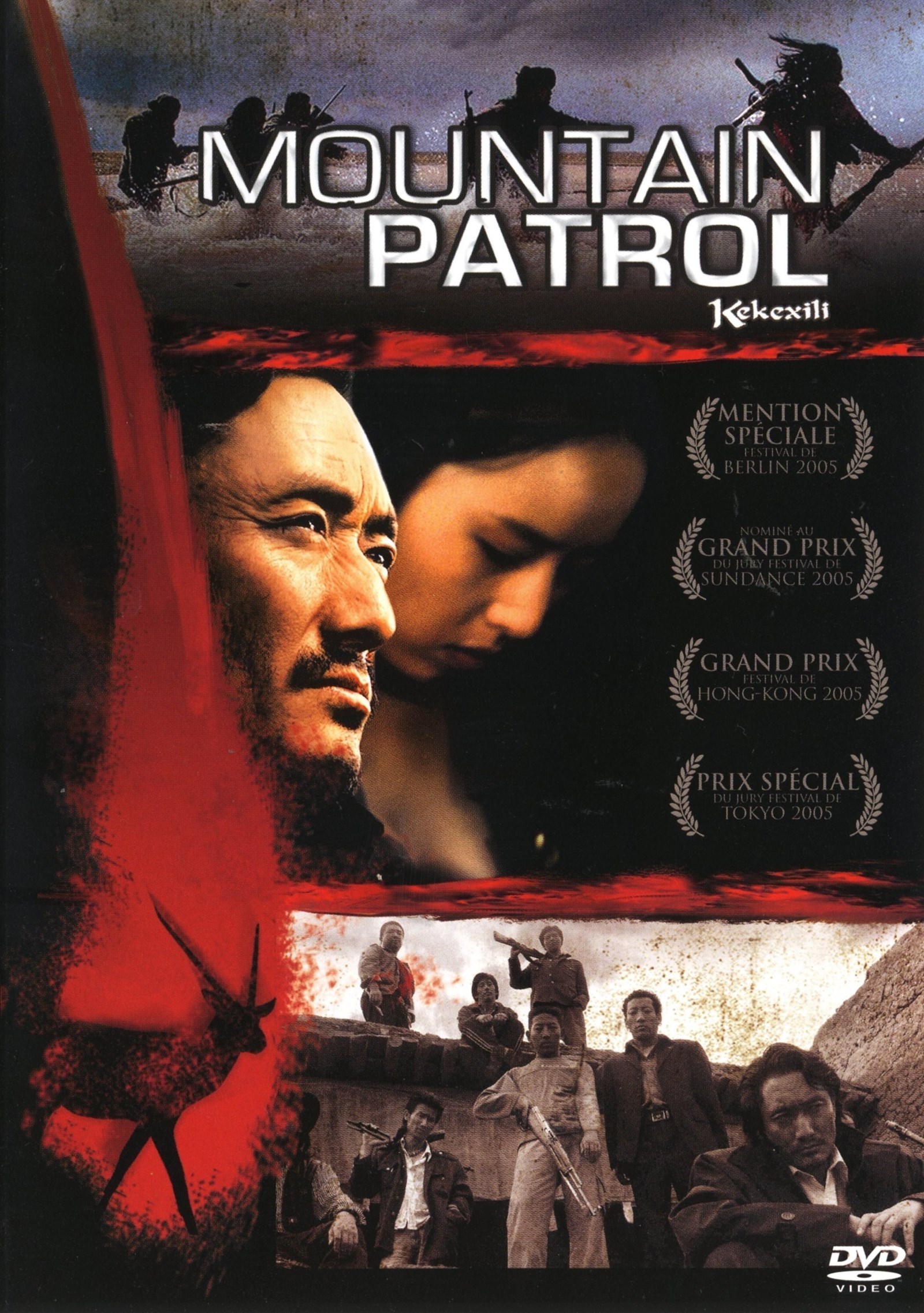
As a 40 episode series, each ep is immersive, something everyone could talk about, offering a world no-one knew exists, and better still it is in China. Both landscape and lead characters were lovable, the camera loved them all, a 188 day shoot, big budget, especially when compared to the gritty 2004 movie Kekexili: Mountain Patrol, telling the same story. According to the National Radio & Television Administration, the Tree series planning began in 2019, seven years to complete. NRTA also says : “The Tree of Life” is a key creation project guided by the State Administration of Radio and Television and the Ministry of Public Security.”
PERFECTING PROPAGANDA
Having succeeded in making it a binge viewer, official China then staged a self-congratulatory event, attended by stars of Tree of Life, who neither spoke nor was their presence captioned. Star of the11 March 2026 “symposium” was Cao Shumin, deputy director of the Central Propaganda Department, secretary of the Party Leadership Group and Director of the State Administration of Radio and Television. The message: “By telling the touching story of three generations of guardians who sacrificed their lives to protect the pure land of Sanjiangyuan, the play vividly interprets the important concept of ‘lucid waters and lush mountains are mountains of gold and silver’, and fully embodies and practices Xi Jinping’s thoughts on ecological civilization. “The Tree of Life” is a benchmark work that sincerely writes about ecological protection and vividly shows the construction of ecological civilization. It is a good drama that is carefully crafted with heart and soul. It is the result of the collaboration and joint efforts of many parties. It is both ideological and artistic, and has a strong appeal.
“Firstly, we must draw inspiration from the great endeavours of the new era to explore themes and identify suitable subjects. By keeping pace with the times, we should present a comprehensive and panoramic view of the changes of the era, China’s progress and the aspirations of the people. We must transform this vibrant vitality into fine dramas and masterpieces, deeply integrating grand themes and spiritual messages with local customs and traditions, thereby providing audiences with more compelling and vivid works rooted in reality.
“Secondly, we must tell stories sincerely and in a down-to-earth manner. We must meticulously refine scripts, immerse ourselves in real life and root ourselves among the people, sparing no effort in the painstaking and arduous work required to ensure that the ‘foundation of a drama’ is solid, nuanced, authentic and tangible. By starting with small-scale narratives and ordinary characters, we must capture the essence of everyday life. Through vivid audiovisual language, innovative narrative techniques and compelling character portrayals, we shall convey profound ideological themes and unique contextual significance.
“Thirdly, we must forge masterpieces with an attitude of relentless refinement and the pursuit of perfection. We must further hone our skills in narrative structure, aesthetic expression, acting and technical effects, demonstrating steadfast determination and pouring our hearts and souls into creating more television dramas that resonate, spread widely and stand the test of time.”
In every way the 2026 remake supplants the 2004 movie original, and prior to that the intensive 1990s reporting by Chinese and foreign journalists that made the indiscriminate slaughter of Tibetan antelopes a global scandal. A decade of journalists reporting vividly from the remotest, roughest location, after accompanying the Wild Yak Brigade on patrol, witnessing Tibetan courage, determination to protect the fast dwindling antelope population, against all odds. That decade of frontline journalism leaves us with a yardstick to assess today’s Tree of Life telenovela embrace of a treeless alpine desert which is miraculously China’s. Who knew?
BACKSTORY: HOW THE WORLD CAME TO KNOW
How did “the king of dzi” become the heroes of Tibetan environmentalism?
Tree of Life says it is based on real events, and does include a city based journalist tagging along on patrol, largely as a plot device, to do exposition, bringing along an audience who have never heard of Achen Gangyab, Hoh Xil, Kekexili, Chumarleb, or any of the locations named. This requires the journalist to be a bit of a bumbler, so we can travel alongside and discover. In reality the reporters who went out on actual patrols not only chose the danger of being shot at by poachers, but all the hardships of extreme cold, endless boggings, running out of petrol, out in the badlands for weeks, sleeping rough, same as all the Tibetans.
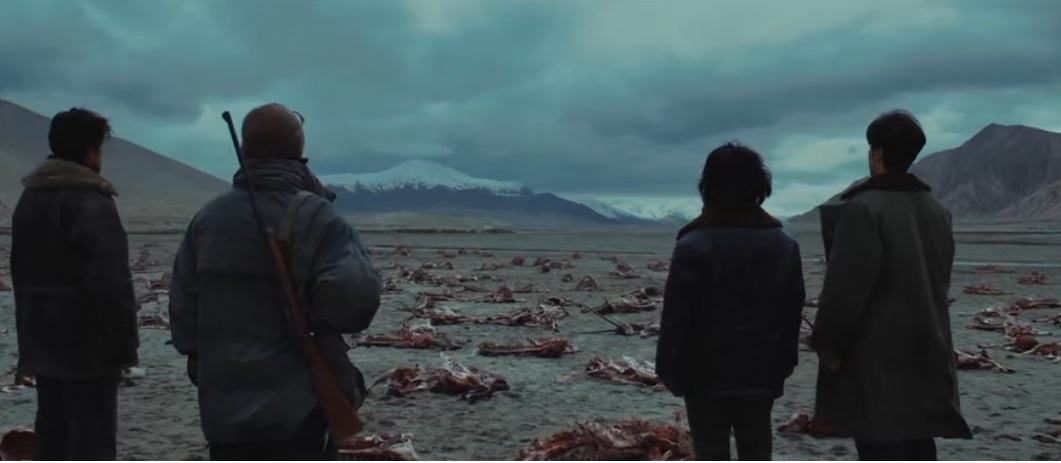
Not only does their reportage verify how a handful of Tibetans confronted the killers, and saved the chiru གཙོད་, gtsod, pronounced tsǿ,藏羚羊 zànglíngyáng antelope from extinction, giving us eyewitness reality checks on the Tree of Life series; their immersion in Tibetan ways give us rare insights into Tibetan minds, so rarely found among Chinese sources.
To get authentic stories they had to live as the Wild Yak patrollers lived, adopt a shared willingness to endure all hardships, without limit, including death. So seldom can we find writing by Han Chinese that wholly embraces Tibetan points of view. They came to witness the chiru, to fall in love with animals that seem dainty yet are strong, resilient, resourceful, collective. Via their passion for chiru they came to deeply respect the few human protectors.
Today the Central Propaganda Department does its homework, convenes focus groups, monitors citizens emotional lives. The chiru story is a women’s story of love, solidarity, mutual aid, maternity. So the leading role in Tree of Life had to be a woman, a Han Chinese woman, in the uniform of the nation-state, improbably out there in the waste lands (as China habitually calls them) on patrol with all those Tibetan men. That is why the gifts of the benevolent Chinese state to the backward Tibetans explicitly includes tampons. How generous, how considerate. Central Propaganda Department knows how to play the emotional card 打感情牌 dǎ gǎn qíng pái.

If we look from afar, through the gaze of Beijing, mass domestic tourism can be turned on, like a firehose, directed at remote frontiers where there is nation-building work to be done. Beijing has a master plan, finance, strategy and curriculum direct the tourism firehose to the Tree of Life landscapes, urging tourists to make the pilgrimage of homage to the red pioneers who tamed the frontier. That reduces Tibetans to be passive objects of the tourist gaze?
In the words of Li Qing, Chairperson of the Qinghai Provincial Federation of Industry and Commerce, “the TV drama *The Tree of Life* 生命树 has brought Qinghai’s snow-capped mountains and grasslands into the hearts of hundreds of millions of viewers. This drama is certainly worth watching; it showcases the faith and steadfast commitment of generations of highlanders who have safeguarded the ‘Water Tower of China’ with their lives. To ensure this panorama becomes Qinghai’s new calling card, attracting visitors from all corners of the globe, we must work together. This devotion to the motherland and reverence for the green ecosystem are precisely the deepest spiritual essence of Qinghai.”
The master plan extends the grasp of the state to remote frontier districts, as a patriotic pilgrimage, delivering development and prosperity to the isolated ethic folks on the frontier. The Ministry of Culture and Tourism explains: “The Government Work Report proposes stepping up differentiated policy support, vigorously advancing the initiative to revitalise border areas and enrich their people, and promoting the revitalisation and development of former revolutionary base areas, ethnic minority regions, border areas and cities with depleted resources. In recent years, localities across the country have actively explored revolutionary heritage resources, promoted their transformation and utilisation, and consistently highlighted the appeal, appeal and influence of revolutionary culture, thereby driving the sustainable development of revolutionary tourism. China Tourism News on how to preserve and promote revolutionary culture and drive the quality upgrade of revolutionary tourism. Revolutionary tourism serves as a vehicle for disseminating revolutionary culture, a platform for ideological and political education, and a cultural tourism product that can meet the spiritual and cultural needs of the people. We must focus on four key concepts: ‘authenticity of content, educational impact, service capacity, and industrial driving force’. Red tourism should be deeply integrated into youth education and the social education system. We should integrate red resources with rural revitalisation, cultural and creative industries, and distinctive accommodation and dining options, enabling revolutionary base areas to generate truly sustainable, comprehensive benefits.”
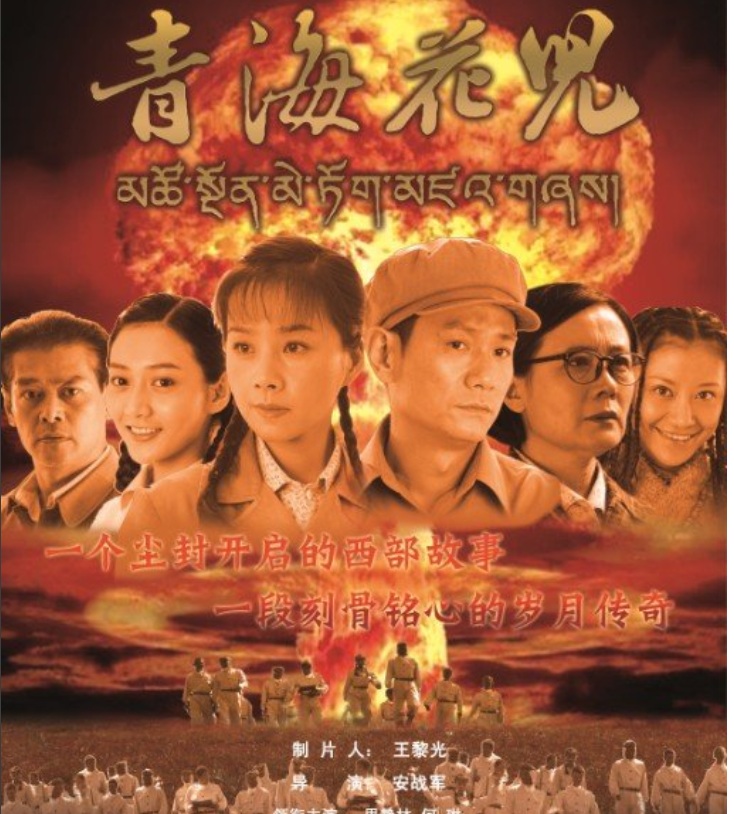
This is not the first time China has tried to make Amdo/Qinghai a red tourism site, nor the first to stage a multi-episode drama of red heroism. In 2012, Xi Jinping’s first year in command, 青海花儿 Qinghai Flowers, a 29 episode drama went to air, celebrating the red heroes who designed and built China’s first nuclear fission and fusion bombs, in Tibet. The “flowering” nuclear explosion was the result. The long term result is that “Atomic City” on the shores of Tso Ngonpo/Qinghai Lake is currently the top red tourism destination in Tibet.
THE PAST IS ANOTHER COUNTRY
There is big contrast between the 2004 and 2026 movie versions, in how they were made. The film makers for 2004 were almost as broke as the Tibetans they were filming, and struggled to endure a much longer shoot than anticipated. Many film crew bolted. It says much about Lu Chuan, the director, that filming was completed: “The shoot of Mountain Patrol (Kekexili) has run into tragedy and trouble: Alex Graf, the producer from Columbia Pictures, has just been killed in a car crash; most of the crew are suffering from altitude sickness, with nosebleeds and headaches that make sleep almost impossible. Many have been flown back to Beijing for hospital treatment, and those who remain have told young Chinese director Lu Chuan that they are going on strike since his three-month schedule has already overrun, with a third of the film still to shoot and winter closing in. The situation looks hopeless, but with a determination worthy of Werner Herzog at his most ambitious or Francis Ford Coppola on Apocalypse Now, Lu has resolved to finish his film. Above all, Lu says, it was the real life subject of Mountain Patrol (Kekexili) that inspired him to persevere.”
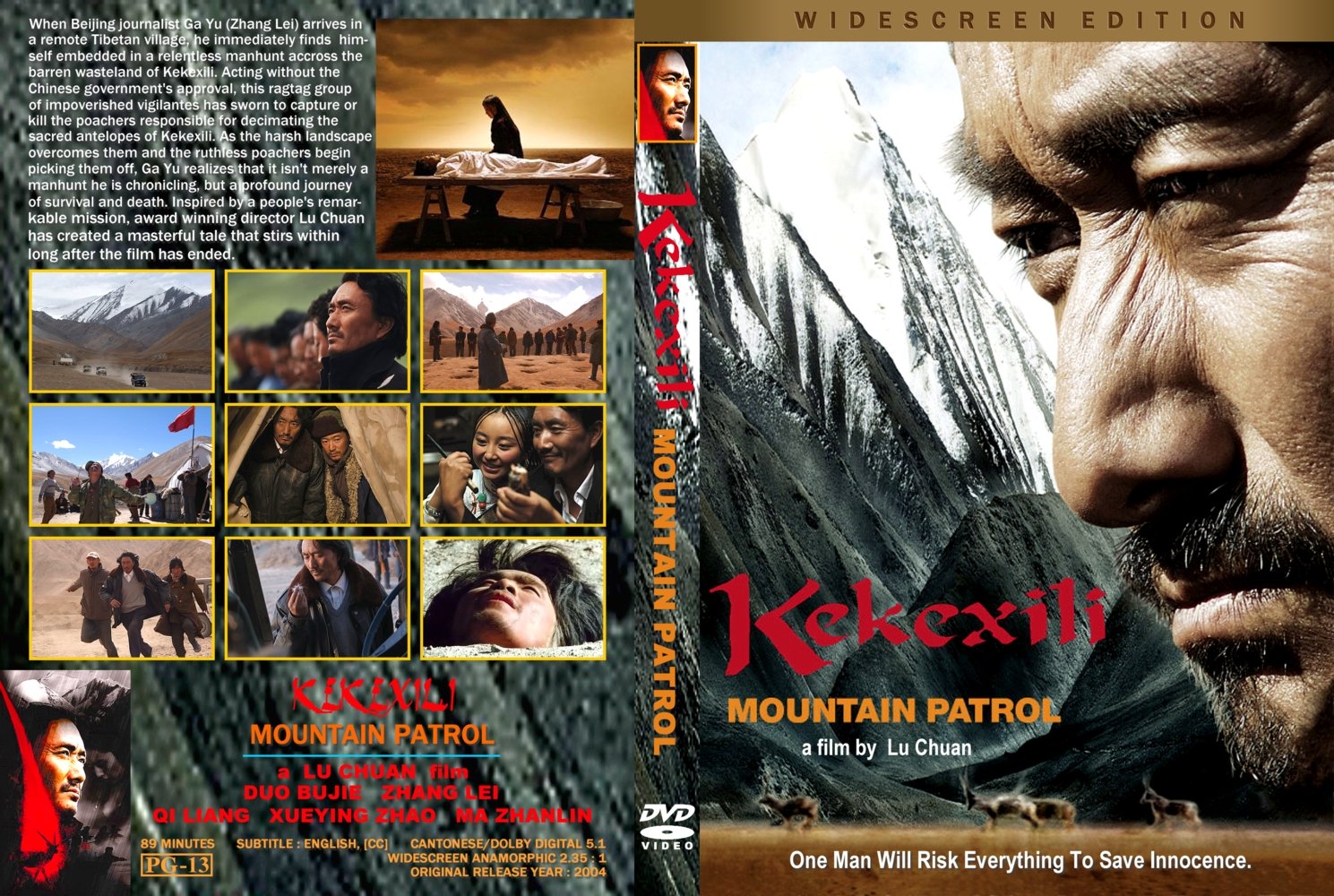
Interviewed by Sight and Sound magazine, director Lu Chuan said “There’s a meagre amount of oxygen, it’s very cold, the environment is wretched and the roads are treacherous. We never had enough food, and what little we had was of poor quality. An outsider could never imagine how cruel and hard life is there. We had planned to shoot on location for three months, but we ended up staying there for more than six. Towards the end of the shoot sickness and defections had reduced the crew of 108 to around 50. In Kekexili a human life is so small and fragile. There’s a hopeless feeling out on the plateau that you can’t fully imagine unless you’ve been there. It can often seem as if the mountain patrol faces an impossible task: ten people chasing poachers across an area of over 45,000 square kilometres. It can seem desperate — you catch one poacher but another one runs away, then when that one is caught the first one has escaped. I came to share in that hopeless feeling; I thought we wouldn’t ever finish the film and would die there.”
The precarious semi-official status of the patrollers then made Lu Chuan’s filming just as officially precarious, eventually resolved by gradually cultivating guanxi connections with uneasy local cadres. “It was uncertain if we’d be allowed to film there at all. I became friendly with people who worked for local environmental-protection organisations and with the original mountain-patrol members and finally the Administrative Bureau of Kekexili Nature Protection Area gave us its permission and support. Before I wrote the script I had followed the mountain patrols in Kekexili for months and after that I spent another three or four months scouting locations with my cameraman and art director. At the time there were three mountain patrols, two of which were unofficial, nongovernmental organisations, and the local government was uncomfortable because they knew our story was based on a nongovernmental patrol.”
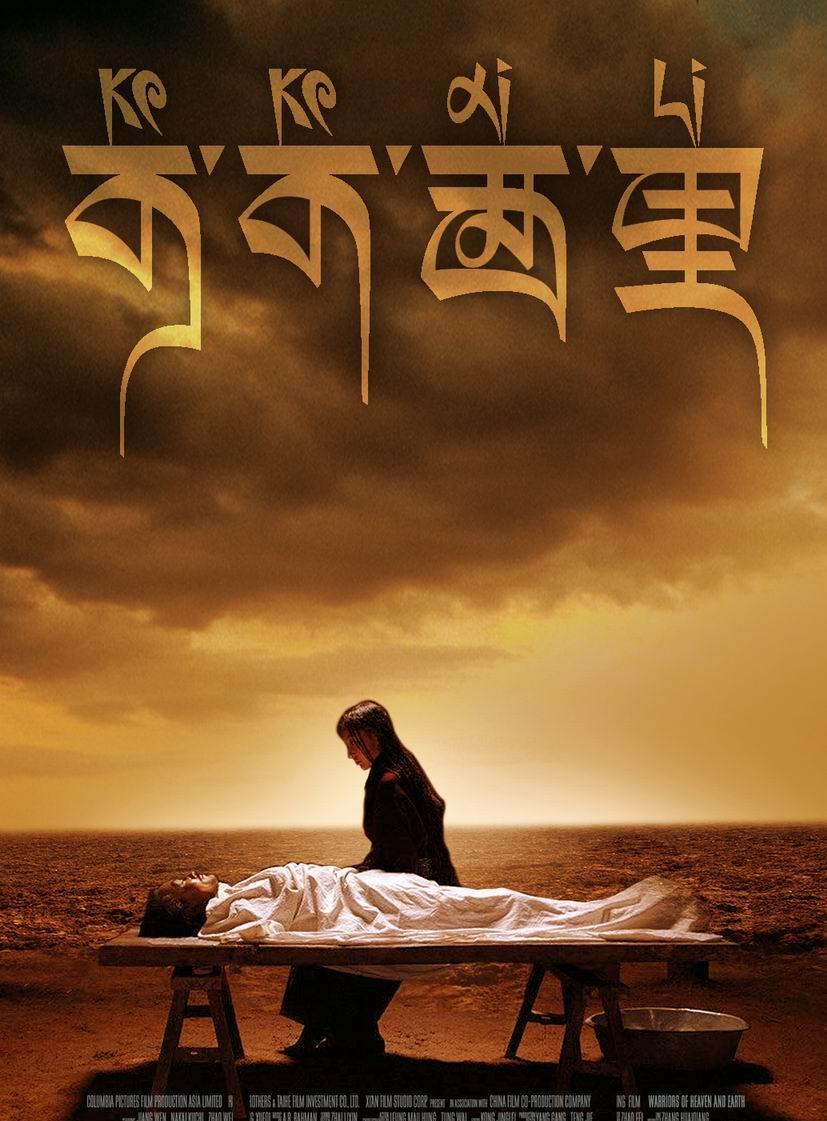
If the 2004 film had not been so popular probably director Lu Chuan and the local government cadres might have been in trouble; but audiences flocked in. A 2014 remake is a macho action hero movie. The world has since changed.
The bottom line for the 2026 remake is not to see through Tibetan eyes, but to enchant us with the treasures of China’s far frontiers, and convince us the state was there all along, out on patrol, facing off against the bad guys, in a 17 year time jump in later episodes, to also bring to justice illegal gold miners, coal miners despoiling these pristine lands which are now there to be experienced first hand. Not only is the state right on the case of biodiversity protection, it also benevolently provides the Tibetans with medicines, tampons, access to modernity. The party-state does both development and environmental protection, and acknowledges the tension between them. So refreshing, so untrue to the actual history. Why does the official propaganda machine name tampons in its list of gifts of modernity? As we will see, the chiru story resonated most strongly with women across China, who then told the world. They were influencers, ahead of their time.
TIBETANS AS EXTRAS
Throughout this drama Tibetans make fleeting appearances, whizzing past on a tractor cheerfully singing. Not only does this add local colour, their brief but frequent onscreen presence authenticates the entire series as real, actual. These glimpses of local customs and traditions put flesh on the bones of propaganda slogans.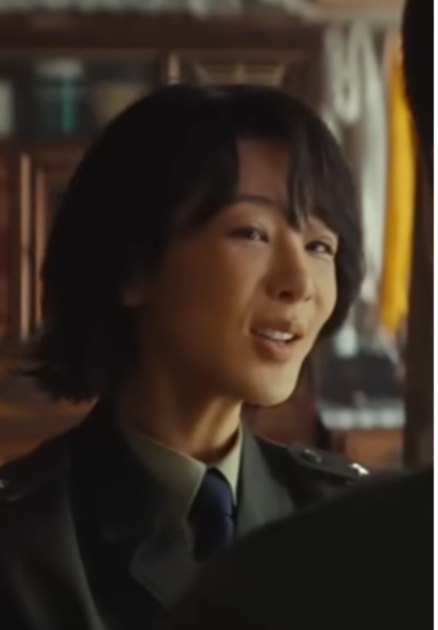 The star of Tree of Life/Born to be Alive is Yang Zi, playing the policewoman Bai Ju, throughout the 40 episodes. She is a fine actor, capable of showing several emotions at once, utterly convincing as the through line. Only one might wonder how come a fearless crack shot policewoman in the early 1990s, utterly at home in the badlands, was on hand, the ideal recruit to deliver justice to the largely faceless bad guys. Her back story is that “Bai Ju (Yang Zi), a young policewoman in the patrol team, became a turning point in Dorje’s life. She was an orphan adopted by Zhang Qinqin (MEI Ting), a doctor sent to Tibet, and the youngest daughter of the Bai family, known for her adventurous spirit. After experiencing the uninhabited area firsthand, Bai Ju matured quickly, becoming close friends with the patrol team members and falling in love with newspaper reporter Shao Yunfei (ZHANG Zhehua). Together, they worked to establish a nature reserve, but on the eve of their success, they experienced the disappearance of their leader, Dorje, and the disbandment of the patrol team.”

To make this confection plausible she is given a backstory even more farfetched. As a baby she was an orphan, taken in by an ideal couple who had volunteered to serve in Tibet as a revolutionary vocation, dedicating their lives to bring the modern world to Tibet. “Bai Ju is an orphan adopted by Zhang Qinqin, a doctor sent to Tibet as part of the aid programme, and is the youngest daughter of the Bai family, known for her daring and tenacity.” That explains our feisty heroine’s presence in the badlands of fictional Bola Mula, a slightly veiled version of Golmud as China calls it, Gormo in Tibetan.
The most heavily industrialised region of the Tibetan Plateau is getting a makeover. Industrialised Gormo, with its magnesium, potash and lithium salt extraction and processing factories, oil and gas wells, and petrochemical plants, is off the propaganda agenda. Now it is starkly beautiful Gormo/Bola Mula, deeper inland.
Such noble ideals, then and now: our heroine personifies China’s civilising missions then and now, even if you have to risk your life. As the fan sites say: “Harsh land. Harsh truths. But life endures. The Tibetan Plateau backdrop reinforces this theme.” In the end the baddies are brought to justice, and the state executes them. There will be no series two. However, stand by for a remake of this remake.
To maintain flow, to narratively connect stories separated by a 17 years jump, plot devices abound. Dorje’s murder remains a mystery solved only in today’s telenovela China by our resolute policewoman. Only once justice has triumphed does Sonam Dargye/ Duo Jie become a true martyr and hero of ecological civilisation: “From deputy county magistrate to ecological guardian, and finally to an unknown victim deep in the snowy mountains, Duojie’s presence has long transcended the character himself, becoming the series’ most poignant spiritual totem.”

BLACKFACE WITH HAN CHINESE CHARACTERISTICS
The Tibetan wildlife protection patrollers are still very much in the story, at least in the episodes set in the 1990s, prior to the 17 year storying leap. Some of the best actors of Tibet are to be seen here, actors who previously worked with Pema Tsedan.
The male lead plays the Tibetan who created the Wild Yak Brigade mountain patrol, named in this telenovela as Duo Jie, played by a famous actor from Shanghai, Hu Ge, not quite blackface but couldn’t a Tibetan have had the role?
But Hu Ge, a handsome Han star of Han cinema, plays Duo Jie/Dorje, an amalgam of the two murdered Tibetan patrol leaders, rolled into one. In Tree of Life he is nowhere near the star quality of Yang Zi, who gets the best lines and close-ups. With the right makeup and a very neat beard, you might not guess his many other starring roles.
Famous Chinese actor Hu Ge is, well, huge in China, star of many movies, both cosplay period dramas and contemporary. With fame has come celebrity endorsements of high end merch aiming to build sales in China. Hu Ge was named brand ambassador of Emporio Armani, Piaget, Chanel Perfume and Cosmetics.
Not all his acting gigs are in lead roles, sometimes he adds star power, making a “special appearance” as a secondary character. This includes his role as Sonam Dargye in Tree of Life. Having played a Tibetan hero of wildlife protection, in 2026 Hu Ge was also appointed “the Xizang international communication ambassador” during his appearance at a Lhasa conference on intensifying propaganda on Tibet “under the theme ‘Understanding and Support · Empathy and Resonance — Comprehensively Enhancing the Effectiveness of International Communication on Tibet’”
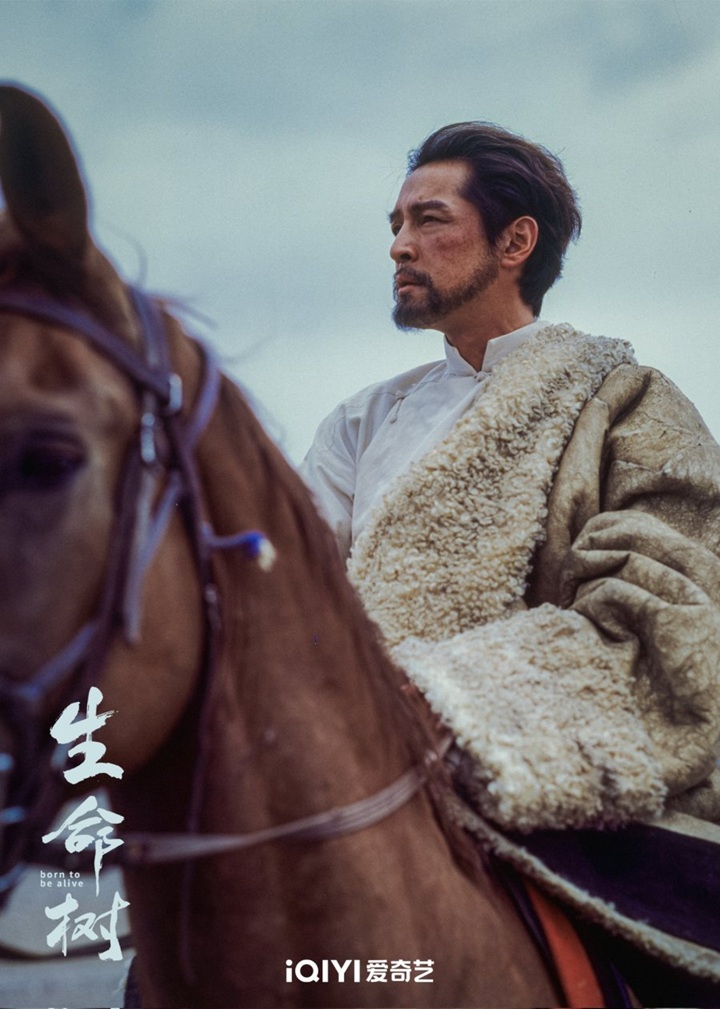
European luxury brands strategising to attract Chinese consumers knew what they were doing by paying Hu Ge to be their brand ambassador. But now he is China’s propaganda ambassador to the world, as the living embodiment of Tibet, maybe Euro luxe brands will need to reconsider?
The unique selling proposition of Tree of Life is that hundreds of thousands of chiru antelopes were slaughtered to make luxury brand shahtoosh shawls for rich Europeans, a slaughter stopped only by Tibetans, as played by Hu Ge.
The Tibetans tend to be the strong silent type, rugged, handsome, manly but largely silent. Chinese audiences are accustomed to seeing Tibetan men as kinetic but inarticulate.[2]
The Lhasa gathering aiming at making propaganda more attention grabbing, more emotionally engaging, was jointly staged by the Publicity Department of the CPC Tibet Autonomous Region Committee, the Academy of Contemporary China and World Studies under the China Foreign Languages Publishing Administration, the Foreign Affairs Office of the CPC Tibet Autonomous Region Committee, the United Front Work Department of the CPC Tibet Autonomous Region Committee, and the Cyberspace Administration of the CPC Tibet Autonomous Region Committee.
SONAM DARGYE
The story starts, in backstory telling, not in Hoh Xil/Kekexili, but in Dritő, a one street town on the edge of the drylands. There we meet up with Sonam Dargye well before he moved to no-man’s land 无人区 and created the Wild Yak Brigade.
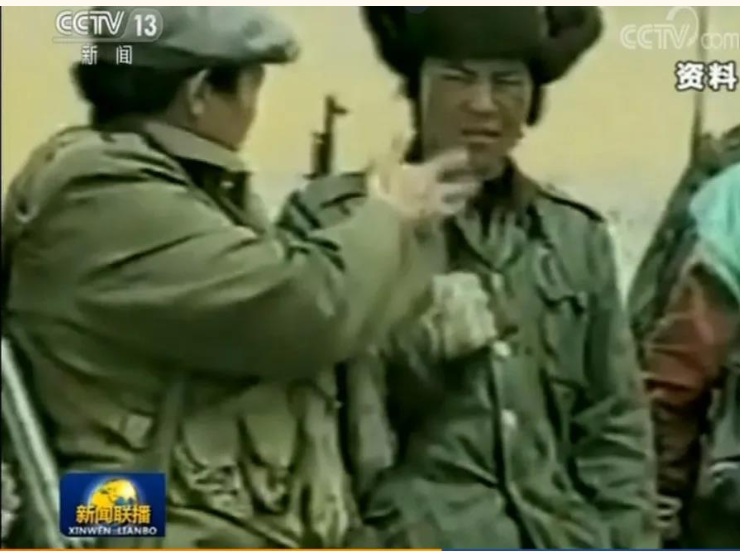
Sonam Dargye embodied the contradictions of 1980s China. Deng Xiaoping invited one and all to get gloriously rich, but Drito, on a side branch of the uppermost Dri Chu river/Tongtian/Jinsha/Yangtze was isolated, on the road to nowhere, far from the provincial city of Jyekundo, no investment by the distant party-state, no investable capital of its own, only 300 mm of rain a year, sparse pastureland. . In the 2000 census , Drito county had a scattered 23,000 people, 97 percent Tibetans. འབི་སྔོད་རྔོང་治多县Zhiduo Xian ‘bri stod rdzong Drito Dzong.
We have a detailed account written the one person who first alerted China and then the world to the slaughter of chiru གཙོད་, gtsod, pronounced tsǿ, which then triggered waves of Chinese and international reporting and the 2004 movie. If there is a single writer whose prose triggered this story going global, it is Liu Jianqiang, story teller now excised from later retellings. His first immersive trip with the Mountain Patrol was in 2005, as a reporter for the innovative Southern Weekend newspaper.
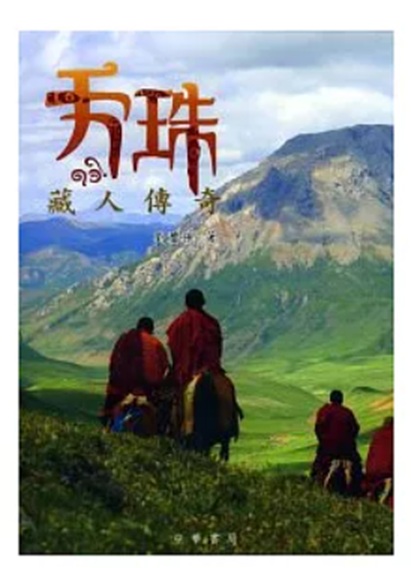
Beijing had encouraged Township and Village Enterprises in rural districts, but Dritő འབི་སྔོད་རྔོང་’bri stod rdzong治多县Zhiduo Xian, is too dry, too cold, too far from markets, altogether lacking in factors of production, other than Sonam Dargye’s agentic urgency to make development happen
Dritő is also vulnerable to blizzards, in any season, which can make a wealthy pastoralist a pauper overnight, killing herds which cannot escape being trapped.
There was only one path available, which was to become a cadre and leverage official rhetoric promoting modernity, development, prosperity into actual opportunity, not for personal wealth but for this remote town to move ahead in a material world. In Liu Jianqiang’s telling, this is where the story begins.[3] All opportunities are to be grabbed, be it hydropower, minerals or a road extending much further west to link into the main Lanzhou-Xining-Gormo-Lhasa highway.
Rapacious gold miners in the 1980s scoured the many side streams of the Yangtze source region, trashing the riverbeds, sluicing for flecks of gold. Why not take up alluvial gold mining as a county enterprise? Sonam Dargye investigated all, but with no result. Sonam Dargye knew how to work China’s guanxi system of gifts and favours to elicit assistance, so he plied geological surveyors with high grade liquor, and they showed him how to analyse and map mineral samples.
In 1992, as deputy county party secretary he set up a Western Working Commission, to go even further west, into the officially designated no-man’s land of Kekexili/Hoh Xil/Achen Gangyab, in the search for entry into modernity. This official designation came with modest funding for a few staff, and Sonam Dargye knew that in this back o’ beyond he would need motivated, multi-skilled drivers, mechanics, doctors. His old buddies, the former schoolteachers of Drito, joined.
CAPTURING THE STATE?
In a standard dualistic us/them world the wild yak brigade mountain patrol is either an official party-state operation, or an NGO taking the initiative. Sonam Dargye was a cadre in Drito, so in an either/or world his creation and command of the wild pursuit of poachers was official, which makes the 2026 telenovela, starring a Chinese uniformed policewoman not such a fiction.
However international media on the ground at the time, going out on patrol, call them an NGO.
What nobody mentions is that strict dualism is reductive, reality is more complex and ambiguous, especially 20 to 30 years ago in China’s boondocks. In remote Tibetan landscapes where the presence of the state was sketchy, minimal, it was actually possible for enterprising Tibetans to initiate projects, with enough official approval to then get on with bold, enterprising work.
This has long been so in the many districts where caterpillar fungus/yartsa gumbu is found each spring, in highland grasslands, in such demand in China that fortunes can be made. One might expect these uplands would be overrun by Chinese pickers swarming up from the lowlands, across the rangeland to overwhelm the Tibetans patiently lifting the turf. Not so. In remote districts the cadres are mostly Tibetan, and they use their authority to impose gatekeeping fees to allow entry, which means the nomads make money either way, by lifting the husks themselves, or collecting upfront fees via the county or township government. You could say the party-state does not govern Tibetan life; it is the Tibetans who capture the state. Not any longer. But that was possible 20 years ago.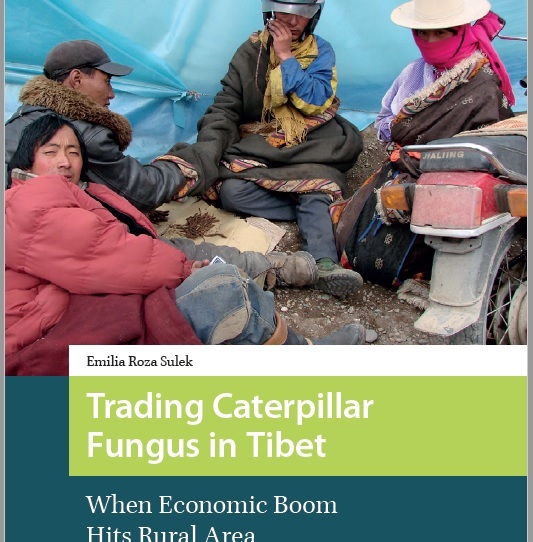
In the high-altitude alpine deserts in 1980s, 1990s, official representatives of state power seldom left their heated, gated compounds. State capture by energetic, charismatic Tibetans was possible. No gunslinging uniformed Han policewomen riding shotgun alongside.
Today it is hard to imagine Tibetan communities capturing local government, to serve and protect community interests, although Tibetans out on the open range do find inventive workarounds that fulfil the state capture of their lives, yet still allow them plenty of agency.
Ethnographer Palden Tsering’s fieldwork: “In China’s pastoral regions, both formal and informal rules are embedded in society and are continually negotiated and reassembled according to social, cultural and political contexts. In particular, the de facto rules governing rangeland use and access are much more intricate and dynamic than de jure property rights as set forth by statutory law. Pastoralists develop rangeland practices in multiple contexts to manoeuvre in their struggle for inclusion in wealth building and the right to access rangeland and natural resources. Through three cases of customary practices–grazing bans, pasture patrols and communal summer grazing–this research demonstrates how pastoralists interpret and tailor rangeland governance to meet their expectations. A plural context-based hybrid rangeland governance is visible in Saga, where in response to changing de jure ules, de facto rules are deeply rooted in social, cultural and emotional dimensions. Rather than becoming fixed, de facto rules and practices are always evolving in response to the local context where multiple types of de jure rules apply.”[4]
If Tibetan drogpa pastoralists tailor rangeland governance to meet their needs, what of the Tibetans now becoming objects of the mass Chinese tourism gaze? Are they reduced to passive spectators of their own lives served up for Chinese consumption, performing song and dance at the arrival of every bus? Is smiling compulsory? Are Tibetans reduced to pawns of Han tourism porn? We will take a careful look.
**********
This series of four blogs is by Gabriel Lafitte, with much research assistance from Shide Dawa at Tibet Watch
[1] Episode 1 https://www.youtube.com/watch?v=uY-oCd0ue1Q&t=498s
Episode 2 https://www.youtube.com/watch?v=cwTRxwaXYdk
Ep 5 https://www.youtube.com/watch?v=HmCbyLtaBuk
Ep6 https://www.youtube.com/watch?v=plnfPEoAFco
Ep 7 https://www.youtube.com/watch?v=iJ-DR_BWkxI
Ep 8 https://www.youtube.com/watch?v=6NnwoMHDPMc
Ep 9 https://www.youtube.com/watch?v=TUHDB916Gws
[2] Patricia Schiaffini, “The language divide: identity and literary choices in modern Tibet.” Journal of International Affairs , 2004, 57, 2, 81
[3] Liu Jianqiang, Tibetan Environmentalists in China: the King of Dzi, Lexington Books, 2015, 80 – 93
[4] Palden Tsering, Rangeland Governance and Practices in Amdo Tibet, China: Legal Pluralism in Pastoral Communities, The China Quarterly (2025),263,722–738 doi:10.1017/S0305741025100908