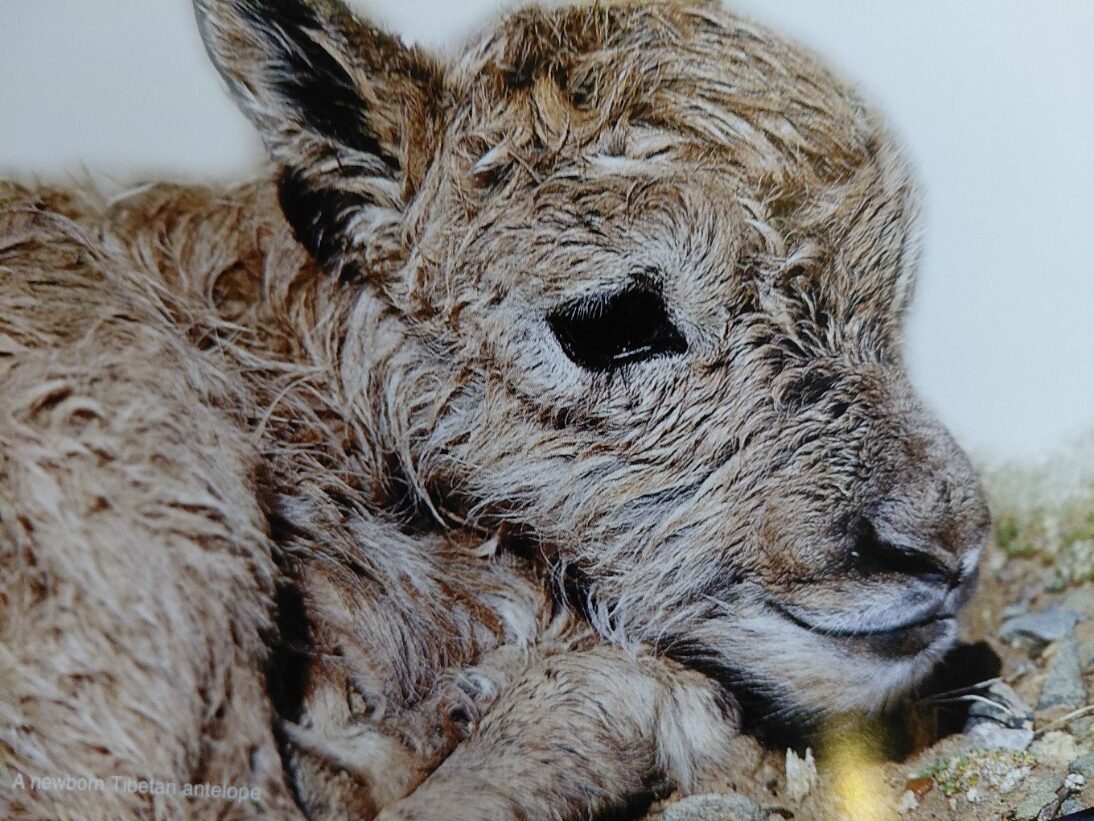
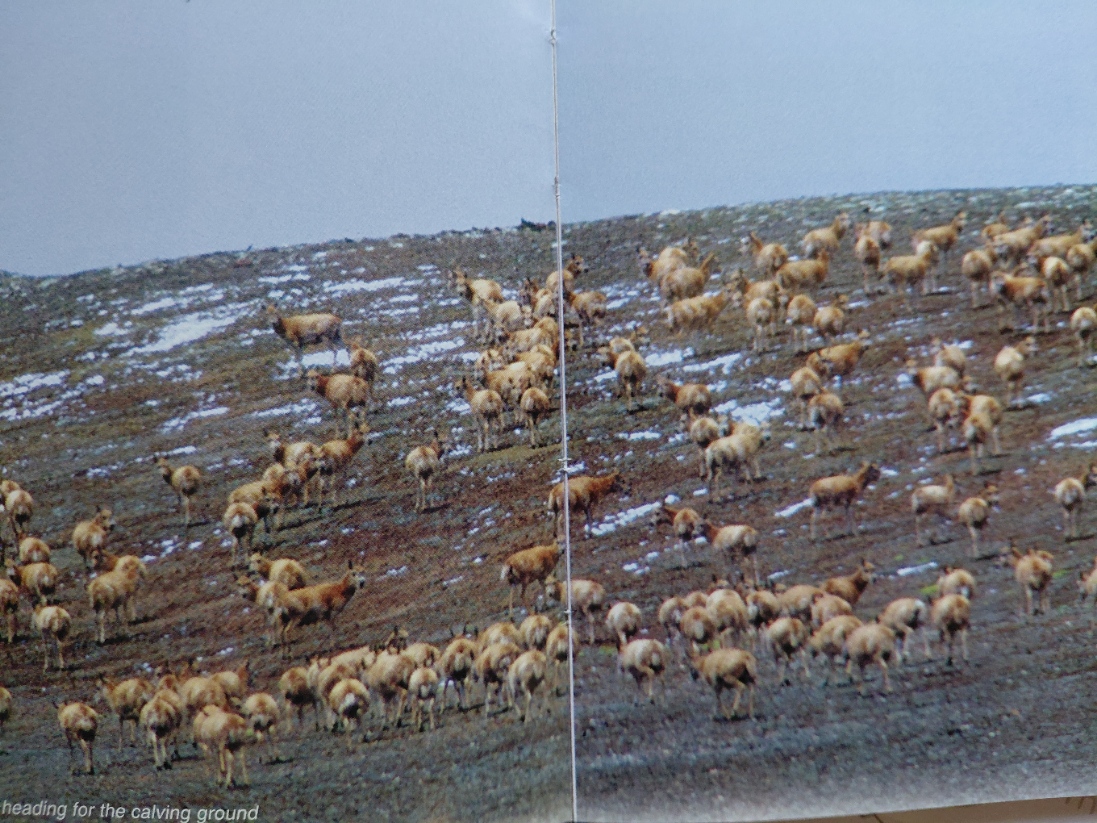
Women are few in the narratives of the heroic men of no-man’s land. Yet the main narrators, over several decades, are women, who deeply identify with the pregnant chiru dashing to their birthing grounds, to protect weak and wobbly newborns from prowling wolves. That is the heart of what made an obscure animal, not seen in zoos, so iconic.

The women who went out into the frigid desert with the Tibetan patrols to see for themselves the nimbly trekking antelopes experienced rapture, complete identification. Their love for the chiru, and respect for the Tibetan patrollers, drove a worldwide response. Quickly the chiru became as iconic as snow leopards and pandas.
Women were there as journalists out on patrol witnessing the grittiness of jolting jeeps and slaughtered antelopes. Their reporting made all the difference, made chiru གཙོད་, tsǿ,藏羚羊; zànglíngyáng poaching a national, then an international issue. Radio Free Asia’s Bay Fang is one example. Xiao Huanhuan 肖欢欢 is another. She became part of the story, graphically telling what it does to body and mind to cram into a hard sprung jeep that repeatedly bogs, then jolts up steep slopes as they escort the heavily pregnant antelopes to their birthing ground, where few wolves roam.

Their storytelling changed an obscure badland into the home of the cutest of charismatic animals, magnetising global concern. Statist amnesia in 2026, essential to making Tree of Life a drama of nation-building, erases the voices of the many women who have told the Tibetan chiru protector story many times, to widening audiences. Not only is this a story told multiple times and now erased, Tree of Life is not the only party-state effort to capture and retell it. [1]

The American Wild West of the 19th century somehow morphed into late 20th century China’s wild west. Manosphere of Tibetan frontiers morphs into Chinese writers -nearly all women- making the fleeing chiru a global issue.
THE PASSION OF THE CHIRU
In 2004 the official Foreign Languages Press [FLP] in Beijing published a 168 page book, Tracking Down Tibetan Antelopes, by environmentalist Wang Lei, each page featuring colour photos by Xi Zhinong. Wang Lei writes passionately, her voice lyrical even in translation.[2]
In 2004 official China had no way of acknowledging the global fear of chiru extinction, other than turning to a passionate volunteer who had actually witnessed the mass migrations of pregnant chiru to their safe birthing grounds. Even world-famous wildlife expert George Schaller, in six expeditions, failed to see wild chiru herds migrating.
FLP is the official publisher of the multiple volume collected works of Xi Jinping, in several languages In 2026 it is hard to imagine Foreign Languages Press would publish, as its contribution to wildlife management, the heartfelt writings of an environmentalist falling in love with chiru, but that was then. Today China’s primary global propaganda platform would not be handed to one woman and her heartfelt stories.
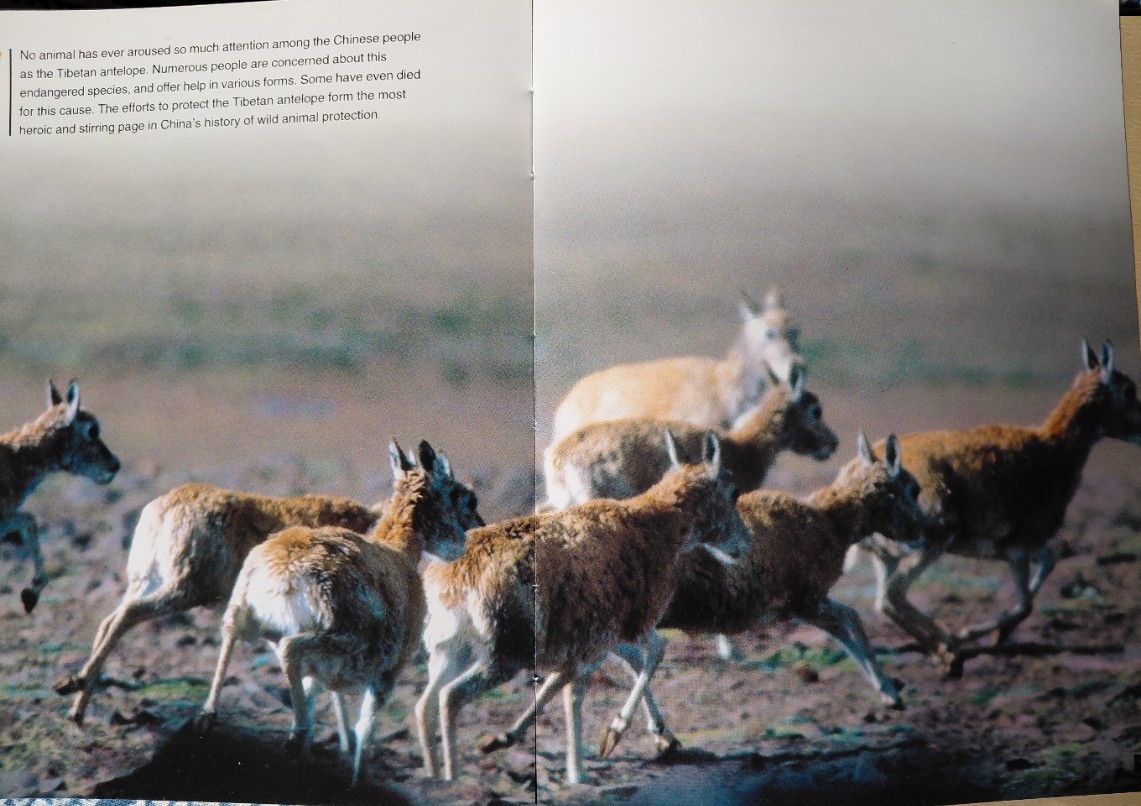
Tracking Down Tibetan Antelopes is a handsome publication, colour photos on every page, bookended front and back, on quality parchment paper, are spreads of classic art thangkas, no explanatory text, making this, from end to end, a Tibetan story.
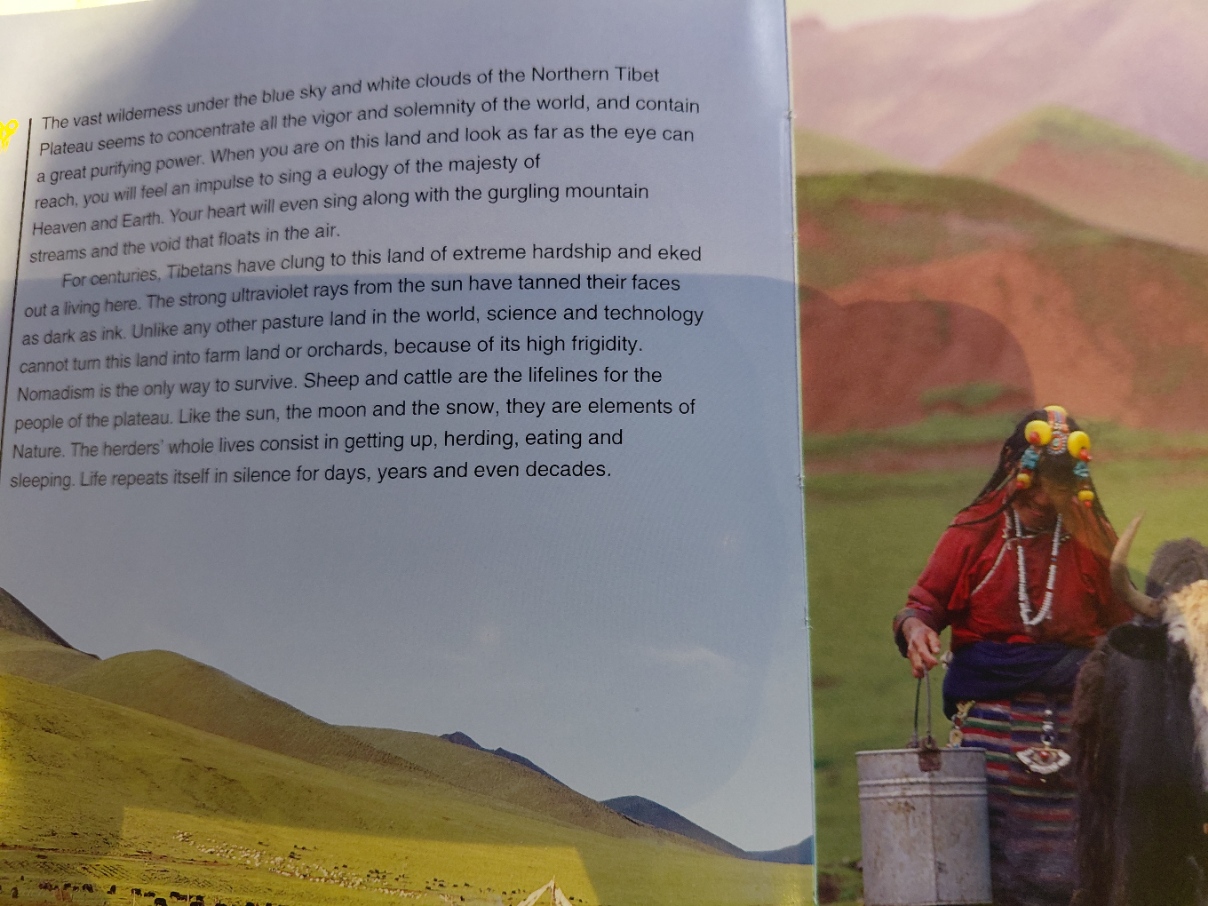
In her lyrical account: “For centuries, Tibetans have clung to this land of extreme hardship and eked out a living here. Unlike any other pasture land in the world, science and technology cannot turn this land into farm land or orchards, because of its high frigidity. Nomadism is the only way to survive…The herders’ whole lives consist in getting up, herding, eating and sleeping. Life repeats itself in silence for days, years and even decades……Over the centuries, the Tibetan people have created many incredible wonders on this vast land…all representing their talent and creativity, and all illuminating like mystic stars.”[3]
Wang Lei (and her state publisher) see no contradiction in extolling the active Tibetan presence, while also insisting it is no-man’s land, terra nullius: “This vast uninhabited land with its severe natural conditions is a mystery to the humankind…….This area is rarely visited by humans, even adventurers, and it is generally referred to as ‘the No-Man’s Land of Northern Tibet.’ This is the largest uninhabited area in China. To indicate its level of desolation, people refer to it as the ‘Third Pole’, after the desolate North and South Poles………..It is a deserted solitude, visited only by gusts of wind. There is not a single tree within sight…One can hardly see a sign of human life even after days of walking,,, ,This is the last pristine land… The area is described as a ghastly ‘land of demons………… For man, the harsh environment has made the Northern Tibet Plateau a forbidden zone for human life.”[4]
Wang Lei is similarly ambivalent as to whether the Tibetan protector patrols were the nation-state extending its reach, or a bunch of Qinghai Khampas on their own initiative, with minimal official status.
GROUND TRUTHS
Another Chinese woman, Xiao Huanhuan, sticks to the awkward journalism convention of writing about herself in third person,even when she is part of the story. Yet her account of the physical realities is vivid, authentic, in ways Tree of Life star power cannot match. In 2010, in Guangzhou Daily, she wrote: “The story of these heroic guardians is far more tragic than any movie. They protect the last pristine plateau in China with their lives and blood. Recently, a reporter accompanied members of the Hoh Xil patrol team to the Sonam Dargye Nature Reserve, about 250 kilometres from Golmud City. Named after the Hoh Xil hero Sonam Dargye, almost all tourists and hikers visiting Hoh Xil make a point of visiting the Sonam Dargye Protection Station. Six patrol team members are stationed here at an altitude of approximately 4600 meters. Even the reporter felt dizzy upon suddenly reaching such a high altitude, and became breathless after walking even a short distance. Opening a cupboard, the reporter found it filled with pickled vegetables, chili sauce, and other simple side dishes, along with some noodles. Qiuzha explained that the team members rotate shifts every 15 days, and the vegetables spoil easily, typically running out after three days.
“Due to the harsh environment, many team members suffer from malnutrition. The team members must remain on duty 24 hours a day in the high-altitude, icy conditions. A reporter experienced the hardships of a day’s work on the plateau. Before setting off, two off-road vehicles were filled with supplies and two large barrels of gasoline, with instant noodles and biscuits crammed into the trunk. “Anything can happen on a patrol. If we lose contact with the outside world, we might not have food for several days,” a patrol team member said.
“The hardships of a patrol are beyond the imagination of ordinary people. The rugged plateau is muddy [in May] and difficult to traverse; the off-road vehicles could barely move an inch on the yellow plateau. After only 5 kilometres, the wheels got stuck in a swamp. The team members had to use shovels to dig the wheels out of the mud. However, after only 3 kilometres, the rear wheels got stuck in the mud again. Two team members had to get out of the vehicle, dig the mud around the rear wheels, and then push the vehicle. After more than ten minutes of struggling, the rear wheels finally got out of the mud, and the team members were panting heavily.
“The accompanying team members said that patrolling the mountains is purely physical labour, and older people can’t do it. Firstly, the vehicles are extremely bumpy; secondly, they have to prevent the vehicles from getting stuck in the mud along the way, constantly digging them out; and thirdly, it’s extremely dangerous, with dangers lurking at any time, even leading to direct encounters with poachers. Almost everyone has experienced being trapped in snowstorms and feeling dizzy from hunger. After just two hours of bumpy travel, the reporter felt nauseous and dizzy. On a hillside 30 kilometres from the camp, the slope reached nearly 45 degrees, and the vehicles climbed slowly like snails. “When we first started patrolling, no one could withstand this kind of bumpiness. The first time we patrolled, we couldn’t even eat dinner that night. Even after sitting down, our heads were still buzzing, and we felt like vomiting,” said one of the accompanying team members.
“The short 50-kilometer mountain road took nearly five hours to traverse due to the muddy and difficult terrain. Around noon, they finally found a place to rest in a mountain hollow. The team members took out blowtorches, boiled water on the stove to cook noodles, added some salt, and seemed to enjoy the food immensely. However, the reporter couldn’t eat anything, felt short of breath, and felt nauseous.
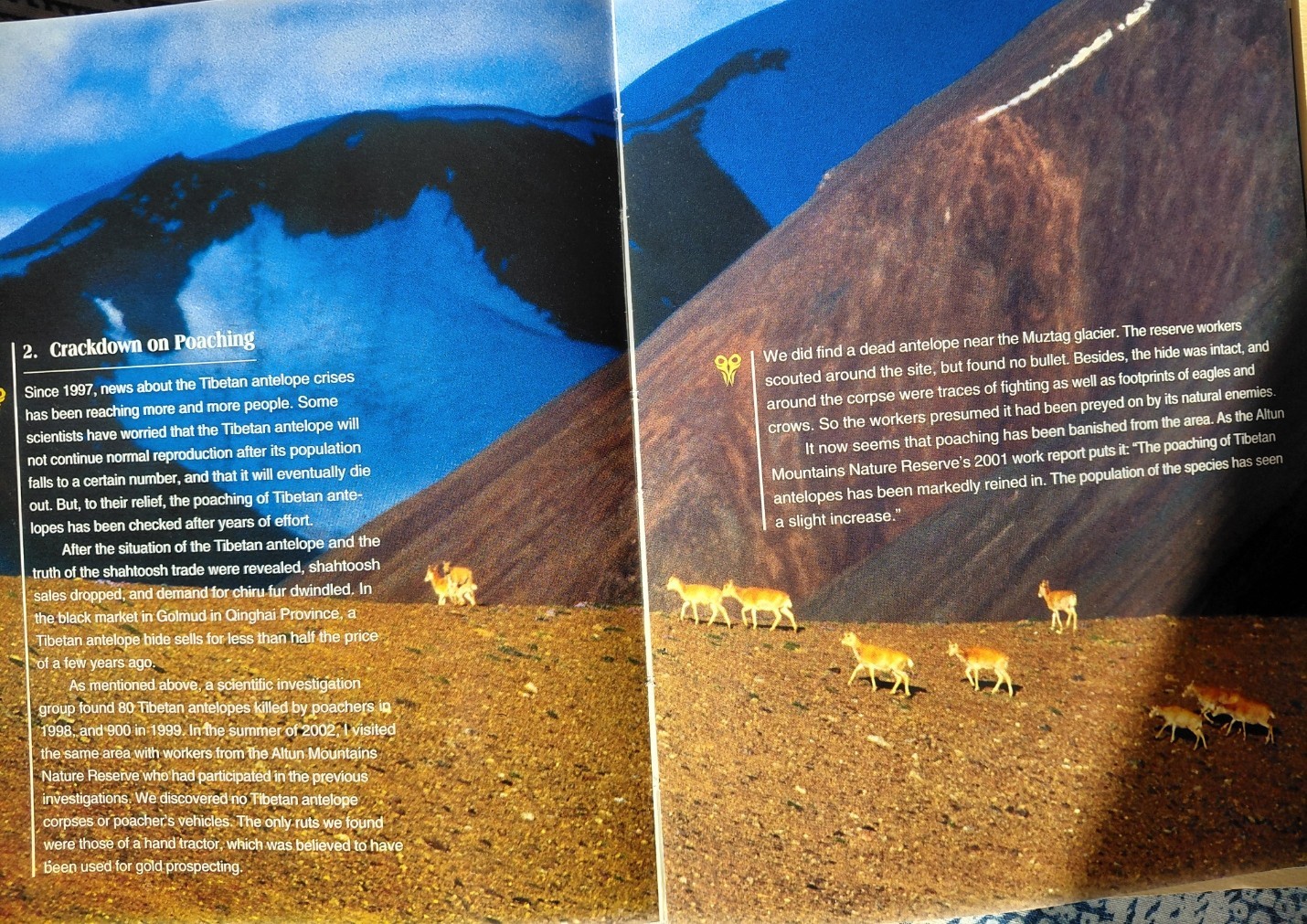
“The heavy heart was palpable; every journey could be a final farewell. Almost every patrol member had a harrowing story: being trapped in the vast snowfield for over ten days, nearly dying from high-altitude pulmonary enema, or surviving a gunfight with poachers… The team apprehended a man who confessed to hunting Tibetan antelopes in the mountains. The group consisted of two large trucks and one small car. The snow on the road was 50 centimetres deep, and Wang Zhoutai braved the bitter cold for over four hours. At the border of Tibet, Qinghai, and Xinjiang, tents dotted the foot of the mountains, and the ground was littered with the carcasses of Tibetan antelopes, the pungent smell of blood filling the air. “Killing one is equivalent to killing two; this is the Tibetan antelope’s breeding season,” Wang Zhoutai recalled, his eyes reddening. Later, all five poachers were subdued; the two gangs had killed a total of 712 Tibetan antelopes.
“Almost every patrol could be their last, so the team members would embrace and weep upon returning from each patrol. Now that poaching has decreased, criminals have turned their attention to minerals, with illegal gold mining and other crimes becoming particularly rampant.
“Relying on youth for a living, burdened with ailments, many find it difficult to climb mountains again after 45. Puchuo Cairin [Buchung Tsering] and Qiupei Zhaxi [Chope Tashi] are unique in the patrol team; they are brothers, nephews of Sonam Dargye, a hero of Hoh Xil, and sons of Zhaba Dorje. Puchuo said that Hoh Xil is an uninhabited area, and initially, none of the team members were familiar with it, making getting lost a common occurrence. Sometimes food was scarce, testing the team members’ endurance. Because of the muddy roads, the vehicle might get stuck in the mud up to thirty times a day, forcing them to get out and dig. Thus, by the end of the day, the team members’ clothes were constantly wet and dry.
“Puchuo said that due to the long-term bumpy ride at high altitudes and sleeping huddled in the vehicle, half of the 35 team members suffered from lumbar disc herniation, rheumatoid arthritis, and other ailments. He said that patrolling the mountains is a job that relies on youth; after about five years, you’re riddled with illnesses. After 45, even if you want to go up the mountain, your body won’t allow it. ‘I don’t know how long I can last, but I’ll keep going until my legs can’t carry me up the mountain anymore,’ Gelai [Gelek] said, adding that the power of his faith sustains him in this fight. “I’m Tibetan and a Buddhist. I think protecting the ecology and wildlife is a meaningful job, a way to accumulate merit for myself and future generations.” He added, ‘If I die in Hoh Xil, that’s fate.’”
IDENTIFYING THE HUMAN WOLVES
The absence, on the ground in remote Tibetan lands, of nation-state power also meant swarms of hunters could not only slaughter pregnant Tibetan antelopes but also smuggle the fine belly fur all the way to Kashmir, to be made into luxury shawls. It takes four dead antelopes per shawl.
Who were these men? Where were they from? On this, almost everyone has been silent. In Liu Jianqiang’s original book, in Chinese in 2009, he avoids identifying them; likewise in the 2015 English translation. Harmony must prevail.
Foreign journalists were more direct. Today’s head of Radio Free Asia, Bay Fang, as a resourceful young journalist in 1999, reporting from the frontline for US News & World Report: “Hualong County in the eastern part of Qinghai province is home to many of the province’s poachers, 95 percent of whom are Muslim, according to Liang [Brigade leader Liang Yinquan]. An eerie silence shrouds one village, which appears nearly deserted. ‘All our husbands have gone,’ explains a woman with a face much older than her 30 years. ‘They go in groups to the plateau to dig for gold for eight yuan ($1) a day, but I don’t know what they actually do.’ Poachers, in contrast, can make $60 to $85 for each pelt sold to middlemen, who smuggle the wool to Kashmir, where it is woven into shawls. From there, exporters mail or carry the shawls in suitcases, sometimes concealed in sheep’s wool.
“On his patrol, Zhaxi [Tashi] Tsering, a former gym teacher with an intimidating moustache, waves his gun as he strides toward the truck his group has just apprehended. ‘Tear down the cover and unpack it,’ he orders, as men in patched Mao jackets and Muslim caps tumble out from beneath a plastic tarp. As the men scramble to unload shovels, a pickaxe, and thick quilts from the truck bed, Zhaxi crawls underneath and emerges with a rifle, a skinning knife, and two sets of Tibetan antelope horns.”
WHO ARE THE BAD GUYS?
The ruthless hunters made money from chiru གཙོད་, tsǿ,藏羚羊wool smuggling. They had more jeeps, more fuel. They were desperately poor, their families had been poor for generations. Battling both the armies of Qing dynasty in its end times, then battling Republican China, violence was not new: “In the northwest, with its long-standing militarization, communal strife, and extreme poverty, “banditry”—that is to say, organized violence and robbery by groups of armed men—became an important secondary occupation for many farmers and townsmen….The Qing officials both regularly and brutally used military force against the locals. All the communities armed themselves for defense of their lives against their neighbours and/or the state…. In these “little wars” around Xining, communal or religious identity functioned very much like lineage identity in Chinese society, creating one vector of unity for villages or groups of villages, a boundary against the dangerous Others. In Philip Kuhn’s terminology, the simplex tuan of many Xining Muslim villages engaged in vendettas (Ch. xiedow) with non-Muslim villages and with Tibetans. Fighting between Muslims could be as vicious and enduring as Muslim vs. non-Muslim battles….. The violence between some Muslims and Qing loyalists and allies of various cultures had devastated a fourth of a province, killed tens of thousands, and sustained the worst fears of all. The Qing officials retained their conviction that religious disputes among the Muslims, particularly those caused by the New Teaching (whatever that may have been) and the menhuan, \ed to conflagration and bloodshed. The local non-Muslim Chinese verified their tradition, that their Muslim neighbours were bloodthirsty fanatics. The Muslims confirmed that they were to be discriminated against, excluded, even slaughtered, because they were Muslims, and thus different. The total Qing military victory did not bring lasting peace, for even brutal pacification could not eliminate communal mistrust and hatred. As long as the Muslims and non- Muslims remained neighbours and state authority could not maintain local order, the problems would continue to exist.”[1]
Relations between Tibetans and Hui Hui expanding violently into Tibetans lands were concealed but not healed by the arrival of the People’s Republic in 1949. In the prior decades, the expansionist Hui Hui warlords, with access to more modern weapons than the Tibetans, not only repeatedly attacked, massacres ensued, many Tibetans were taken hostage, wealth looted and the Tibetan wool industry ruined. Rapacious gold mining began in 1918, its 1980s revival a return of the repressed.[2]
The World Bank inadvertently revealed where the poachers were from. The Bank’s ill-fated 1990s plan to ship tens of thousands of poor Hui Hui Muslims from the eastern fringes of Qinghai, far westwards into Tibetan homelands on the fringes of antelope country, is explicit about who it planned to ship out. This project, officially the China Western Poverty Reduction Project was designed during the peak years of the Wild Yak Brigade confrontations with antelope slaughter. “The target population live in fragile agricultural and pastoral lands, In Qinghai, crop yields are low due to poor soil quality, low rainfall, recurrent drought and undeveloped farming techniques. Increased cultivation and grazing pressures in mountainous areas are having devastating ecological impacts and there appear to be limited and even no environmentally sustainable options available in those areas. In Qinghai, this situation is already resulting in severe environmental degradation. All of the participating project populations suffer from severe poverty which is leading to serious environmental problems The resource base of the move out counties has been severely depleted due to intense population pressure and the associated unsustainable cultivation and over grazing that has been necessary for local people to survive.”[3]
DEATH OF A TIBETAN WILDLIFE PROTECTOR, BIRTH OF A RED GENE SAINT
It never occurred to the World Bank project designers that Tibetans might consider what the Bank blandly called the “move-in area” is Tibetan, and so might disagree with 4000 mobile Tibetan pastoralists being demobilised, as per Bank plans, to move in 57,000 poor Hui-hui from hundreds of kilometres to the east. Poverty is poverty, development is colour-blind. That was policy.
That fitted well with party-state emphasis on “harmonious society” and its pitch to the World Bank for funding. On a map, the “move-in” area appeared not as Tibetan, but in Qinghai (Amdo Chumarleb in Tibetan) so no question of Tibet and Tibetans arose in the planning, until the moment the project was made public, shortly prior to its planned formal approval.
It was the skilful advocacy of the Tibet movement in Washington that pushed the World Bank to recognise ethnic complexity, pause approval and then pull out altogether, leaving China with its original plan which was inevitably executed, on a more modest scale. Tibetan advocacy, both on D.C. streets outside the World Bank, and inside the halls of power, succeeded, at a time the Tibet movement was peaking. [Stefanie Ricarda Roos, The World Bank Inspection Panel in its Seventh Year: An Analysis of its Process, Mandate, and Desirability with special reference to the China (Tibet) case, in J A Frowein and R Wolfrum, eds, J Max Planck Yearbook of United Nations,Vol 5. 2001, 473-521]
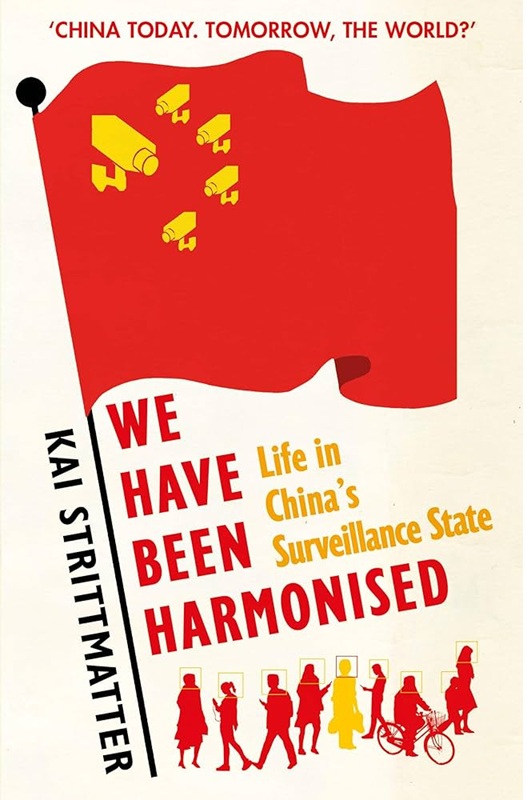
Also peaking at that time was Hu Jintao’s compulsory harmonious society, repressing dissenting voices within China, whose wry way of acknowledging they had been censored was to announce: “we have been harmonised.” Mandatory harmony had its enemies; it also had its heroes, including the red gene martyrs who sacrificed their lives for the party-state. But harmonious society was a doctrine, not yet fully a religion.
It was Xi Jinping who made worship of the party-state a religion; and as a religion it sees other religions as competitors for human hearts. What Xi Jinping has wrought, through purge after purges, is uncannily akin to Fascist Italy: “In 1932, the Fascist youth newspaper asserted that ’a good Fascist is religious.’ And in 1930, young university students in Milan established a school of Fascist mysticism cantered on the Duce as a living myth. Potential conflicts of interpretation were resolved through devotion to the party. The leva fascista was a ritual of initiation for young people similar to ‘confirmation’ in the Catholic Church, through which young people were ‘consecrated as fascists.’ The ceremonies were held in public in every city and included, in addition to the consecration ceremonies, oath-taking ceremonies, the veneration of flags, and the cult of the fallen martyrs.”
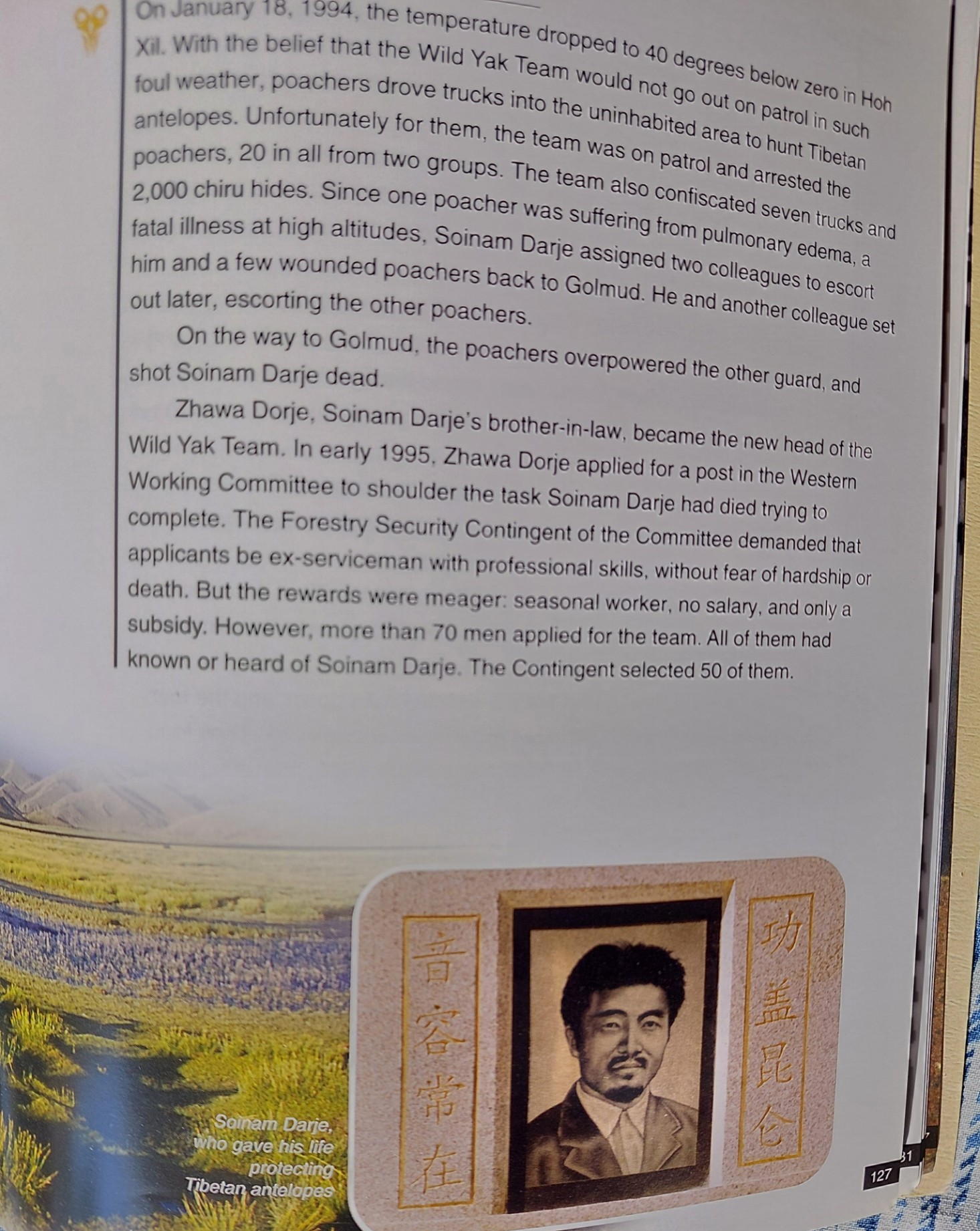
In the 2026 Tree of Life, the death of Sonam Dargye is less sacrifice for antelopes, more a red gene sacrifice for the noble ideals of the party-state, and its mission of ecological civilisation.
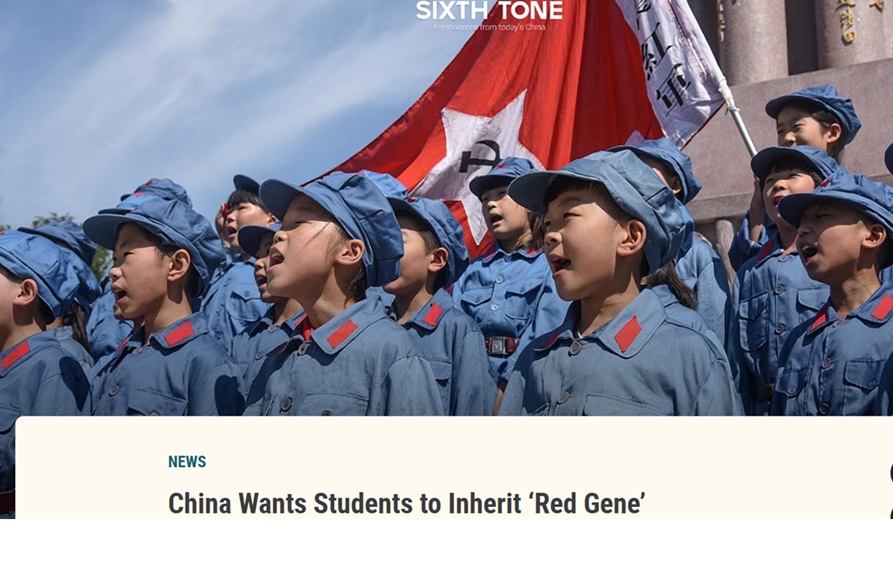
HEROIC MARTYRDOM
Tree of Life weaves its plotlines to a neat conclusion, bridging the 17 year storying gap, by leaving Duo Jie’s death an unsolved murder, until justice finally triumphs in the last reel. It is in today’s China that whodunnit is revealed, in the final episode. Ethnic tensions play no part, but corruption is involved, righteously brought to justice by our fearless heroine.
Only then does Dorje/Duo Jie’s apotheosis elevate him to the saintliness of the fallen martyrs, and the story is now complete.
Telenovelas are addictive. In English they are dismissively called soap operas, but they come from lands and times that also gave us magical realism. Seemingly the dogged realism of the soapie/telenovela has nothing to do with the magic of magical realism, but there is magic in Tree of Life/Born to be Alive, as its titles hint at. The magic is the martyrdom of Duo Jie. A second magic is the camera’s caress of these bare Tibetan landforms, which enchanted addicted audiences, so much so Qinghai provincial government is urgently planning outback Chumarleb/Gormo as a major tourism destination.
ASSET MAKING
The success of Tree of Life in making the treeless expanse seductively attractive has given provincial officials a new market, creating an asset they never imagined. This must now be monetised, urgently. Qinghai Daily, 5 April 2026 reported: “the TV drama *The Tree of Life*’s contribution to cultural and tourism development that the show’s popularity has not only brought phenomenal traffic to Qinghai’s cultural and tourism sector but has also opened up entirely new avenues for deepening the integration of film and television with cultural and tourism development in Qinghai. Qinghai will focus on five key areas to build on the success of *The Tree of Life*, transforming the vitality of this film and television IP [intellectual property]into a sustained attraction for the province’s cultural and tourism sector. Efforts will be accelerated to formulate an implementation plan for support and guarantees will be provided to high-quality production crews filming. Planning will begin at the creative source, systematically cataloguing filming locations across the province to create a comprehensive map. Targeted recruitment drives will be conducted in provinces with thriving film and television industries and in provinces providing targeted assistance to Qinghai, with the aim of establishing Qinghai as a nationally renowned filming location. We will advance the implementation of derivative projects based on *The Tree of Life*, inviting the film’s principal creators and lead actors to return to Qinghai to participate in cultural and tourism activities, thereby continuously harnessing the ‘long-tail effect’ of the film IP. Furthermore, we will cultivate and launch products such as self-drive adventures, high-altitude wellness, revolutionary history study tours, and snow-capped mountain climbing, to promote the year-round, routine development of film-tourism integration. We will accelerate efforts to address infrastructure shortcomings along tourist routes, including car parks, public toilets, oxygen supply and communications.
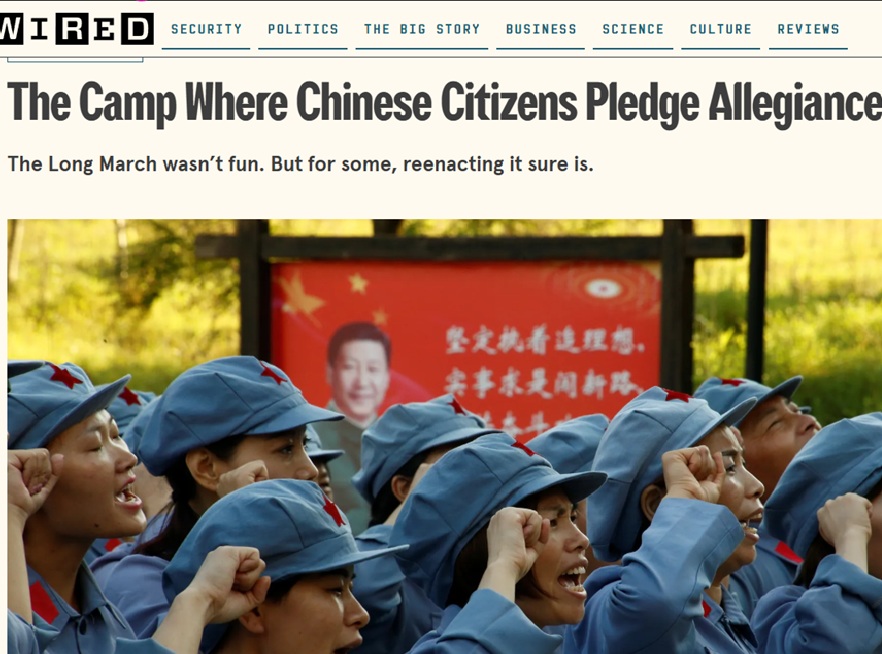
“We will launch distinctive products such as one-way self-drive hire and cross-location vehicle return schemes, and collaborate with map navigation companies to create a Qinghai-specific digital tourism map, thereby accelerating the implementation of smart cultural and tourism scenarios. We will scientifically demarcate ecological protection boundaries for film location scouting and cultural tourism development. We will create a matrix of online topics and organise themed promotional events offline to establish a comprehensive promotional loop. At the same time, we will seize opportunities presented by major events and competitions to continuously amplify the empowering effects of film and television.”
MANUFACTURING DESIRE
Will Qinghai cadres succeed in making Chumarleb Gormo a magical destination by systematically cataloguing filming locations across the province to create a comprehensive map? Will owners of SUV trucks expand their range of stickers, beyond the current “此生必318国道In this lifetime, I must drive National Highway 318” or “此生定情214国道 In this lifetime, my heart is fixed on National Highway 214” from Sichuan to central Tibet?
What is certain is that a bureaucratic compilation of scenic spots of Tibet fulfils the top-down central commands of China’s stat capitalism. An April 2026 decree: “Encourage popular scenic spots and cultural and museum venues to extend opening hours. Improve public facilities at scenic spots, revitalize existing tourism projects, strengthen fine-grained management, and optimize service supply. 鼓励热门景区、文博场馆等延长开放时间。完善景区公共设施,盘活存量旅游项目,加强精细化管理,优化服务供给”。
“Accommodation and catering. Adapt to the upgrade in public demand from “somewhere to stay” to “staying well and getting value,” raise safety and hygiene standards, expand new service models, and develop new accommodation formats incorporating elements such as history and culture, science and technology, and family-friendly stays. 住宿餐饮。适应人民群众从”有地方住”到”住得好、住得值”的需求升级,提高安全、卫生标准,拓展服务新模式,发展具有历史文化、科技、亲子等元素的住宿新业态.”[4]
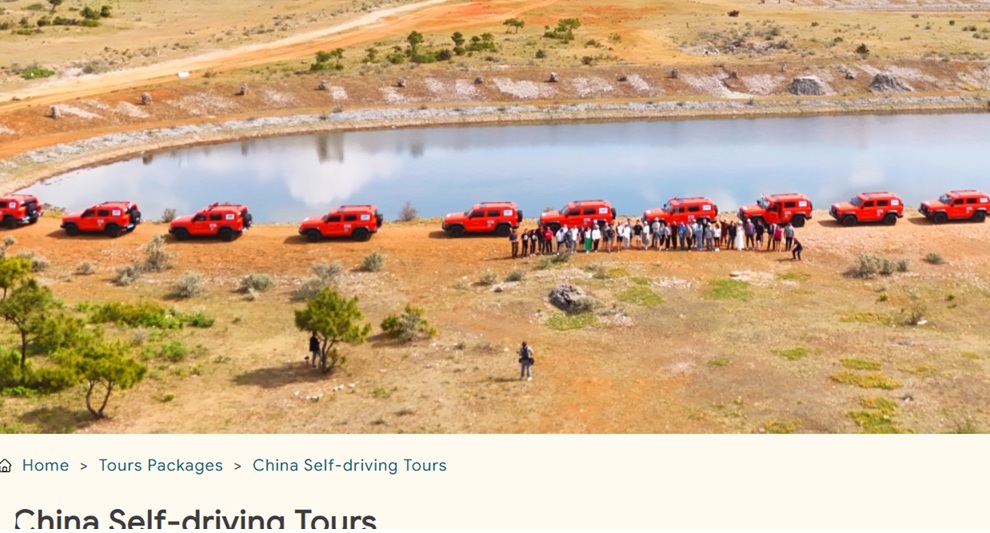
This is magic, transforming badlands, waste lands into investable, profitable destinations. Of the entire Tibetan Plateau, Qinghai/Amdo has lagged as a tourism destination, lacking iconic scenic spots. Qinghai leaders did try to popularise the briny lakes as spots for dreamy photos of women ankle deep in water a rosy pink, but that was not enough to bring the masses. The mirror lake 茶卡天空壹号景区 is officially a 4-star AAAA scenic spot, a few influencers came, and moved on.
Now Tree of Life has made the most treeless of Tibetan landscapes a must-see, come and commune with nature, pay homage to that red gene martyr Sonam Dargye, possibly glimpse some charismatic antelopes. So, in state capitalist mode, on 30 April 2026, Luo Dongchuan, firstly, Deputy Secretary of the Provincial Party Committee and secondly, Governor of Qinghai Province, chaired a Xining city symposium “focusing on building an international ecotourism destination, giving full play to consumption stimulation, making every effort to ensure service and support during the peak tourist season, and accelerating the upgrading of ecotourism quality and brand.” He made it clear this is what Xi Jinping has decreed. The party-state will orchestrate this new campaign. Addressing the assembled tourism companies, he directed them to “leverage the unique cultural and tourism resources of the plateau to innovate and launch more high-quality tourism products, deeply expand domestic and international tourist markets, strengthen the training of employees, effectively improve tourist satisfaction, and continuously enhance the reputation of “Mountains and Waters, Beautiful Qinghai.”
Glimpsing antelopes on the hoof, in their home habitat, is unpredictable. Better instead to cage and breed them, available to be patted, a rush. That is a much more reliable consumable, as China’s caged pandas proved decades ago.
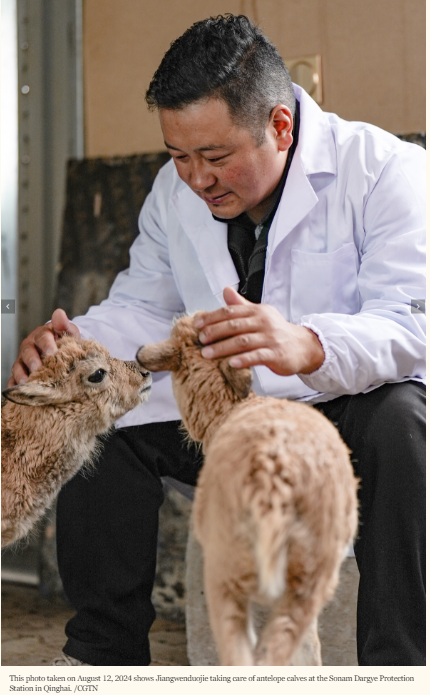
This is a classic win-win, for industry and for the party-state. The hospitality industry is asking for state financed loans to upgrade destination infrastructure. “Qinghai Strait International Travel Service, 青海海峡国际旅行社Qinghai Wild Yak Outdoor Adventure International Travel Service, 青海野牦牛户外探险国际旅行社Qinghai Chaka Salt Lake Cultural Tourism Development Co., Ltd., 青海茶卡盐湖文化旅游发展股份有限公” are the beneficiaries.
They are instructed to get busy “ushering in a golden period of development characterized by concentrated policy dividends, accelerated upgrading of tourism consumption, and continuous expansion of market space. strengthen their confidence and determination to grow bigger, stronger, and better, demonstrating greater achievements. Prioritizing ecological protection, they should deeply embed the concept of ecological and environmental protection into the entire process of route design, product development, scenic area construction, and reception services, making each scenic spot a window for promoting and educating about ecological civilization. 把每个景区景点建成生态文明理念宣传教育的窗口.”
INDIVIDUATE
This makeover means more than money. Qinghai/Amdo is a big province, but almost entirely lacking mingsheng scenic sites that resonate as Chinese, part of the canon of famous scenery celebrated by ancient poets. The Great Wall never reached Qinghai. Until recently Chinese movie directors seeking filmic landscapes that express desolation, loss, grief, sorrow, chose Qinghai. Recently China has tried to add Qinghai to the Yellow River culture of distant lowland North China Plain, retrofitting Qinghai, far upriver, with a lineage stretching all the way back to the mythical Yellow Emperor. But few tourists buy in.
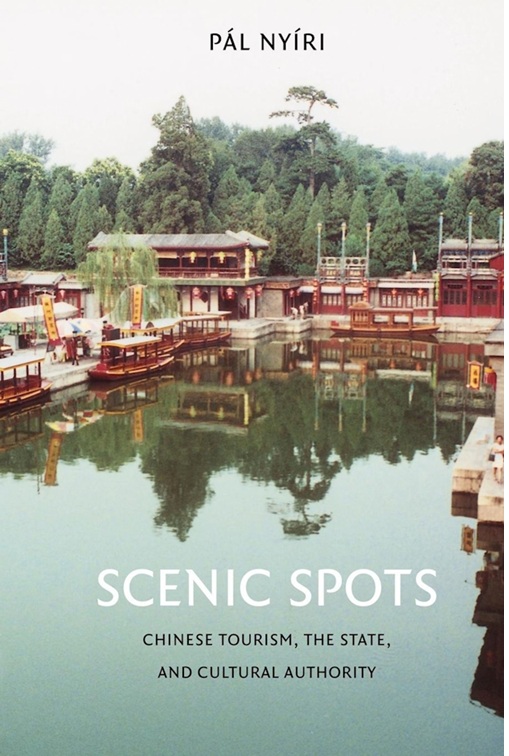
Now Qinghai can at last become part of the great modernist project to turn the masses into individuals who absorb the party-state narrative by touring official scenic sites, while developing values, tastes, desires that define the modern individual consumer. Come to Qinghai and individuate. Manifest your awareness of China’s ancient, excellent culture by doing the pilgrimage to Qinghai. Improve your suzhi human capital formation by touring the Qinghai shrines to ecological civilisation construction.
By personally visiting the official scenic sites, taking and sharing photos, you show you have become a person, an individual with taste, you have discovered your authentic self through the modern ritual of travel to faraway places.[5]
In 1989, in an influential text Dean McCannel suggested : “For moderns, reality and authenticity are thought to be elsewhere: in other historical periods and other cultures, in purer, simpler lifestyles. In other words, the concerns of moderns for “naturalness,” their nostalgia and their search for authenticity are not merely casual and somewhat decadent, though harmless attachments to the souvenirs of destroyed cultures and dead epochs. They are also components of the conquering spirit of modernity—the grounds of its unifying consciousness.”[6]
Until now Qinghai cadres have perceived their deeply inland province as a low priority in Beijing’s gaze. All Amdo/Qinghai had going for it was as “China’s Number One Water Tower”, a brand Qinghai promoted vigorously, for mass aquaculture of alien trout sold as salmon, for water provisioning and damming to extract hydroelectricity for export.
But for decades advancing desertification of northwest Qinghai, down wind from arid Xinjiang, was routinely blamed on irresponsible, irrational nomads. Until recently Qinghai’s Tibetan Autonomous Prefectures, which by area comprise most of Qinghai, have been seen as unproductive, adding little value, to be rigidly controlled by zoning laws that exclude pastoralists from pastures, in order to grow more grass.
Now, unexpectedly, waste lands can at last make money, in China’s consumption drive. This signals more than wealth accumulation for the tourism industry. It also means the nation-state inscribing its governing presence, by promoting a curriculum of scenic spot mass visitation.
NATURAL CAPITAL VALUATION[7]
China’s 21st century turn to “construction of ecological civilisation”, a regime of environmental authoritarianism, has further intensified this exclusion of humans from ecosystems.[8] This was especially true of the no-man’s land of annual chiru གཙོད་, gtsod, pronounced tsǿ,藏羚羊; zànglíngyáng migration. Widespread horror at wildlife poaching has intensified the wider official horror that any humans had any uses, in any season, for designated, zoned “no-man’s land.”
Yet in realty Tibetan drogpa nomads have routinely herded sheep and yaks into the summer pastures of Achen Gangyab/Hoh Xil every year, the domestic flocks and chiru གཙོད་ antelopes mingling with no fear of human shepherds. But as the state came back in, this became problematic. While semi-official anti-poaching patrols might be acceptable, grazing sheep and yaks alongside chiru transgressed the official category of uninhabited, no-man’s land, and eventually accepted as World Heritage by UNESCO, in 2017 at China’s request, of outstanding natural (not human) value to the world precisely because it was and must remain uninhabited.
A 2005 an alarmist Xinhua headline said: “Kekexili protection area encroached by large numbers, no-man’s land of the Qinghai-Tibet plateau has been reduced sharply, 可可西里保护区被大量侵占 青藏高原无人区锐减.” This human intrusion is reported as transgression, since it is of great importance that no-man’s land 无人区 remain devoid of all human presence. Why? Because China can claim an empty land as its’ sovereign nation-state space, free of any counter claims. If no-man’s land is patrolled by wildlife protectors that only reinforces the state’s claim to complete jurisdiction, especially once it is clear the patrollers and their patrol stations are local servants of the state.
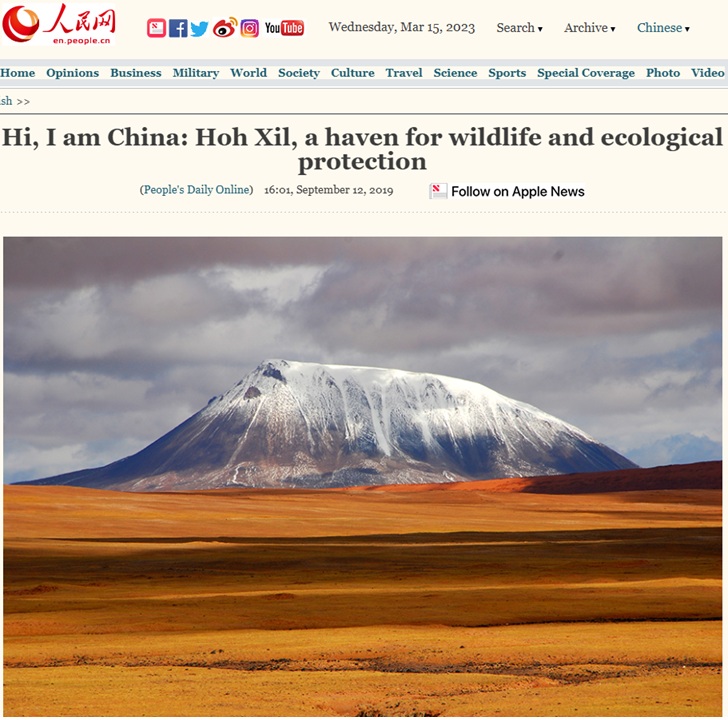
When China assembled a detailed proposal to the UNESCO World Heritage Committee (WHC) to inscribe Hoh Xil, an area bigger than Netherlands, as World Heritage, China’s proposal repeatedly emphasised “no-man’s land”. In 2017 the WHC agreed, awarding this coveted, bankable status solely on the grounds of outstanding natural -not cultural- heritage. UNESCO sealed and delivered Achen Gangyab/Hoh Xil unequivocally to China.
After questioning by exiled Tibetans, UNESCO did then agree that: “This area supports the traditional nomadic lifestyles of Tibetan pastoralists who have coexisted with its conservation for a long time, and these communities have demonstrated a strong commitment through various initiatives to participate in conservation efforts. A few self-guided tourists (mostly in summer) along the Qinghai-Tibet highway do not significantly affect the integrity of the property.”.
Now that empty land is to be populated by tourists.
QINGHAI SPECTACULAR SUBLIME
Over the longer term, the solution lies in the caress of the drone cam.
This is not the first time the camera has made love to the achingly empty landscapes of Qinghai. A 2021 documentary series was extremely popular.
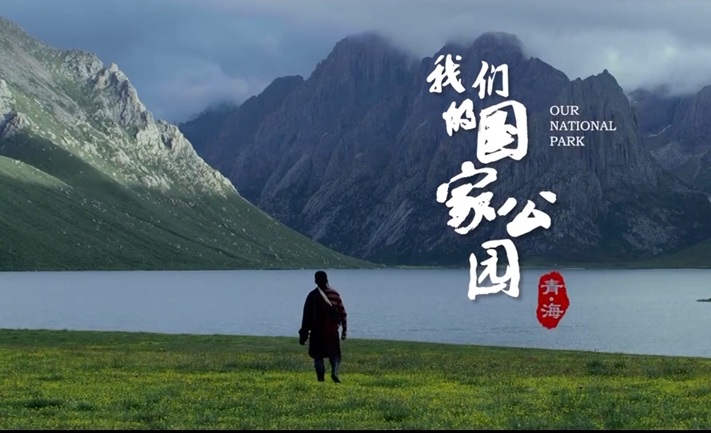
Grass Sea青海·我们的国家公园follows a cameraman with his macro lenses all over Amdo, on a lyrical evocation of the snow mountains and glaciers of Qinghai, emphasis on the ultra pure water trickling from them, by 20 mins in we finally descend to the alpine meadows in full summer bloom, lingering on the flowers, not pastoralists. Tibet is too beautiful and too important to be left to the Tibetans. But villains enter this pristine scene: the plateau pikas, burrowing the soil, proliferating everywhere. 30mins in we meet the foxes and their cute cubs that chase pika but don’t catch, and the birds of prey that seem a bit more successful. But clearly nature needs a hand, so @31mins with pick and shovel we dig out the pikas from their burrows. 33mins in we finally discover human residents, their golden rapeseed fields, villages in the distance. We briefly see a few cows. Then it’s back to lyrical green and crystal clear streams, forested hillsides, wild deer, woodpeckers, range after range of blue mountains 36 mins up and up we go again, into the clouds, the vegetation dripping wet at China’s great water source, frogs, dragonflies, wetlands, buttercups, and again and again our friendly young photographer is in frame telling us how wonderful it all is. Magically, there are even flowers under water. Finally @ 38’30” we see docile tethered yaks for a few seconds and an actual Tibetan, a drokmo herdswoman, on a horse, for less than 2 seconds. @39 mins we discover a young Tibetan man digging a hole in the pasture in the middle of nowhere, to plant a basketball hoop and play round with some younger boys. This is slo-mo, heaps of smiles. Then 2 low powered motorbikes rev up, 2 young men @40’ race each other along a puddled dirt road in the middle of the vast pasture, the camera following by drone. It’s all good natured fun. By 42’ we are back with our sun hatted camera man unloading a chip from a camera trap. We now discover he has a car, a big SUV, and a MacBook so we can all see more fox footage, this time in the snow. As we approach the final wrap, reprising all we have seen so far, one final segment of yaks and herders, who now seem part of nature; then the final montage of flowers and water, more and more water. Truly, Qinghai is China’s jewel. Stirring music track throughout, “sparking a viewing frenzy. Audiences across the country have been awestruck by the beauty.”
That’s just episode one of three. A magically beautiful but largely empty land, and it is China’s.
But a doco provides no storyline, no entry point for the viewer to imagine yourself being healed of all overcrowded urban anxieties, in this pure but almost empty terra nullius. The 2021 doco series prompted no tourist scramble.
In 2026 more Qinghai dramas are in the works. Heavy Weapons 重器, and The Burning of the Dragon’s Bones龙骨焚箱 are coming. Heavy Weapons 重器 sticks closely to the storyline of Tree of Life, only the bringers of civilisation and justice aren’t police, they are procurators, in a series scheduled for airtime in 2026, sponsored by the Supreme People’s Procuratorate and the Film and Television Centre of the Supreme People’s Court. The location is Terlengkha (Delingha in Chinese), and we are again the heroic 1980s and 1990s. One of our five heroes dies a martyr.
Will this doppelganger be as magical? Will the landscapes of barren Terlengkha enchant viewers? Since the 1990s China has stationed a major long range nuclear missile launch site in Delingha, but that doesn’t quite fit the plot.
THE PAST IS ANOTHER COUNTRY
Nor do these hokey plots fit the facts. Where fiction erases actual history has already been explored above, at several points; but there’s more. The point of tracking what actually happened, is more than just to “right the record”. The loss of truth in Tree of Life’s truthiness is worth tracking further, because it reveals how China was in the 1990s, compared to the tightly controlled environmental authoritarianism of today. What was lost is worth remembering.
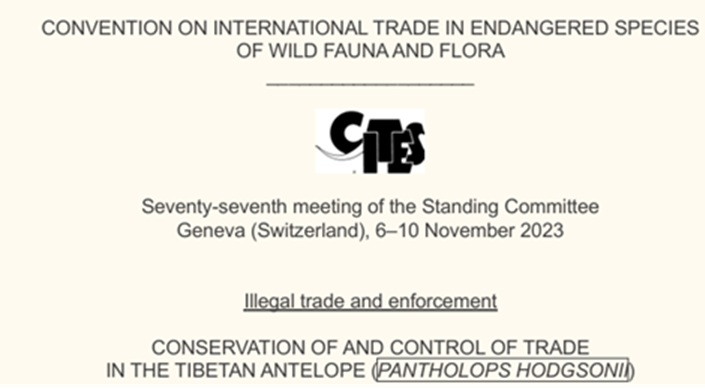
A starting point could be the UN Convention on Trade in Endangered Species (CITES), which has expressed concern at chiru གཙོད་, gtsod, pronounced tsǿ,藏羚羊; zànglíngyáng antelope slaughter for decades. China formally signed on to CITES in 1981, just prior to the waves of antelope slaughtering and belly wool trafficking began. Although China was a CITES signatory, the “no-man’s land” of Achen Gangyab/Hoh Xil/Kekexili was out of sight, beyond the frontier, well beyond the reach of the state, at a time everyone across China was rediscovering capitalism and wealth accumulation.
At most the presence of the party-state was restricted to a few checkpoints on the few long distance highways connecting to Xining and Lanzhou to the east, and Lhasa to the south. Perfunctory checks did little to find smuggled chiru གཙོད་ shahtoosh, which is easily hidden among sheep wool.
By area bigger than Denmark or the Netherlands, Hoh Xil was in scrutable to a state focussing its gaze elsewhere, on much nearer opportunities and threats. If antelopes migrated out there late every spring, to give birth far from the wolves, that was of interest only to wildlife biologists. Not even the wildlife specialists noticed that Tibetan nomads herding their yaks seasonally into Achen Gangyab for summer pasture, giving lowland pasture a break, were accustomed to antelope and yak herds intermingling, the wild animals unafraid of humans.
China’s wildlife specialists studied wildlife not in the wild but in zoos. That is why Professor Tan Bangjie’s 1996 book “Into the Wild: The rare and endangered species of China” has so little to say about chiru. He explains: “The chiru’s native haunt is remote, communication is inconvenient, and the animal itself is a remarkable runner. Despite the thin atmosphere on the high plateau, the animal can run as fast as 80 kilometres an hour. They are as numerous as wild sheep, but because they are so difficult to capture that no zoological garden in the world has ever kept or exhibited one.”[9]
It was around this time the party-state did start to restrict yak and sheep herd size by imposing fixed allocations of land to each household, which was then compulsorily fenced, which interfered with antelope migration. That policy was later reversed, but Tibetan nomads had to spend time and money both constructing and deconstructing wire fences. State failure, never admitted.
As antelope slaughter rapidly escalated in the 1980s, total chiru གཙོད་, gtsod, pronounced tsǿ,藏羚羊; zànglíngyáng population fell from an estimated one million to as low as 75,000. Only then did protection begin, not at the official level, but by the Tibetans of frontier districts. For years they struggled, amid official indifference, to curb the slaughter.
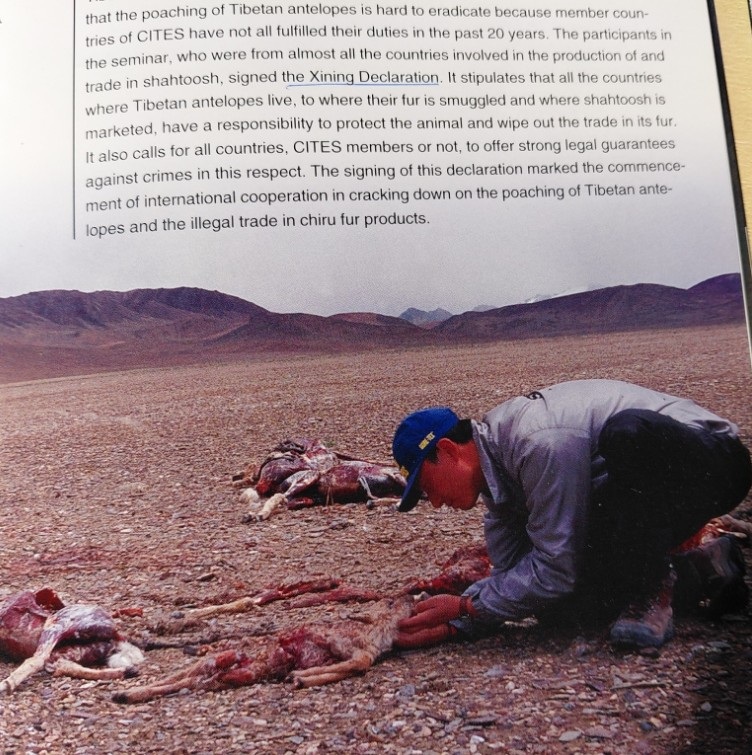
Yet by 1999, with China as host, government representatives from China, France, India, Italy, Nepal, the UK and the USA and representatives from the CITES Secretariat, China Wildlife Conservation Association (CWCA), International Fund for Animal Welfare (IFAW),Tibetan Plateau Project (TPP), TRAFFIC, Wildlife Conservation Society (WCS), Wildlife Protection Society of India (WPSI) and World Wide Fund for Nature (WWF), as well as experts and scholars all gathered in Xining, the biggest city of the Tibetan Plateau, to together commit to protecting Tibetan antelopes.
A global treaty on trafficking wildlife was an umbrella enabling this remarkable gathering, with China’s government one among several governments which had authorised their Beijing based diplomats to officially represent them. Unthinkable today. Their meeting produced “the “Xining Declaration”.
By consensus this 2600 word declaration prescriptively called for: “co-ordination with the Public Security, Court, Customs and the State Environment Protection Administration, the State Forestry Administration should take the lead to develop a comprehensive strategic plan on anti-poaching and anti-smuggling.
“ 1. A joint committee should be formed by the three range provinces of Qinghai, Tibet and Xinjiang to co-ordinate conservation and anti-poaching activities for the Tibetan Antelope and develop action plans. Current status and needs for support should be evaluated to improve institutional capacity and facilities. Based on these needs, international and domestic co-operation and funding support will be sought, i.e. helicopters, off-road vehicles and satellite phones. A population survey and monitoring should be conducted. Training should be provided to associated staff.
“2. Priority should be given to the protection of the key habitats of Tibetan Antelope, i.e. mating sites, calving sites, and migration routes. Livestock grazing should also be managed to limit the impact on Tibetan Antelopes.
“3. Protected areas for Tibetan Antelope should be expanded.. Co-ordination needs to be strengthened in the management of the three reserves and an integrated master plan should be developed. Efforts need to be made to include the whole range of the species into the “Man and Biosphere” programme of UNESCO to improve the international recognition.
- A new anti-poaching system should be instituted which involves the participation of local communities.”[10]
How did this remarkable shift happen? This is the story not told by Tree of Life, of a China in which wildlife protectors worldwide had a voice and a role in China’s internal affairs, accepted within China, pushing for effective biodiversity protection action.[11] China was much more open then. In Xi Jinping’s China such flexibility is not only no longer possible, it is no longer imaginable, nor remembered. Instead we have a gun toting heroic policewoman front and centre, from the outset.
[1] Feng, Z. J. 1999. Status and Conservation of Tibetan Antelope (Pantholops hodgsoni) in China. In: R. D. Zhen (ed.), The Future of Tibetan Antelope. Proceedings of an International Workshop on Conservation and Control of Trade in Tibetan Antelope, October 12–13, 1999, Xining, Qinghai, China, pp. 27–28. Beijing, China.
Fox, J. L. and Bårdsen, B.-J. 2005. Density of Tibetan Antelope, Tibetan Wild Ass and Tibetan Gazelle in Relation to Human Presence Across the Chang Tang Nature Reserve of Tibet, China. Acta Zoologica Sinica 51: 586–597.
Fox, J. L., Dhondup, K., Dorji, T. 2009. Tibetan antelope (Pantholops hodgsonii) conservation and new rangeland management policies in the western Chang Tang Nature Reserve, Tibet: Is fencing creating an impasse? Oryx 43: 183-190.
Harris,R. 2008. Wildlife Conservation in China: Preserving the Habitat of China’s Wild West. M.E. Sharpe, Armonk, USA.
Harris, R.B. and Miller, D.J. 1995. Overlap in summer habitats and diets of Tibetan plateau ungulates. Mammalia 59: 197-212.
IUCN. 2016. The IUCN Red List of Threatened Species. Version 2016-2. Available at: www.iucnredlist.org. (Accessed: 04 September 2016).
Jiang, Z., et al, X. 2016. Red List of China’s Vertebrates (in Chinese and English). Biodiversity Science 24: 500-552.
Leslie, D.M. and Schaller, G.B. 2008. Pantholops hodgsonii (Artiodactyla: Bovidae). Mammalian Species 817: 1-13.
Liu, W. 2009. Tibetan antelope (in Chinese). China Forestry Publishing House, Beijing.
Qi, G., Hu, Y., Owens, J.R., Dai, Q., Hou, R., Yang, Z., Qi, D. 2015. Habitat sutiability for chiru (Pantholops hodgsonii): Implications for conservation management across the Tibetan region of Chang Tang. Journal of Wildlife Management 79: 384-392.
[2] Wang Lei, Tracking Down Tibetan Antelopes, Foreign Languages Press, Beijing, 2004 ISBN 9787119033280
[3] Tracking Down Tibetan Antelopes 38, 41
[4] Tracking Down Tibetan Antelopes 17, 21, 23, 26
[1] Jonathen Lipman, Familiar Strangers: A history of Muslims in Northwest China, Washington U Press, 1997. 160-165, 171
[2] Bianca Horlemann, Victims of Modernization? Struggles between the Goloks and the Muslim Ma Warlords in Qinghai, 1917 – 1942, 153-178 in Marie-Paule Hille, Bianca Harlemann & Paul Nietupski eds, Muslims in Amdo Tibetan Society, Lexington Books, 2015
[3] World Bank, China Western Poverty Reduction Project: Environment Information Package, doc E-269
[4] Opinions of the State Council on Advancing the Expansion of Capacity and Improvement of Quality in the Service Sector 国务院关于推进服务业扩能提质的意见, Guo Fa [2026] No. 7 国发〔2026〕7号
https://www.news.cn/politics/20260421/3f7ff7029a064f388f25e1a4d2767d70/c.html
[5] Pal Nyiri, Scenic spots: Chinese tourism, the state, and cultural authority, U Washington Press, 2006
[6] MacCannell, D. The Tourist: A New Theory of the Leisure Class, Rev. Edition, 1989, 3, Schocken.
[7] Zhiyun Ouyang, Using gross ecosystem product (GEP) to value nature in decision making , PNAS | June 23, 2020 | vol. 117 | no. 25 | 14593–14601
[8] Mark Beeson, Coming to Terms with the Authoritarian Alternative: The Implications and Motivations of China’s Environmental Policies , Asia & the Pacific Policy Studies, vol. 5, no. 1,2017, pp. 34–46
[9] Tan Bangjie, Into the Wild: The rare and endangered species of China, New World Press, Beijing, 1996, 55
[10] TRAFFIC Bulletin Vol.18, No.2 (April 2000), CITES, 78-82 https://www.traffic.org/bulletin/?q=18
[11] Andrew Mertha, China’s Water Warriors: Citizen Action and Policy Change, Cambridge U Press, 2014