Tibetans need more friends, new friends.
Environmentalists might seem unlikely right now as friends of Tibet. Isn’t China making the most of its dominance of the tech of green energy, including solar, wind turbines, hydro dams and power grids? Isn’t Tibet China’s showroom for how fast and completely it can transition out of old carbon tech -fossil fuels- and install green energy on a scale that impresses everyone? Isn’t this becoming a moment when environmentalists, seeing US failures, hope China will save the planet from climate self destruction?
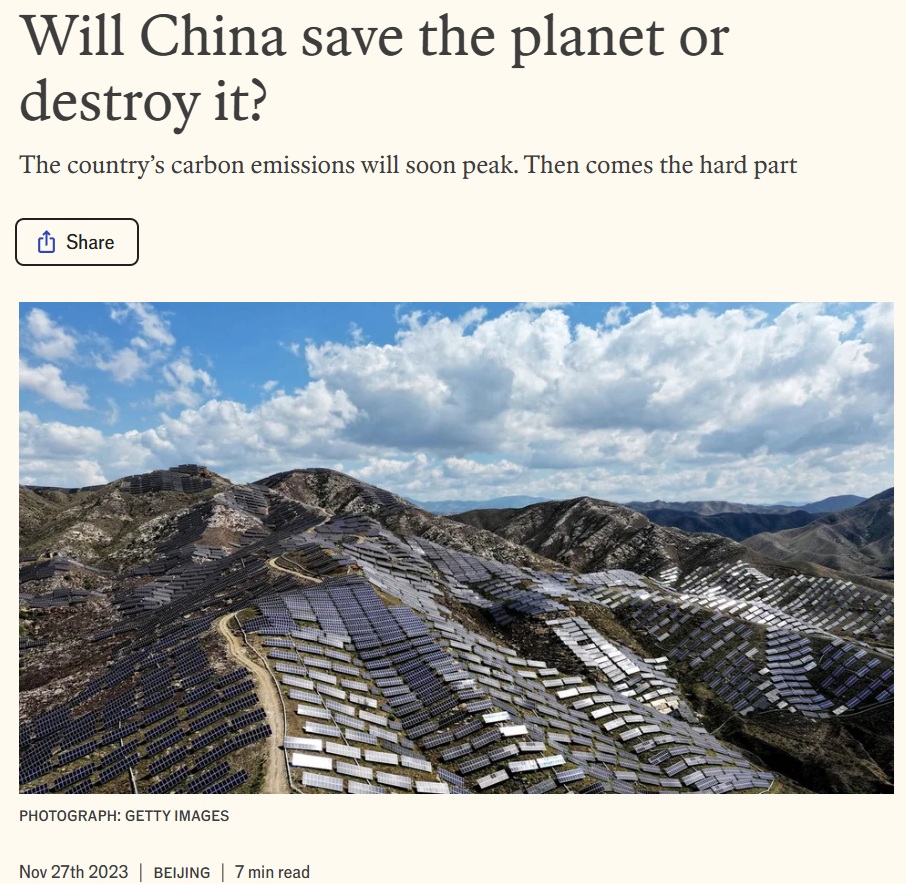
This is so. But there is a wider story Tibetans can tell, that changes the whole narrative.
Two stories that are backed by a lot of evidence, that could swing green supporters to recognise Tibetan human rights are being cancelled by solarising Tibet, carpeting productive Tibetan landscapes with green energy installations on colossal scale, displacing the locals to be shunted off to frontier villages. That is the first story.
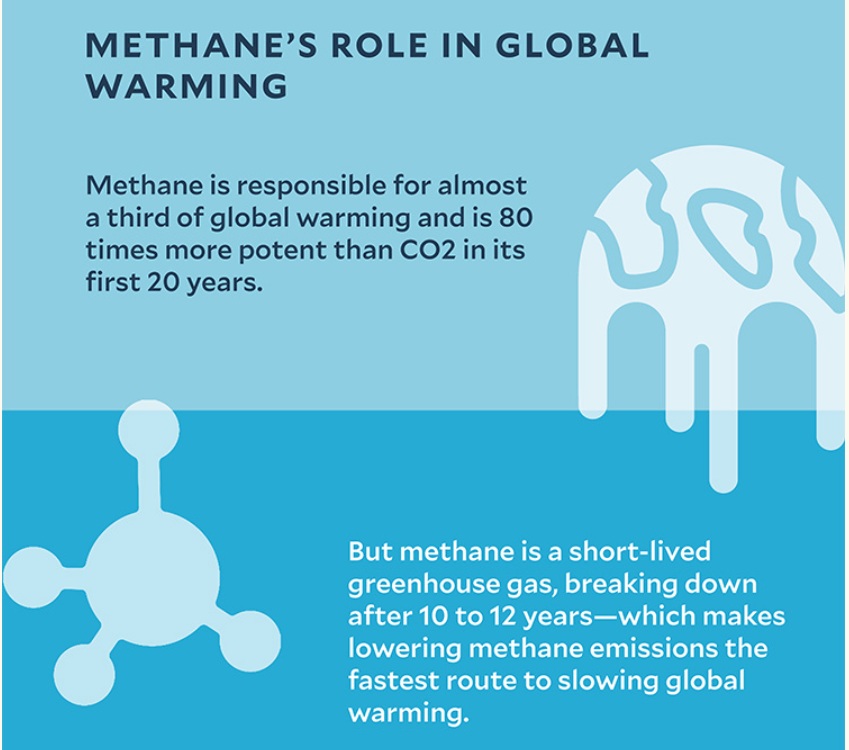
Second story connects the dots linking China’s ongoing climate heating emissions to the globally dangerous melt of the permafrost of the Tibetan Plateau, direct cause and effect. We know the world worries a lot about glacier melt in Tibet, but the icy soil below the glaciers, above the pastures, is thawing and releasing into the global atmosphere methane, a gas far more harmful than carbon dioxide. In 2025 China pledged to do something about methane when it comes from rubbish dumps, leaking oil wells and burping cows, but remains silent about the permafrost that covers a bigger area of Tibet than Germany and France combined, now melting as a direct result of China remaining by far the world’s biggest polluter.
Two stories, one immediate, the second story emergent, longer term as methane emissions start to intensify. Together these stories hold China to account, and can be documented in detail, plenty of evidence available.
WHY TRY?
Before plunging into these new stories in depth, why would we want to make the effort? Are we pushing up against widespread admiration for the speed and scale of installing solar panels surrounding the hydro dams all over Tibet? Doesn’t the green movement worldwide, desperate for decarbonisation progress, yearn for a saviour to appear at the last minute, and it might just be China? Wasn’t the climate COP in Brazil messy, inconclusive, yet China got away with its reputation intact?
Just so. We are now in a more divided, antagonistic world, where truth no longer matters much; it is all about whose side you are on. If Tibetan NGOs find it hard to attract attention to human rights violations, in specific times and places, how do solar panel installations fit into a human rights framework?
Our two new stories are indeed big picture perspectives, not easily reduced to catchy straplines. I am the classic backroom research nerd; distilling it all to a strapline is for the frontline campaigners.
THE BIG PICTURE: CHINA’S PLANS FOR TIBET
Drawing the big picture means connecting the dots so a wider pattern emerges. Many of the dots are familiar: protests against hydro dams that capture Tibetan lands, villages and monasteries, national parks that exclude drogpa pastoralists, blaming them for soil degradation threatening China’s rivers.
The wider pattern is China’s campaign to steadily depopulate rural Tibet, for a wide range of reasons which always lead to displacement, exclusion, landlessness, relocation to distant, monitored frontier villages. The wider pattern identifies China’s laws and regulations governing a range of programs, all of which make explicit provision for displacing the traditional guardians of land.
Whether we look at policies on
- grazing management,
- soil restoration,
- water catchment protection,
- biodiversity protection,
- poverty alleviation,
- rural revitalisation,
- national parks;
all call explicitlyfor irreversible removal of nomads, demobilised into remote, high density frontier settlements under intensive surveillance. Now, displacement by upscaled solar panel installations surrounding hydro dams, with wind turbines on hilltops above, is the latest in China’ decades of pushing Tibetans off their lands, cancelling the livelihoods of custodians of landscapes who have maintained sustainable land use for thousands of years.
The pace and scale of paving Tibet with solar+wind+hydro+pumped hydro+hydrogen+ batteries adds up to displacement faster than ever, part of China’s assimilation program and compulsory teaching of literacy in Chinese. Lots of dots connect up. Environmentalists and indigenous rights campaigners can relate to that. New audience, new friends for Tibet.
HOW DO WE KNOW?
How to make this a campaign issue? First step, prior to simplifying to a core message, is to familiarise yourself with the evidence amassed by researching these topics, which has been done by a team of skilled Tibetans on the frontline of monitoring what is happening on the ground in Tibet, together with close reading of Chinese policy decrees, Five-Year Plans and CCP theory journals. We have experienced researchers who put together comprehensive stories, and publish at Tibet Watch, Turquoise Roof, Rukor.org, ICT and more. Messaging doesn’t require in-depth referencing and verification, but the available research inspires confidence that, if challenged, these new stories can be evidenced. Background briefings can support frontline advocacy.
Another possible approach, especially on Instagram, is to cite Tibetan wisdom, as an alternative to China’s intense speed of requisitioning Tibetan lands for sprawling solar instals. Why China’s haste? In a spiky, unpredictable world is China trying to guarantee energy security to covering Tibet in solar+? The richer China gets, the more worried it gets about risks of all kinds, urgently trying to nail everything. What about a bit of folk wisdom from Shantideva:
ས་སྟེང་འདི་དག་ཀོས་གཡོགས་སུ། །
དེ་སྙེད་ཀོ་བས་ག་ལ་ལང༌། །
ལྷམ་མཐིལ་ཙམ་གྱི་ཀོ་བས་ནི། །
ས་སྟེང་ཐམས་ཅད་གཡོགས་དང་འདྲ། །
This gently suggests Tibetans have available a major alternative to the materialist race to build “the world’s most complete industrial system”, China’s favourite slogan.
Just a suggestion.
WHAT MOTIVATES CHINA’S EXTRACTIVIST IDEOLOGY IN TIBET?
Story two directly challenges the widespread admiration of China for doing the green energy instals, at a time when America is sliding backwards. China instals green tech equipment at an astonishing pace, thus achieving the decarbonisation the world urgently needs, plus sells green tech cheap enough for even Global South to buy up big. What’s not to like?
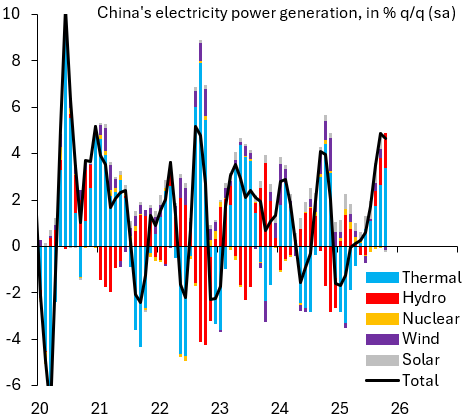
What can we say? Lots. The bigger picture that emerges from research is that China’s extreme pace is because it has calculated it will soon need far more electricity than right now, even though right now China burns more coal than the rest of the world combined.
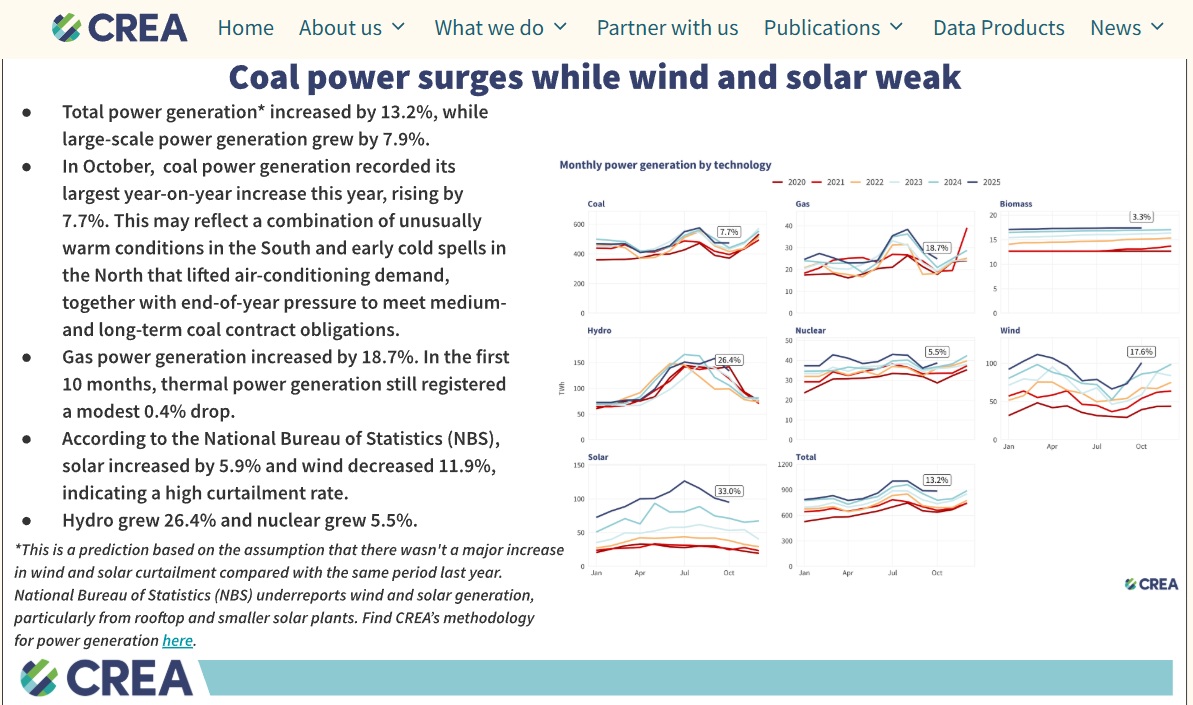
The soaring demand for electricity is driven by China’s campaign to dominate the world in all industries, not only manufacturing but new industries including data centres, AI, bitcoin and high tech weapons. No matter how much oil and gas China imports from Russia and Iran, how much coal it mines in northern China, there will not be enough electricity, especially in the high-tech hubs of China’s southeast coast- Hong Kong, Guangzhou, Shenzhen. That is precisely the destination of the hydro/solar/wind electricity generated in Tibet.

China wants to be loved because its factories make so much green energy tech; while also demanding respect because it is the world’s factory and urgently plans to accelerate further industrialisation. Put plainly, this is a contradiction, and the growing number who admire China fail to see China’s greedy fixation on having it all, at once.
Wall Street Journal bluntly says China is “an AI ‘factory brain’ that acts as a central nervous system.” Who can call out China’s double standard, reframe the debate, make the connection between China’s massive emissions and the melting permafrost no-one yet knows about?
Who will tell it like it is? China has no intention of turning away from coal, oil, gas, nuclear fission and nuclear fusion just because it manufactures lots of solar panels and wind turbines, and locates its by far biggest installations in Tibet.
ADDICTED TO COAL
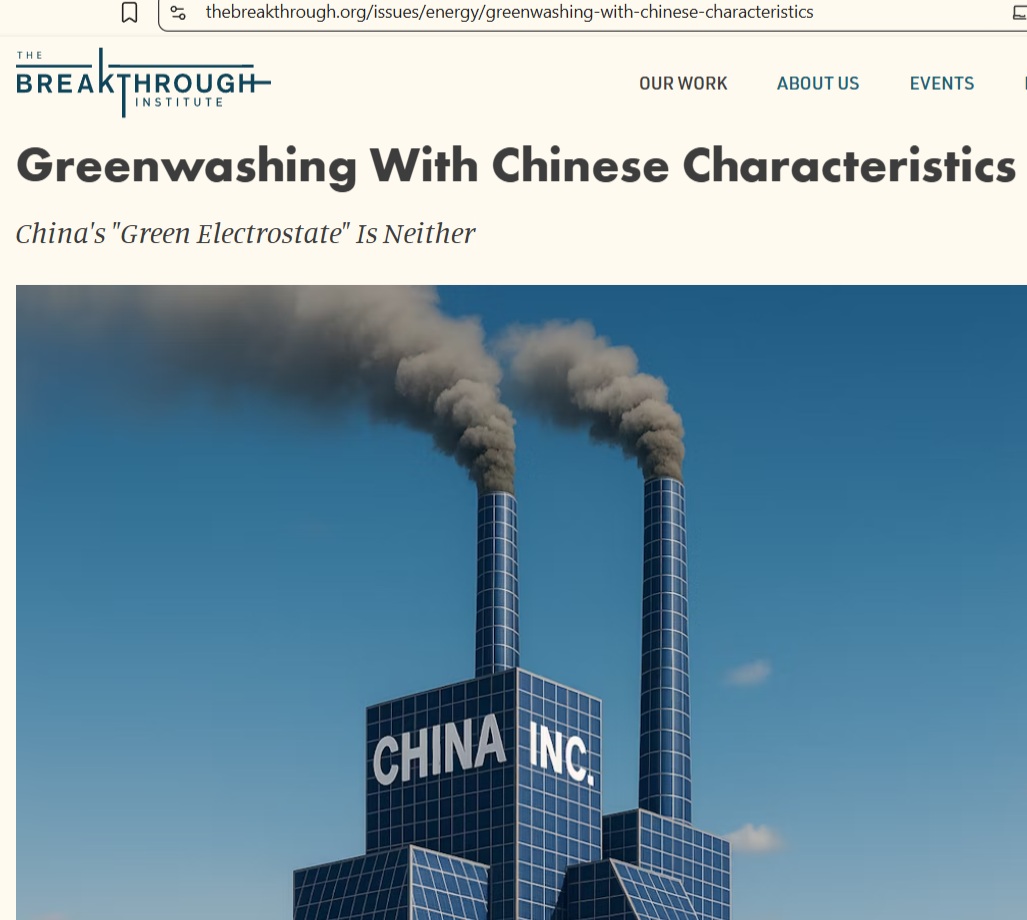
Celebrating China as the world’s first electrostate does not mean China is turning away from being a petrostate. The biggest of China’s state owned oil and gas corporations see green energy as just another tech to add to their coal mines, oil wells, pipelines and tankers shipping in oil from Siberia and Iran.
That is why the Yarlung Tsangpo hydro mega project, after decades on the shelf, got dusted off, for fast construction. That is why China invests huge amounts in building ultra-high voltage power grids that transmit electricity generated in Tibet to Shenzhen, over 2000 kilometres away, in less than one hundredth of a second. That is why official policy directs all hydro dams to be surrounded by solar, wind and other energy sources, including turning the artificial lakes created by concrete walls across rivers, to become enormous batteries.
All of this is explicit in China’s 15th Five-Year Plan for 2026 to 2030, and in other official policy announcements. China’s top-down campaign style urgency is central planners deciding the future of China’s economic dominance requires extraction of energy from Tibet and Xinjiang, two huge areas with -by Chinese standards- small populations that can be shunted aside.
The rush to instal combines several technologies packed together in the hope that the unpredictability of renewables can be balanced out against each other, both on the 24 hour cycle of peaks and drops in distant urban demand, and on an annual seasonal cycle of monsoon rains with high streamflow driving hydro turbines, and low season low flow, low electricity generation, a fluctuation now becoming more extreme due to climate change.
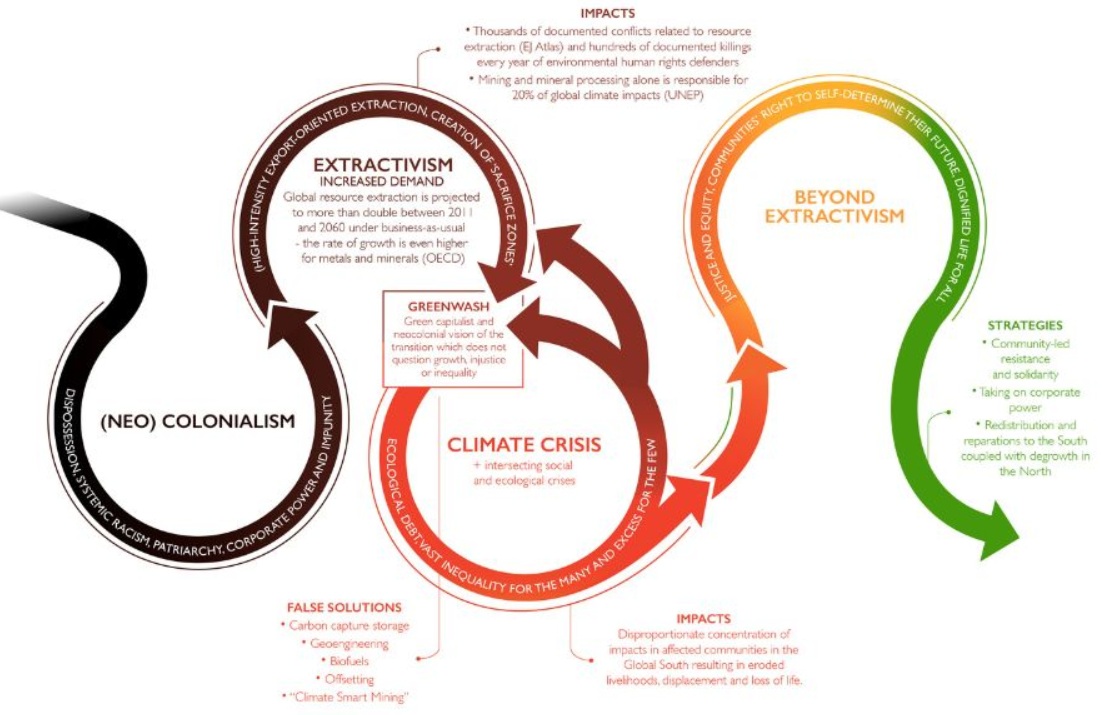
China wants to have it all, and if that makes Tibet a sacrifice zone for green colonialism, for extraction, for turning the free public goods of Tibet into sellable commodities, that is smart thinking.
The sun, skies, clouds and rivers of Tibet join the copper-coloured mountains of Tibet as monetizable, marketable property of the state-owned corporations financed to build, own and operate the hydro dams, solar and wind farms, and the power grids.

SHAMELESS
Those state-owned giant corporate giants are shameless. In the name of embracing the 15th Five-Year Plan targets, they declare themselves champions of green energy, while at the same time promoting their deep petrostate cred as drillers of oil and gas in China, and bulk importers from Russia and Mideast. China National Petroleum & Petrochemical Corporation (CNPC) is on the frontline of China “building an energy powerhouse”, a key goal of the 15th Plan 2026-2030.
China’s petrostate within the new electrostate -CNPC and CNOOC, the onshore and offshore oil giants- now position themselves as embracing green energy, while arguing for ongoing reliance on coal, gas and oil, even after China finally achieves net zero emissions by 2060. They remind party bosses that renewable energy is unpredictably variable, and that China has for decades relied on importing most of its oil and gas. Their solution is a renewed spend on fossil fuels within China, including a staggering budget for pipelines connecting oil wells to consumers. Truly shameless.
CNPC had a taste of Tibetan initiative back in year 2000, when it plunged into the NY Stock Exchange sea, expecting to raise many billions in capital from American investors. Tibetans joined with human rights advocates for Sudan, a major CNPC PetroChina investment, to warn potential investors this stock is toxic. As a result CNPC did list on NYSE, but raised several billions less than they hoped. Even their US promoter, Goldman Sachs, conceded that “The offering faced tremendous regulatory and political resistance, weakening demand.” TV cop show Law & Order: SVU then filmed an ep based on this true story, centred on a Tibet activist murdered.
CNPC says: “an internal critical issue within China’s current energy security that requires further resolution during the 15th Five-Year Plan period. Its core lies in addressing the low effective utilisation and intermittency of renewable energy through the integration of renewable energy with energy storage. Currently, renewable energy sources such as wind and solar power account for over 40% of the nation’s total installed capacity, yet contribute only around 20% of electricity generation. The primary reason for this discrepancy is the mismatch between the generation contribution of renewable energy and user demand. Indeed, national energy security also hinges on energy network development and strategic reserves. The Proposal prioritises “optimising the layout of key energy corridors.”

“During the 15th Five-Year Plan period, comprehensive breakthroughs will be achieved in oil and gas pipeline interconnectivity. Upon completion of major projects like the central section of the West-East Gas Pipeline Phase III and the China-Russia Far East Pipeline, the national long-distance pipeline network will exceed 150,000 kilometres, forming a “four vertical, four horizontal” backbone network. Regarding this, Zheng Zhaojie, Director of the National Development and Reform Commission, stated that during the 15th Five-Year Plan period, it is anticipated that over 700,000 kilometres of underground pipeline networks will be constructed or upgraded, requiring additional investment exceeding 5 trillion yuan.”
SHIFTING THE GAZE: WHAT IS VALID EVIDENCE?
Looking at Tibet through official China’s eyes doesn’t mean you have to wrestle with propaganda. There is a lot published by Chinese government ministries and corporations that provide access to seeing where China is heading, which usually do their compulsory obedience to propaganda slogans at the top, then get down to specific directives.
Maybe the whole point of exile is that you don’t have to look too closely at China. Yet when you do, you can see China’s plans and intentions. Much of what we know of situations on the ground in Tibet can seem fragmented, disjointed. When we look at Tibet via China the general trend becomes clearer, events that seem isolated fit a wider pattern.
It could be a useful way of understanding the pressures experienced by Tibetans now, and to foresee further pressures in the future. Since the seven million Tibetans in Tibet have few ways of assessing what China aims to do, it could be a practical act of solidarity to access and analyse China’s policies, and feed back our understandings to Tibet, even if RFA and VoA no longer transmit.
For 70 years China’s decrees, even when translated into Tibetan, have made little sense to communities on the ground. Too much jargon, too many unstated assumptions, too much disguised by propaganda slogans. If we can connect the dots, contributing to the global analytical effort to understand China, we can then help the seven million connect the dots and see what is coming.

Since China is fixated on endless economic growth as the solution to everything, it helps to know some economics, and to dig into the writings of those who understand well how the Chinese party-state system works. That way we plug into a global effort at clarity about China’s directions and contradictions.
This doesn’t mean asking Tibet advocacy NGOs to become researchers; there are Tibetans and friends of Tibet who do that. It does mean doing a SWOC based on those research reports, so as to be able to tell the wider audience a coherent story that both connects dots and provides a distinctive Tibetan perspective. There is an audience for that.
TIBET AS A CHRONIC THREAT TO CHINA’S NATIONAL SECURITY
So far, this story is all about China’s energy security. But if you look carefully at China’s announcements launching this investment and extraction blitz in Tibet, there is a reason ranked higher, prior, to energy security, and that is national security.
It is at this point lots of dots join up, lots of past campaigning for Tibetan human rights fits into a bigger picture. Lots already familiar now adds up to a wider picture, for a different audience. More on redefining audience later.
When launching the lower Yarlung Tsangpo mega project, why does China say first and foremost this is a question of national security? The threat to national security is not defined. We must find clues elsewhere. This can be done, because the approach we are taking is called political economy, a long established academic discipline, broader than human rights case documentation, able to combine both the economics of why things happen, and the politics.
The Yarlung Tsangpo mega build is in Nyingtri prefecture of TAR, a region China has securitised only by locking down an entire region, for decades, through surveillance, censorship, fear, punishment, disempowerment. Economically, this is not a long-term solution, it only turns the hearts of Tibetans away from China. Now China, as part of the 15th Five-Year Plan, aims for a single, unified national market, in which all provinces are fully engaged in production and consumption. China has ambitious plans for Ű-Tsang, is currently building major new high speed railway lines, expressways, power grids, aims to operate large data centres, a land port for trade with South Asia, and intensify meat production by industrialising livestock production on large scale agribusinesses based on consolidating small land holdings into much bigger landscapes leased to Chinese enterprises. These are all current plans scheduled for the 15th Five-Year Plan period.
Economics drives China. Wealth accumulation, wealth concentration lead to more wealth to be made to make more, and be protected more. Follow the money.
At University of Colorado, Boulder, Emily Yeh teaches political economy of Tibet.
Can TAR graduate from being an expensive cost centre to become a profit centre, if the population is demobilised, infantilised, treated as ignorant and backward? Can China realise its targets of lasting poverty alleviation, wealth creation, labour mobility, human capital formation, land consolidation as long as Ű-Tsang remains locked down? Has it at last dawned on China that endless repression achieves nothing?

Aspects of China’s grand strategy are painfully obvious. The centralised residential boarding schools, making Mandarin Chinese the medium of instruction are coercively assimilationist. Decades of removing nomads off their lands, construction of frontier villages along the border with India: these are familiar issues raised many times. Do they add up to a coherent policy direction China is pushing in Tibet?
It is no secret that China sees urbanisation as the destiny of almost all citizens. Rural revitalisation means large scale, highly automated agribusiness relaces small scale family farms, everywhere. Few former peasants will be employed. City life is the inevitable outcome.
For Tibetans, China sees a longer road before eventual urbanisation, not in cities of Tibet but scattered across China. First step is to get Tibetans to surrender their limited land rights, cancel land use certificates, move them out to distant frontier villages designed to prevent keeping any animals. This is the start of the compulsory road to acquiring urban hygiene and civility, acquiring the one common language of China, vocational training to make Tibetans more productive and qualified. In short, a classic colonial civilising mission. Rural displacement, language policy, residential schooling, hydro dams, scaled up solar installations, frontier village relocations all push Tibetans in a unified direction: coerced, moulded, incentivised, punished to make the transition to joining China’s labour force, as lowly factors of production, scattered across China into many cities.
There is no mystery about this long term trend; it is what CCP explicitly plans for everyone, Tibetans and Uighurs included.
Once we start connecting the dots a much clearer picture emerges. Once we are no longer constrained by legalistic definitions of evidence that can be admitted in a court case, a wider picture emerges, with plenty of Chinese policy announcements, laws, regulations and Beijing elite insider analyses available to us, to ensure the picture is right.
Coming back to China declaring number one reason for investing so heavily in the Yarlung Tsangpo mega hydro is national security: yet another Chinese announcement that it has failed to secure Tibet, remains fearful that chaos could erupt unpredictably, chaos that could readily threaten China’s existence. What does it mean to say Tibet, especially TAR, is not secure? Tibet is still a remote colony, not peopled by settlers reliably loyal to Beijing because Han can’t and won’t settle there, air too thin, too cold.
How can tunnelling a mountain in a remote corner of Tibet produce national security? By joining the dots we see better what is intended. The workforce currently being assembled will be around 100,000 people, all certified as fluent in written and spoken Chinese. It’s an expeditionary force to secure the frontiers, to lock Tibet forever into China, to build an electrostate reliant on endless energy from Tibet, to bind China’s manufacturing base to the fate of Tibet, to provide electricity for the biggest copper mine nearby that plans to intensify extraction, electricity to power the Chengdu to Nyingtri to Lhasa high speed railway due for completion in 2030. It all adds up.
When we speak of hydro it is because local communities, villages and monasteries are evicted, and because of environmental dangers. That is true of Yarlung Tsangpo too, but China naming national security as number one tells us there is more. The displaced -Tibetans, Monpa, Lhopa- will most likely be relocated to frontier villages, expected to patrol the borders, reporting any intruders, most likely their own relatives living in Arunachal and Bhutan.
A construction budget of RMB 1.2 trillion can have big impacts. Beyond the US military, this is the most expensive project in world history.
NEW AUDIENCES
What does this mean, for targeting new audiences? Interest in China has never been higher. There must be thousands of strategic analysts, policy think tanks, investment advisers, wealth managers, geopolitics consultancies, documentary makers, podcasters all trying to figure out where China is headed. A big audience looking for big picture perspectives.
They are busy posting their insights on their own websites, social media, Substack’s; a great source for checking we are on the right track, and a great audience always looking for new angles, new insights.
We could look on this approach as opening up new dialogues, engagements, new collaborations, perhaps new sources of grants. It may seem a big ask, a plunge into the unfamiliar, but big new audiences await. It would be unfortunate if we let the opportunity slide away.
Every electric car made by BYD relies on lithium from Tibet for the battery that powers it. We have known BYD’s reliance on lithium from Tibetan salt lakes for decades, and when the moment came that BYD cars began to dominate electric car sales worldwide, we could have connected with new audiences. The research reports were done, the information was available.
We have amazing stories to tell. When Tibet transmits electricity to electrostate HQ, it is electrifying DJI drones, biggest drone maker globally, a company which revolutionised warfare in Gaza and Ukraine. Where were those drones designed and tested? Within an enormous 4-storey high space inside the DJI building in Shenzhen, away from being seen by competitors. What does it take to build and use an indoor drone test space? Electricity.
What does it take to fulfil China’s 15th Five-Year Plan to dominate AI, big data, large language models, civil-military fusion weapons design? Electricity. The more we know about the booming industries of Shenzhen, Guangzhou and Hong Kong, the more intro hooks we have, to introduce the exploitation of Tibet as the source of their electricity. The entrepreneurs of Shenzhen are keen to tell us their grand plans; and the CCP party-state is keen to back them, including making their electricity free. Gives Free Tibet a different meaning.
If we can’t find ways of speaking up, China gets away with presenting itself as the green energy saviour of the world, its megaprojects overwhelming Tibet pitched as all for the prosperity of the Tibetans, cute pix of sheep (no goats or yaks) grazing beneath the solar panels.
ACCELERATING A MATERIALIST TECH UTOPIA
China is in a hurry to scale up the new energy tech being installed across Tibet and overcome the chokepoint of green energy: fluctuating, unpredictable supply, a mismatch between supply and demand at a time of rapidly accelerating demand.
China’s answer is yet another party-state campaign to quickly create new tech for energy storage by the deadline of 2027, if the tech utopia is to happen. The speed and urgency of this crash program is backed by its two-year budget of RMB 250 billion.
This moonshot warp speed program impacts Tibet in several ways, even though some of the new tech options would be at the electricity consumer end rather than the Tibetan electricity supply end.
First, lithium batteries remain the likeliest solution, according to the Special Action Plan for the Large-Scale Development of New Energy Storage Technologies 新型储能规模化建设专项行动方案(2025—2027年)issued by the National Development & Reform Commission and National Energy Administration in August 2025. That means more and more lithium extracted from Tibet, as batteries get bigger.
But batteries alone can’t bridge the gap between unpredictable supply and insatiable industrial demand. This is where other supply side tech is now being urgently tested under this Special Action Plan for accelerating Tibet’s full assimilation into China’s economy. The top techs already available, or close to being market-ready scalable and cheap, are pumped hydro and splitting water into hydrogen and oxygen, capturing and pumping hydrogen by pipeline to end users. However, like pumping oil from Siberia to China, such pipelines are slow to build, costly and uncertain.
For electricity guzzling Chinese industries, old and new, the variability of green energy from sun, wind and river flow remains a big headache. Currently available tech fixes such as pumped hydro are quite good at evening out the daily peaks and troughs of energy demand of factories and cities far from Tibet. Installing a second dam just below a big dam, to pump water back up in off peak hours of the 24 hour cycle is expensive and complex, but it can add enough water to the upper dam to increase electricity output in the hours of peak demand. Engineers call this peak shaving. In effect, the lakes created by dams become massive batteries.
That may work well in the 24-hour cycle, but not well in the annual fluctuation in river flow based on a wet monsoon season, largely dry outside the monsoon months, a contrast sharper than ever, because climate change drives extremes, floods one year, drought the next.
So China’s engineers of the Special Action Plan for the Large-Scale Development of New Energy Storage Technologies are investing heavily in technologies at the consumer demand end of the power grids from Tibet, to ensure all that Tibet can generate can be used. One current favourite is using electricity from Tibet which has no immediate use, to compress air, which can later be released in peak demand hours to generate electricity as needed. At either end of the power grids the intention is to take, transmit and consume as much electric energy as Tibet can generate, to confront and overcome the chokepoint inherent to the nature of electricity, which means generation and use have to be simultaneous.
HIT THE ACCELERATOR

Why is China in a hurry to intensify and accelerate? Politically this kind of mass mobilisation campaign is how the CCP has overcome inertia and pushed for achieving targets, a strategy based in the revolutionary decades. Looking ahead, in the short term China sees electricity demand racing ahead of supply, just at the time China is at last talking about reducing carbon emissions.
There is a much longer time frame in the minds of China’s central planners, all the way to year 2060. That is the year China says it will finally achieve carbon neutrality, at least one decade later than the rest of the world. How to achieve that in an era of sharply rising demand for electricity, plus security state fears focussed on China’s current reliance on imports.
By 2060, if China is to get 60 to 70% of its electricity from hydro+solar+wind bundled together, that requires decades of intensive installation across Tibet. Yet at the same time, between 2020 and 2060, China’s total electricity production will double, which means China, even in 2060, will continue to burn billions of tons of coal each year, while claiming it has reached net zero emissions. So Tibetan permafrost melt will continue to accelerate.
Here is how China’s energy experts put it. According to energy policy experts from Shanghai Jiaotong University and state-owned China National Oil Company: “wind and solar power must provide 60–70 per cent of China’s total electricity generation by 2060—a shift from an electricity structure dominated by thermal power (nearly 70 per cent in 2020). Total electricity production would increase from 7,511 terawatt hours (TWh) in 2020 to 15,100 TWh in 2060. Consequently, by 2060, the combined generation from wind and solar power must reach 8,700 TWh—far exceeding today’s current total electricity consumption. This grand transition must occur within 40 years. This transition is further fuelled by the need to ensure national energy security. China has few reserves and little production of fossil fuels. This, and the fact that China’s economy is heavily reliant on fossil fuels for its energy needs, leads to an increasing dependence on international energy markets. In 2023, China’s crude oil consumption was 772 million tonnes, with imports accounting for 564 million tonnes, resulting in an external dependency rate of 73 per cent. In 2021, President Xi emphasised that ‘as a major manufacturing country, China must hold its own energy bowl firmly in its own hands’. Hence, fully utilising China’s abundant wind and solar resources to replace traditional fossil fuels is vital for enhancing China’s national energy security. Therefore, the transition to low carbon is necessary not only for sustainable development but also for ensuring energy security.”[1]
This is a massive commitment; China is out to exploit Tibet as never before. If you add in other major announced and financed projects currently in construction, China plans to capture Tibet in new ways, siphoning Tibet’s water, electricity and minerals to distant cities; while despatching Han Chinese tourists, tens of millions more annually, into Tibet to consume Tibet as China’s exotic other. All of this becomes clear, and in detail, by tracking China’s policy announcements.
**********************
[1] Haitao Yin, Boyu Liu and Feng Wang, Striding over the next hurdle in China’s transition to renewable electricity, in Ligang Song and Yixiao Zhou Eds, The Great Energy Transformation In China, ANU Press 2025, free download https://press.anu.edu.au/publications/series/china-update/great-energy-transformation-china#tabanchor