THE NINETIES IN CHINA, SO DIFFERENT TO TODAY
The decade of the 1990s, immediately after the Tiananmen massacre, seemed to be a decade of imposed conformity once the party-state, June 4 1989, brutally reminded everyone that power still comes from the barrel of a gun. The “culture fever” decade of the 1980s, with its intense curiosity about the wider world, had been suppressed, yet China’s hunger to connect with the wealthy modern world persisted. Culture fever continued.
The nineties still had niches where advocacy for wild rivers, wild antelopes and the Tibetan wild yak brigade could mobilise strong public sympathy, widening media coverage, ad hoc partnerships connecting Beijing elites with frontline NGOs and investigative reporters; all of which led to global attention, concern, funding, movies and the 1999 Xining Declaration.
In that remarkable agreement to protect Tibetan antelopes, China was one of the many signatories, alongside other governments and NGOs all pledging to work together on saving chiru; a coalition that could never happen under Xi Jinping’s monopoly of power. The 1999 signatories were just such an ad hoc partnership, bringing together Chinese and international NGOs, diplomats, officials and frontline wildlife protection workers; in a skilful push to nudge the central leaders to take on effective responsibility for saving an endangered species.
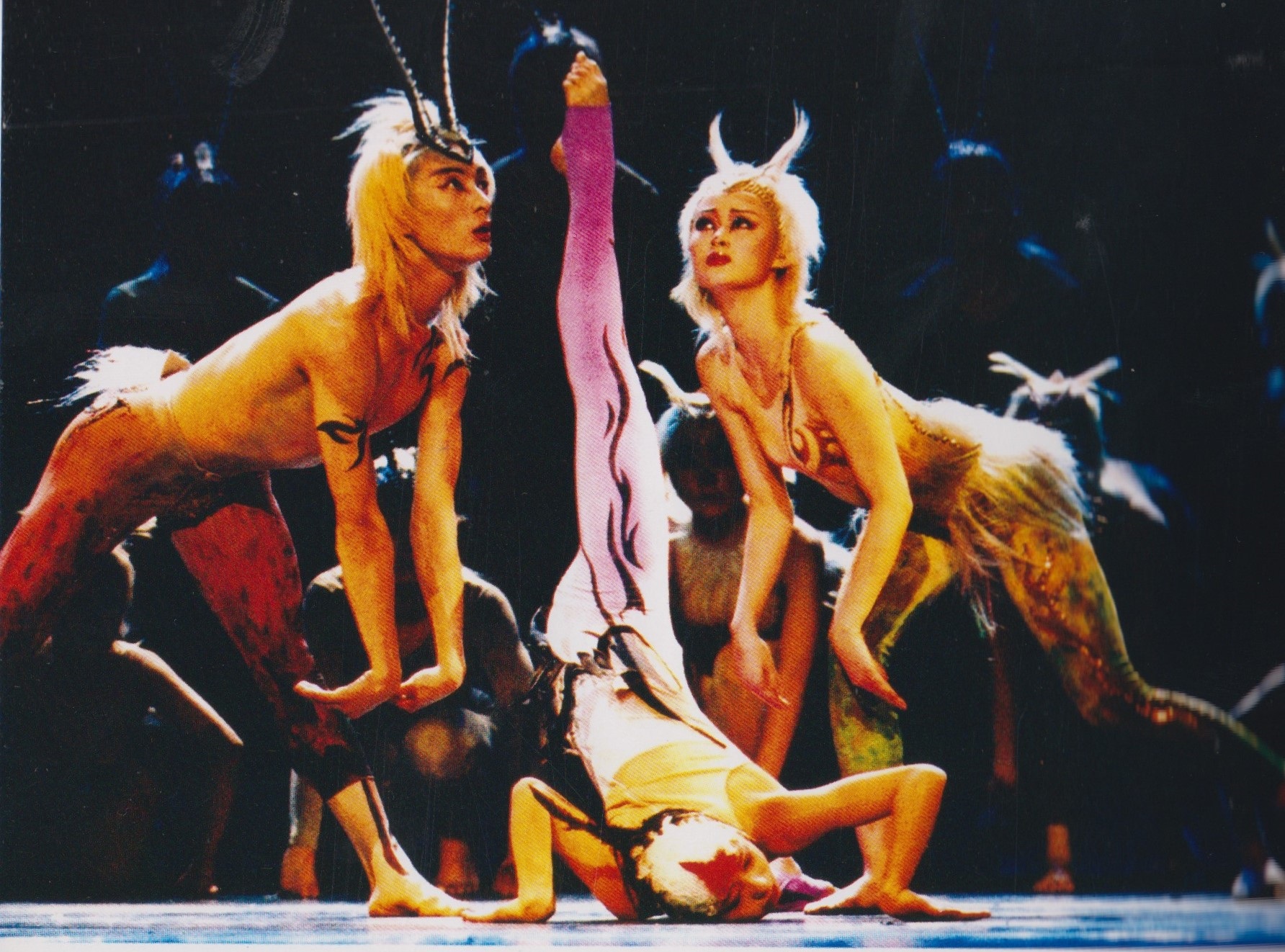
Throughout the 90s there was censorship, centralisation of power, rectifications; yet by today’s standards many voices could still speak, and at the highest level within the party-state a growing awareness that economic growth needs to be balanced by protection of nature. Party bosses sometimes heeded those swellings of dissent, for example the 1994 cancellation of planned hydro damming of the last wild river, the Gyalmo Ngulchu/Nujiang/Salween. Theatre groups dressed up as antelopes in fear of further slaughter, journalists filed story after story, script writers started writing screenplays.
While the Tibetans out on patrol had by then almost eliminated the slaughter, their status was precarious and ambiguous, with barely any official credentials, almost no money, and physical exhaustion.
Yet their efforts had inspired so much graphic, grounded journalism, touching so many readers’ hearts, chiru གཙོད་, tsǿ,藏羚羊 slaughter had become a mainstream issue, which the party-state had to respond to.
Throughout the life of the Mountain Patrol it was both a grass roots NGO and an outlier agency of local government, a negotiable ambiguity renegotiated many times, never resolving into a neat binary. Similarly the 1999 gathering in Xining was ambiguous: was China in command, or just one of several governments collectively asserting their legislative voice? The party-state had its red lines, and many NGOs, Chinese and international, were skilled in pushing right up to those invisible red lines.
The Tibetan patrol leaders who had been murdered were remade into heroes, martyred not for the glory of the party-state but for the chiru གཙོད་ tsǿ,. For the first time the patrols were adequately financed, and stationed deep inside chiru གཙོད་ land at the Sonam Dargye Protection Station. Six patrol team members were stationed there at an altitude of 4600 meters, which rapidly became a pilgrimage destination for Han visitors seeking to partake of the sacred mission to protect the annual uphill migration of pregnant chiru གཙོད་,. This brought the state back in, expanding its reach.
PACKAGING THE AUTHENTIC, EXPERIENTIAL ENCOUNTER WITH NATURE
However transforming Amdo/Qinghai “no-man’s land” into a hospitality industry hotspot for mass Chinese domestic tourism is hard work, and requires local government subsidies to tourism packagers.
By comparison TAR is expanding its packaged destinations beyond Lhasa, by focussing on counties with varied scenery -snow mountains and lakes- as well as enough resident Tibetans to sing and dance for the tourists. Destination development is much easier if transport is convenient. For example Sangri, east of Lhasa, is now energetically marketed as a desirable stopover.
Until now Sangri -In Tibetan Zangri ཟངས་རི་རྫོང་།; in Chinese 桑日县- has long been known to Tibetan pilgrims for its Ode Gungyel mountain, father of mount Nyengchen Tanglha; at its foot Ola Cholung monastery, a key site of Tsong Khapa and the major Buddhist lineage he founded.
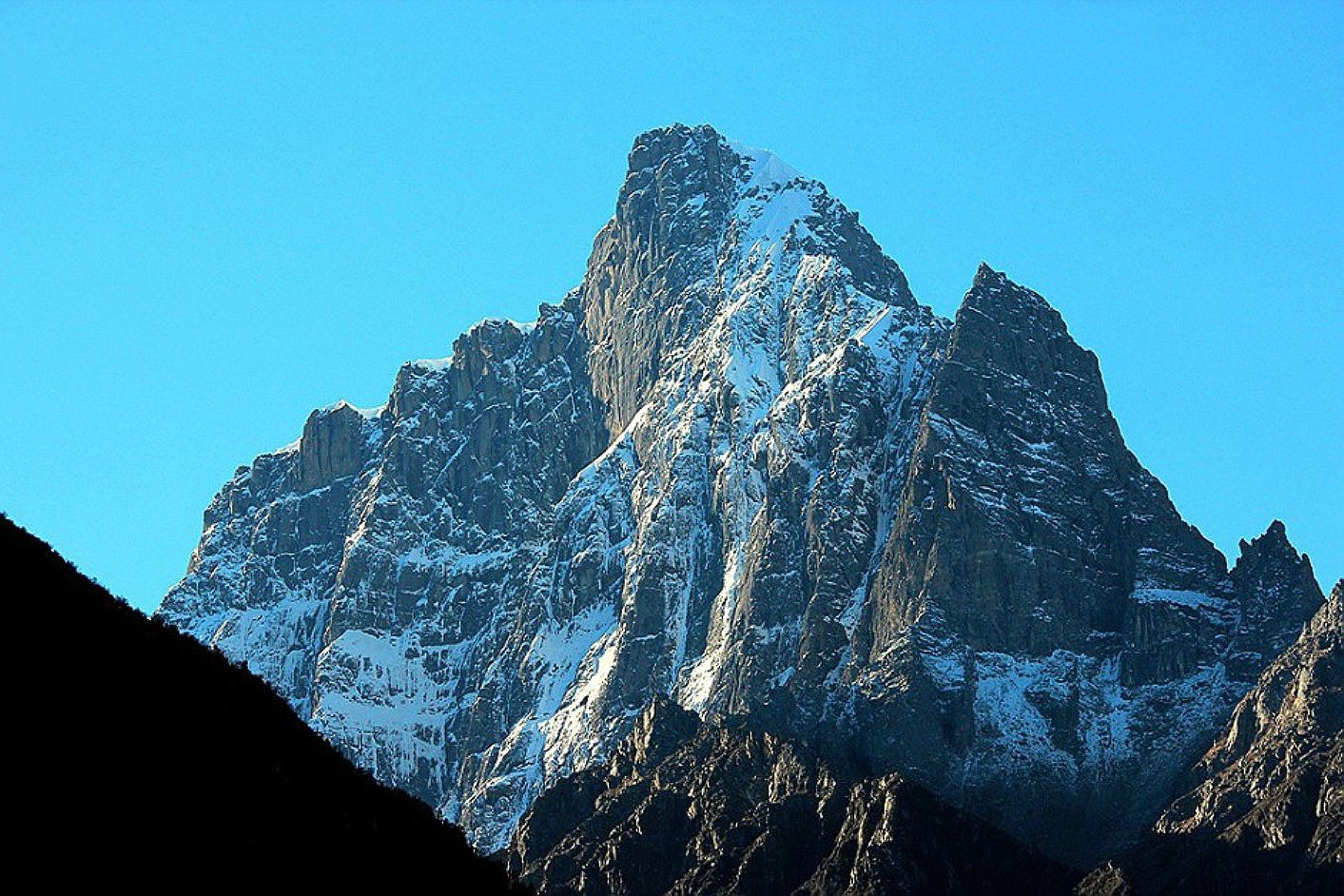
In short, Sangri has a wide range of marketable locations; so the question is how to package them, make them a coherent product, finding a unique selling proposition?The county government, only 200 kilometres from Lhasa, is assiduous in promoting its suite of products, and emphasises the key element that defines a tourism package: intellectual property, IP.
So important is IP that in Chinese it often retains its English abbreviation. IP is bankable, it is capital, investable, profitable tangible and in UNESCO jargon intangible heritage. IP means ownership, and the tourism industry in Sangri proclaims its ownership and exclusive access to mountains and lakes, and to the Tibetans who on cue sing and dance for the tourists. The Sangri Tibetans are owned, as chattels primed to dance when the train from Lhasa or Nyingtri pulls in.
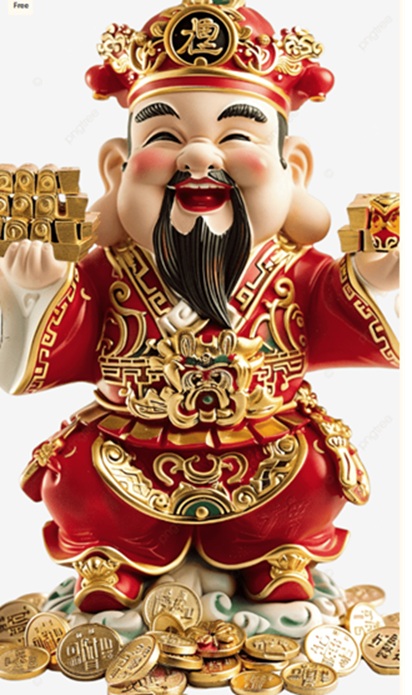
In the words of 2026 official media: “Sangri Sijin Lacuo Cultural Tourism Brand Promotion and Lake Opening Ceremony commenced in grand style. Marking the opening of the lake, a diverse array of experiences—including folk performances, cultural tourism activities and scenic tours—took centre stage, attracting over 600 visitors from across the country who flocked to the area to witness the magnificent moment of melting ice and snow. Centred around the core IP of ‘Tibet’s only world-class God of Wealth Lake’, the event featured four meticulously curated sections: an original song-and-dance drama, a romantic gift-giving ceremony, trendy rap performances.”

Why is IP so important? If you can make ideas, metaphors, dance moves property, you own them, or have exclusive rights to make money from allowing access to others. Property is the basis of capitalism. USA global dominance has long been based on IP, on exporting its movies, music, culture, fashions that counterbalance America’s fading dominance in manufacturing.[1]
Likewise, China is transitioning from becoming “the world’s most complete industrial system” to also becoming a post-industrial powerhouse of intellectual property. So in Sangri a Tibetan lake become the intangible cultural heritage intellectual property of the tourism industry because it has branded the lake as the God of Wealth Lake and held an Opening Ceremony to launch the lake into the market. Similarly the Tibetan dancers are IP of the tourism industry. This is more than money grabbing, it is Tibet’s part in China’s grand strategy of growing a giant post-industrial consumption economy, as well as remaining the world’s factory, in which Tibet also features as a supplier of raw materials, water and electricity.
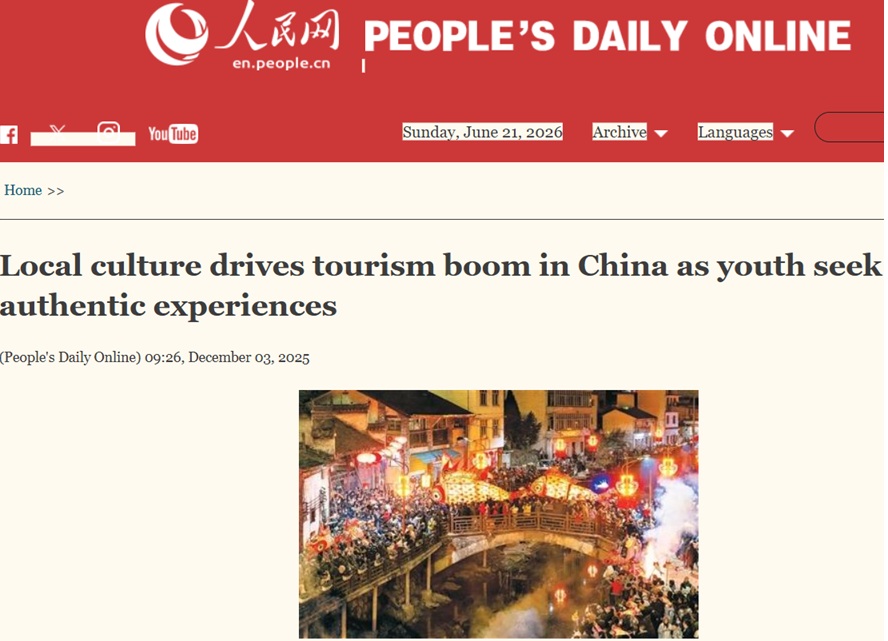
China’s growth trajectory depends on boosting tourism, core of the party-state strategy to orchestrate an economy of spending on travel, scenic spots, hospitality industry branding of more, newer destinations. If China is to avoid stagnation in the “middle income trap” that afflicted Japan and South Korea for decades, a major solution is to stimulate spending on tourism.
Existing, well-known destinations are already swamped. The need for new destinations is urgent. Inventing new scenic spots is a process of staging the production of new product. “China logged around 1.52 billion inter-regional passenger trips during the 2026 five-day May Day holiday, a 3.49-percent increase compared with same period a year earlier, the Ministry of Transport said. Hong Yong, associate researcher at the Chinese Academy of International Trade and Economic Cooperation pointed out three major shifts — consumption motivation has changed from “destination-driven” to “interest-driven,” consumption scenarios have expanded from “standardized scenic spots” to “personalized experience spaces,” and policy effects have upgraded from “single subsidy” to “ecosystem coordination.” Young consumers are increasingly pursuing in-depth travel experiences.”
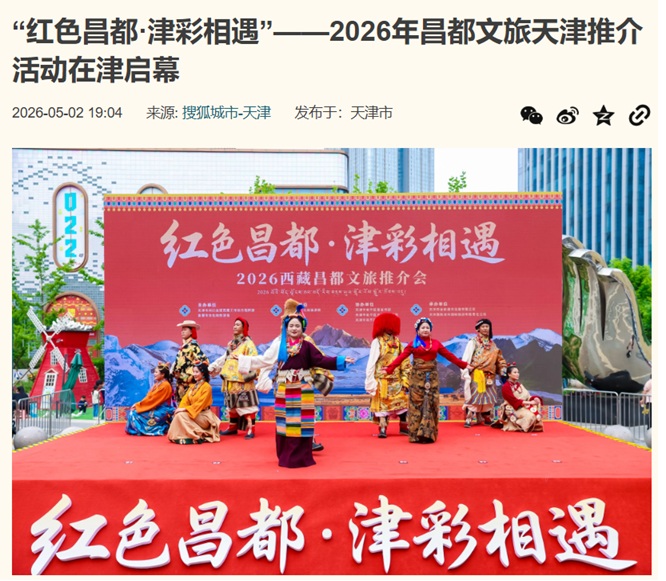
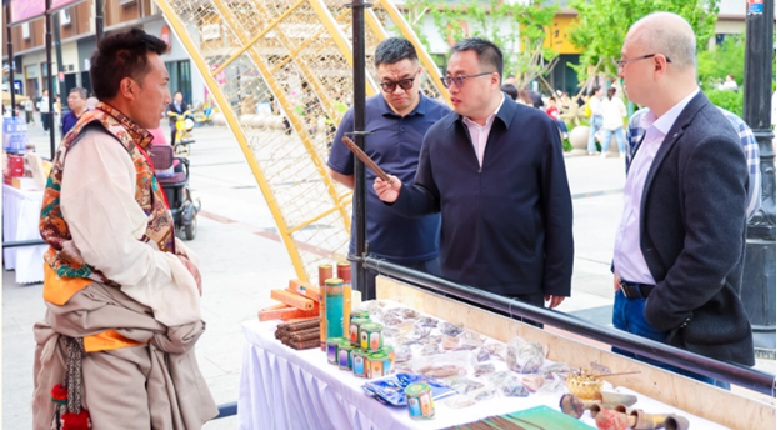
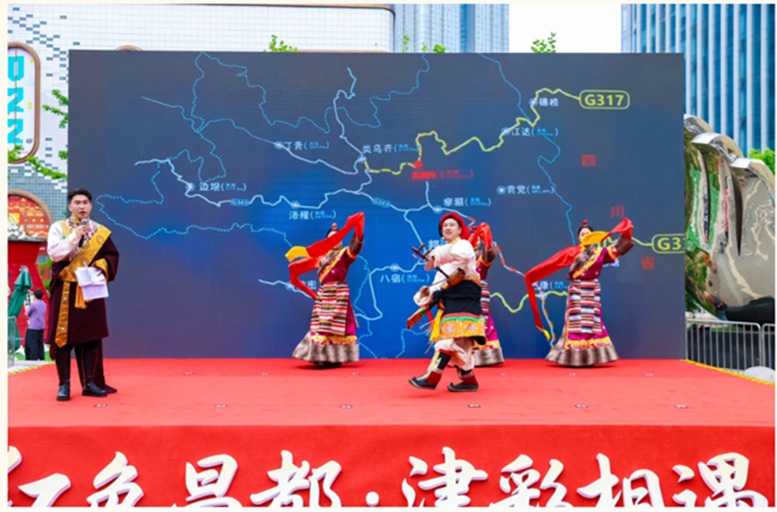
Even more shamelessly Chamdo now markets itself as a tourism attraction because that is where the People’s Liberation Army defeated the Tibetan Army: “At the launch ceremony, Chamdo’s cultural and tourism ambassadors highlighted the region’s three key credentials—‘The Eastern Gateway to Tibet’, ‘ the Birthplace of Kham Culture” and “The Site Where Tibet’s First Five-Star Red Flag Was Raised”, systematically promoting premium tourism itineraries such as eco-tourism, cultural study tours and off-road driving.”
PACKAGING THE AUTHENTIC, EXPERIENTIAL ENCOUNTER WITH NUCLEAR BOMBS
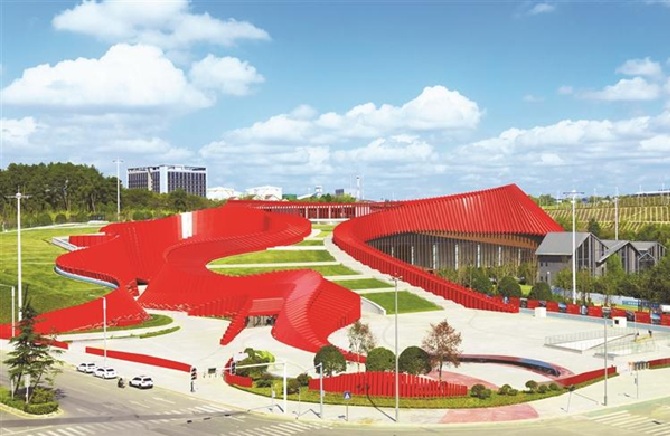
We need not go as far afield as China’s newly invented God of Wealth lake in Lhoka, or the Birthplace of Kham Culture in Chamdo to find models of what Qinghai hopes to build in its’ no-man’s land. Probably the biggest Chinese tourist magnet in Qinghai is Atomic City, on the shores of Tso Ngonpo/Koko Nor/Qinghai Lake, where China’s nuclear weapons were secretly designed and built in the 1960s and 1970s.

What made this site, abandoned and forgotten from 1980s until the Xi Jinping era, such a top attraction for patriotic red gene pilgrimage tourism? A televised drama of the arduous struggle of China’s frontline physicists bravely enduring the cold, thin air of Qinghai, was part of the transition of the top secret Ninth Academy to top destination. The 2018 dramatisation, now on YouTube, begins with a walkthrough of the Atomic City patriotic museum by our ageing heroic scientist, reliving his willingness to “eat bitterness”, sacrificing so much to build those bombs.
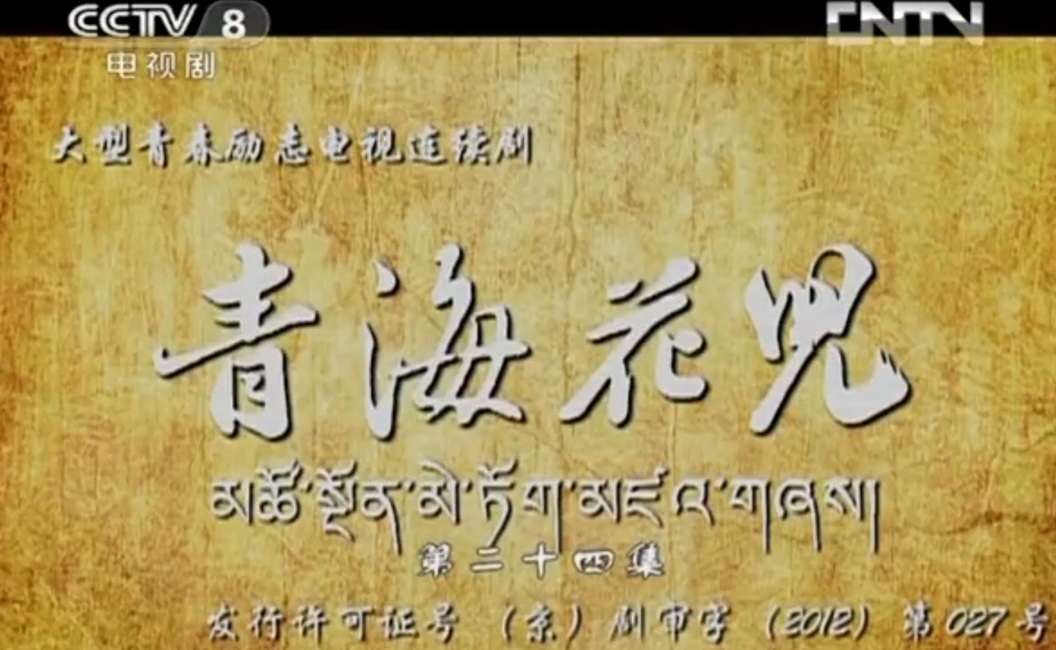
It was a hit. Twenty nine episodes, so much heroic sacrifice, red gene incarnate, an exemplary model for today’s patriotic young Chinese to emulate. In the soapie it is all heroism and sacrifice, but in Shijie Wei’s book, the original on which the telenovela epic is loosely based, much of the sacrifice and loss is the pain of China’s politics. Although the frontline physicists -like today’s AI engineers- were highly paid, the chaos of the Cultural Revolution caught even them. “Wu Jilin, director of the nuclear research and manufacturing base, was killed, as were many of the nuclear program’s most capable experts. Shijie Wei and many of his colleagues were detained and sent down to so-called ‘quarantine and investigation’ programs, accused of fabricating secret assassination and sabotage groups.”
That is all scrubbed from the 2018 epic 29 ep playlist, along with Shijie Wei, in old age, looking back and wondering whether the radiation and atomic blasts had any connection with “significantly higher cancer rates in areas surrounding test sites than elsewhere in China… His only son was born with an intellectual disability, and his only daughter developed severe mental health problems — outcomes Wei himself occasionally wonders may be linked to the work undertaken by both him and his wife, who was also employed in the program.
“With rare exceptions like Wei, most direct witnesses to this extraordinary history left little record of their experiences behind. In their place, selectively curated ‘positive energy’ stories have come to stand in for the whole history, carefully enforced as the only permissible way to remember what happened. Even Wei himself, despite preserving his memory through an autobiographical novel, is frequently invited to recount officially sanctioned stories of patriotic sacrifice at schools and media outlets across the country — unwittingly helping to bury the fuller history his book seeks to recover, and the very spirit of reflection it aims to sustain.”[2]
However, the Atomic City museum of Amdo/Qinghai lake shores remains an iconic red tourism destination, its status reinforced by 2026 National Peoples Congress new legislation, including the Law on Protection and Inheritance of Revolutionary Cultural Resources红色文化资源保护传承法and a new Tourism Law旅游法and Museums Law 博物馆法.
INVESTIGATIVE JOURNALISM, WITH CHINESE CHARACTERISTICS
In 2004 the movie Kekexili: Mountain Patrol was released, quickly becoming a major hit with audiences across China. Closely following the narratives of Chinese journalists such as Liu Jianqiang and Bay Fang, it also featured onscreen a reporter character who does the exposition work of making understandable the dynamics of this remotest of corners, where TAR, Qinghai and Xinjiang meet. That narrative convention, of positioning a Chinese journalist as bridge between audience and action, is one of the few storytelling elements that Tree of Life redeployed, and our heroine falls in love with him. Natch, Plot device becomes love object. Telenovela. “Contemporary Chinese postfeminist media simultaneously celebrate women’s autonomy, economic empowerment, and consumerist pleasure while subtly reinforcing traditional patriarchal values, particularly emphasizing marriage, family, and heterosexual norms. Despite promoting women’s individualism, the drama ultimately portrays marriage as essential to women’s fulfillment, illustrating how state-market complicity in China shapes gender narratives and obscures persistent structural inequalities under the guise of personal choice.”[3]
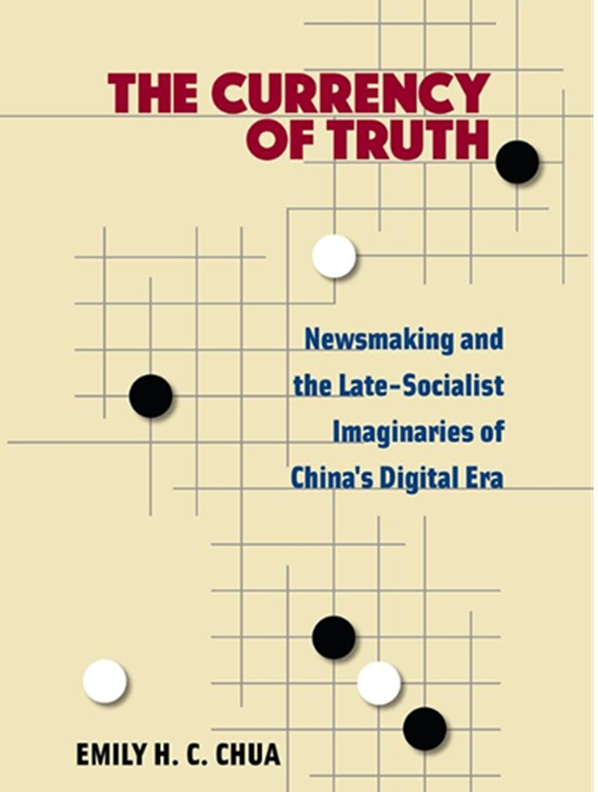
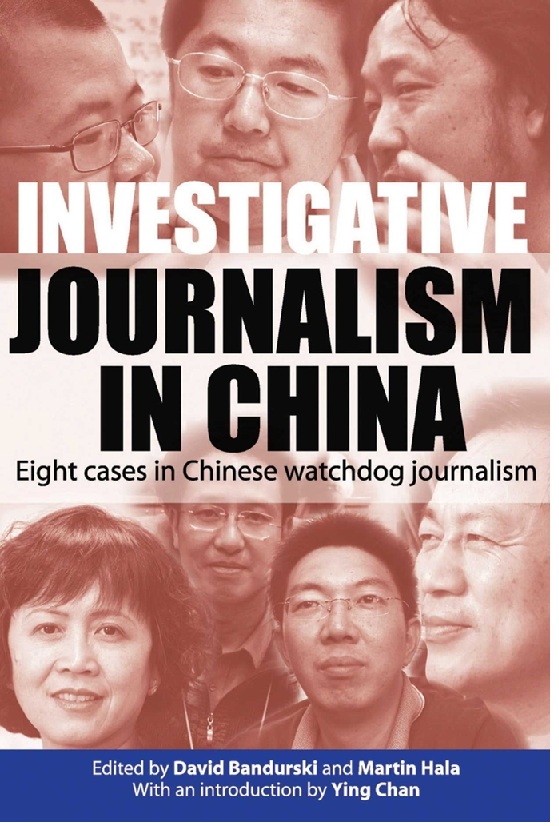
Today there is nostalgia for the 1990s as the decade of investigative journalism. “Despite being critical and revealing the ‘truth,’ investigative reporting in the 1990s aimed at depicting a picture of ‘justice beating the evil side’ zhengyi zhansheng xie’e, representing the determination and capacity of the ruling CCP to punish the black sheep, which enhanced the public’s confidence in the CCP’s rule.”[4]
In the Xi Jinping era investigative journalism is very rare, although the rectification of the corrupt continues to be a popular theme, not only in Tree of Life but in documentaries and even official media, when the corrupt are caught, brought to justice and ravaged landscapes restored. And CCP virtue is thus restored.
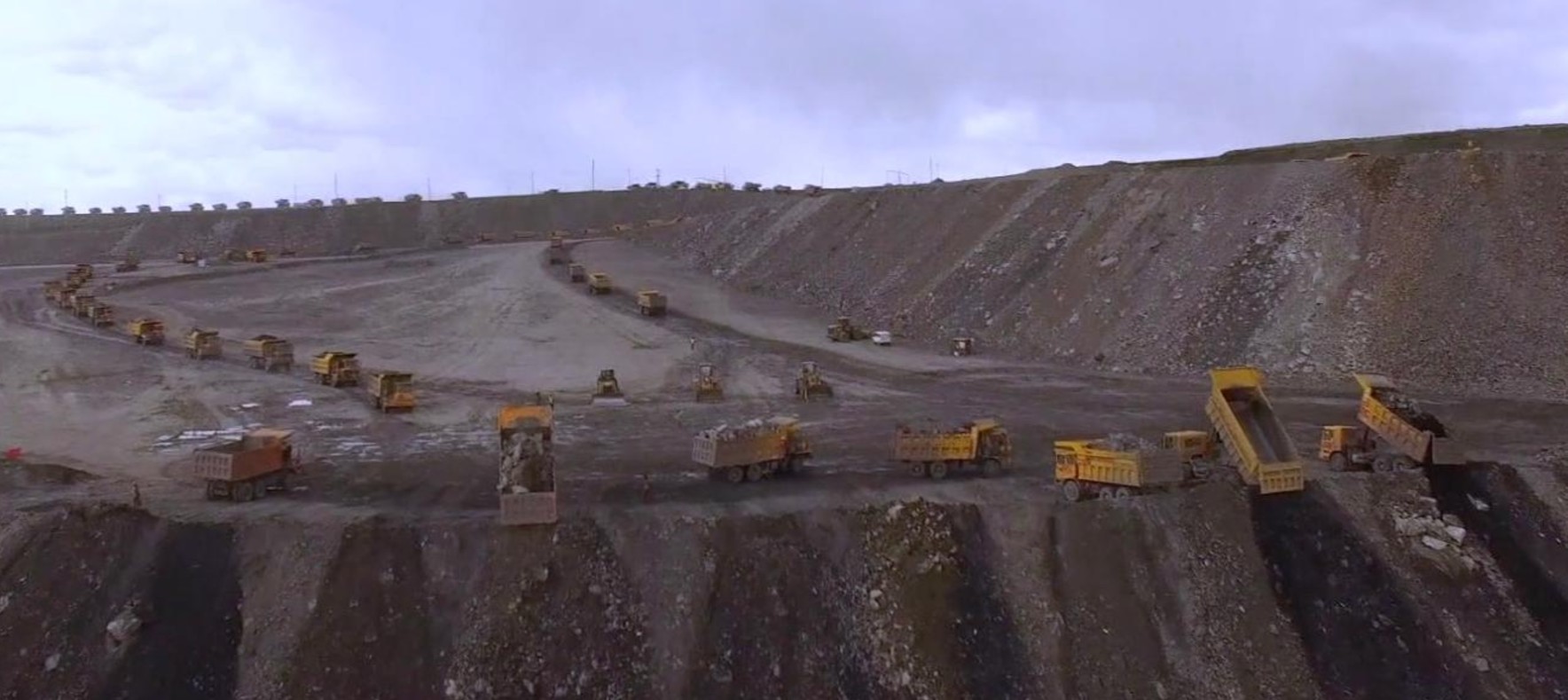
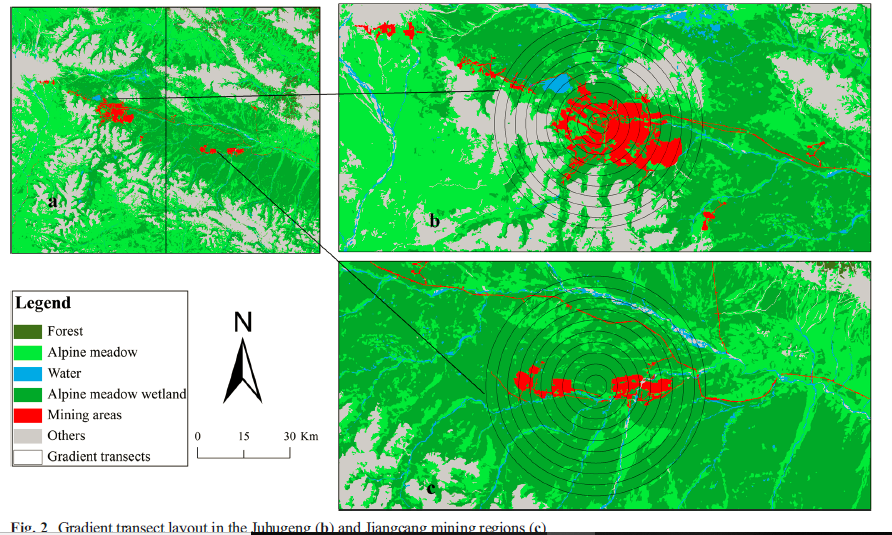
This is why Tree of Life jumps forward, to actual cases, notably the decades of illegal, polluting and wasteful extraction of coal in Amdo, the Juhegeng Mining Area, Muli Coalfield, 青海木里煤田聚乎更矿区, northeast of the chiru གཙོད་ slaughter. In 2020 a lengthy investigation was published by Xinhua, exposing a large scale, persistent, illegal, rapacious coal extraction from Tibet’s far north that had been occasionally checked by environmental law officials, who saw little of concern as the well-connected operators knew they were coming, ceased extraction briefly and blocked roads to the pit with slag. As a result over 20 million tons of coal had been removed, and much more wasted, over many years.
BENEVOLENT PARTY-STATE TO THE RESCUE
By 2022 revegetation was under way and CCTV aired a 44mins doco showing the early stages of restored pristine wetland wilderness, but too many talking heads, nowhere near as dramatic, engaging as Tree of Life in 2026.
From the 1980s influx of gold diggers and chiru གཙོད་ killers to the 2026 Tree of Life soap opera is a saga of close to 50 years. Some aspects of that saga have shifted dramatically, some not at all. Throughout China has remained deeply ambivalent about who has agency in its farthest frontier regions; who is the real protector of the charismatic chiru species; whether the right approach to Tibetan back country is to see it as pristine and mystical, its fauna as magical; or whether statist institution construction is the way forward. All of these perspectives arise again and again throughout the saga, often vehemently expressed, both by conservationists and by the party-state.
Even in the latest hard science, several thousands of years of backward projecting chiru གཙོད population fluctuations, Chinese geneticists cannot resist anthropomorphising their genetic analysis as human demography. Further, they attribute each herd size fluctuation to the standard pantheon of China’s cliches of Tibet. Thus “(i) Neolithic collapse (around 6–4 thousand years ago) probably due to prehistoric overhunting; (ii) Bronze Age expansion (around 2.4 thousand years ago) possibly due to reduced hunting pressure as humans shifted to agro-pastoralism; (iii) an early 15th century expansion potentially from the influence of Tibetan Buddhism on reducing exploitation; (iv) a brief yet severe recent bottleneck during the 1950s– 1990s caused by illegal poaching; and (v) a post-bottleneck recovery since 2000 due to enhanced protection.”[5]
Too neat by far, too anthropocentric, yet this is in China’s oldest and most reputable science journal, a mathematised proof of China’s benevolent, restorative intervention, constructing ecological civilisation.
In Wang Lei’s rapturous text there is even an erotic element: “A male Tibetan gazelle, like a Tibetan antelope, has two horns which curve backward. It has white buttocks and a white belly. It prances around the plateau wiggling its white buttocks like a cute urchin.”[6]
“I once saw a whole dried hide of a Tibetan antelope. Under the long brown hair was a layer of short white fluff, soft and warm. Placing my fingers on it, I felt a charge of tenderness go through my body as far as the recess of my soul.”[7]
Faced by a tsunami of public emotion, all the state can do is try to capture it. Even a party-state as powerful as China can only try to steer such energies into the nation-building stream of propaganda.[8] The tide of ecofeminist passion for slain chiru གཙོད་, mothers and their newborn was unstoppable, ungovernable.[9]
REGIME SECURITY NOW DOMINATES
Yet China’s propaganda machine does work hard at channelling such energies in a nation-building direction.[10] Tree of Life, 40 episodes, seven years in the making, is one of the greatest achievements of institutionalised propaganda.
What does this all add up to? What does this narrative of China’s new narration of Tibetan values, culture, identity, history tell us?
China has not only betrayed Tibetans who embraced hope, development, modernity and eventual prosperity; it has betrayed its own history and multiple contending identities.
From 1990s to today, China has sped up yet regressed, abandoning all concessions to Tibetan autonomy, rebranding Tibetan heroes as China’s heroes of ecological civilisation, erasing Tibetan agency and sacrifice, and China’s indifference to its far frontiers, into a new nation-building story line of heroic Chinese police on the front line.
Recalling the 1990s is not nostalgia; it is a measure of how far China has closed its mind. Recalling the 1980s as a time when some Tibetans took seriously the CCP promise of heaven on earth, a materialist enlightenment, measures how far China has betrayed such hopes.
In his preface to Magic Mountain, Thomas Mann wrote: “Is not the pastness of the past the profounder, the completer, the more legendary, the more immediately before the present it falls?” Rupture.
The more China embraces a simplistic parody of its imperialist past in order to position Xi Jinping as the culmination of human social evolution, the greater the rupture. The more China insists it is also socialist, despite treating workers like expendable chives to cut any time, rupture deepens.
TIBET VERSUS TIBETANS
The landscape of Tibet is the bridge.
China today insists its’ rise to global power is teleologically predestined, inevitable, leaving no landscape behind in the onward march of modernity, development and prosperity, while protecting adorable, iconic wildlife species as evidence of ecological civilisation construction.
Tibetans are portrayed as a quaint, backward tribe, always colourfully dressed, usually singing and dancing, who are ushered into modernity by China’s benevolence. The recent past of Tibet, as well as the deeper past, seemingly can be completely erased, and fitted with a new story of happy families, progress, material wealth.
China’s ongoing strategy of appropriating Tibetan identity, Chinese actors playing Tibetans, dramas in which Tibetans seldom speak for themselves is part of China’s broader campaign of assimilating Tibet into China. Language policy and recent “ethnic unity” legislation are part of a broad and urgent campaign to engineer human souls, to make Tibetans Chinese, and express gratefulness for it.
Taking seven years and a big budget to make even the remotest of Tibetan lands desirable, for tourist consumption, is hailed by the propaganda apparatus as a major achievement, achieved with dramatic plotlines that make Tibet China’s. China’s assimilation campaign has many facets, many fronts, and is intensifying.
When China legislates explicit, punitive regulations on what is required, Tibetan advocates protest worldwide. Incisive analyses are published. However, legislation is just the most overt aspect of a relentless, coercive strategy that appropriates Tibet’s past, present and future, that comprehensively instals a Chinese industrial economy, transforming Tibet into a green colonial extraction zone, that systematically displaces Tibetans from their productive landscapes and houses them in high density prefabricated frontier villages, as the first step in human capital formation with Chinese characteristics. Tibetans become entry-level Han Chinese. Tibetans become productive, in Chinese eyes, at last.
In June 2026 the Qinghai Provincial Market Supervision Administration staged a pavilion at the Shanghai Tech Trade Exhibition, with antelopes and drone-caressed landscapes the core attractions. Qinghai official media enthused that “This initiative aims to facilitate the deep integration of local industries into the dual domestic and international economic circulation, thereby empowering the high-quality development of the province’s ecological economy. 赋能全省生态经济高质量发展” Buy your antelope merch here.
WILDLIFE DIPLOMACY
Iconic wildlife spearheading China’s propaganda campaign reach is familiar worldwide. China rents its captive pandas for huge payments to zoos chosen for their political location, and demands its pandas back if the politics sours.
But some of China’s famous charismatic species are not easy to transport and keep in activity, including chiru, Siberian tigers and snow leopards. However they can be leveraged into media deals that fulfil propaganda organ objectives: “on April 23,2026, Jishi Media (吉视传媒), Jilin Province’s only state-owned listed cultural enterprise, signed a strategic cooperation agreement with the University of Salamanca pledging to jointly produce a documentary on ecological themes, build “international communication capacity” — which in a Chinese official context refers concretely to China’s external communication — and deepen exchanges in journalism, culture, and AI. You Zhiqiang 由志强, Jishi Media’s Party secretary and chairman, signed for the Chinese side, while Salamanca rector Juan Corchado signed for the Spanish. The ceremony was witnessed by the propaganda office of the Jilin Provincial Committee of the Chinese Communist Party and the China Public Relations Association 中国公共关系协会, or CPRA. The CPRA, ostensibly a non-profit association, is directly run by the Central Propaganda Department, the body under the CCP in charge of ideology, media control, and international messaging. One of its key objectives is to “strengthen international exchanges and continuously expand the international influence of China’s public relations work.” The upshot is that while the University of Salamanca and its officials may have believed they were completing a media and cultural exchange deal with credible Chinese partners, they were in fact sitting across the table from several different arms of China’s Party-state propaganda structure, all sharing the singular agenda of promoting Chinese narratives back in Spain and across Europe.” https://substack.com/home/post/p-195971407
ICONIC ANIMALS FOR A VIOLENT WORLD
Tibetan antelopes are impossible to cage. Too agile, too mobile, too dainty, too alert for predators, too short-lived. But the success of Tree of Life turns remote Tibetan antelope locations into filmic hotspots for international doco or drama productions, and Qinghai province plans to monetize this newly created asset class.
Iconic animals make for iconic heroes and hyped prose, superlatives abound, romance flourishes. George Schaller made six trips to find the birthing grounds of Tibetan antelopes, without success. This did nothing to dent his reputation as “the man who saved more nature than anybody, ever.” https://substack.com/home/post/p-196026694
He urged China to do more to protect Tibetan antelopes, but saw Tibetan nomads in the Changtang antelope habitat as dangerous, whose exclusion should be imposed by state power. Ecology, as a science, has long been fundamentally dualistic, defining ecosystems as comprised of all that lives, except for humans.
CODA
Why call an epic drama set in treeless, frigid uplands Tree of Life? Turns out this is central to making Sonam Dargye predestined to be a wildlife protector long before he went out into the antelope trail. Teleology of red sainthood.
The tree in Tree of Life is not in antelope lands, but back in Sonam Dargye’s hometown of Drito. It was planted by cadre Sonam Dargye, an improbable experiment in tree growing at 4800 metres altitude, well above the tree line.
In one of the many spinoffs of this new brand build of China’s Tibet, in May 2026, an official livestreaming “team, in conjunction with the Zhiduo [Drito]Media Center in Yushu Tibetan Autonomous Prefecture, visited the former residence of Jiesang Sonam Dargye and the Hero Culture Square in Zhiduo County to find the prototype of the “Tree of Life” in the drama, leading netizens to recall the hero’s life in front of the stone statues and reliefs.”
There the interviewer, in her best chuba, met up with elderly Sonam Lobsang, making the most of his 15 seconds of fame: “Thirty-one years ago, he took on the responsibility of protecting this tree and his former residence. In front of the live broadcast camera, his words were simple yet deeply moving. ‘In winter, I would wrap the trunk with blankets and quilts to prevent frost, and in summer I would water it regularly, protecting it as it grew.’ He pointed to the canopy, his eyes filled with emotion. ‘It was only 3 meters tall at first, but now it’s grown so big.’”
[1]Herman Mark Schwartz, American hegemony: intellectual property rights, dollar centrality, and infrastructural power, Review Of International Political Economy 2019, VOL. 26, NO. 3, 490–519 https
[2] Tong Zhao, The Bomb is Back, China Review of Books, 2026 https://chinabooksreview.com/2026/05/07/the-bomb-is-back/?utm
[3] Yangzi Chen and Stella C. Chia, Celebrating women’s autonomy, embracing patriarchal norms: The transnational manifestation of postfeminism in China, Media, Culture & Society, Volume 48, Issue 3, April 2026, Pages 462-479
[4] Jingrong Tong, Investigative Journalism in China: Journalism, Power, and Society, Continuum, 2011 41
[5] Weimin Kuang, Hongfeng Zhang, Yingli Jiang, Han Hu, Wei Huang, Yaping Zhang, Xiaomin Wu & Li Y,u Genomic insights into recurrent demographic collapses and recovery dynamics in Tibetan antelopes (Pantholops hodgsoni), SCIENCE CHINA Life Sciences Vol.69 No.4, 1371–1384 April 2026
[6] Wang Lei, Tracking Down Tibetan Antelopes, Foreign Languages Press, Beijing, 2004, 34
[7] Wang Lei, Tracking Down Tibetan Antelopes, Foreign Languages Press, Beijing, 2004, 116
[8] Shih-ding Liu and Wei Shi, Affective Spaces: The Cultural Politics of Emotion in China,: Edinburgh University Press. (2024)
[9] Vandana Shiva, The nature of nature: the metabolic disorder of climate change: Women Unlimited India, 2024
Anderlini-D’Onofrio, Serena, The Gaia Hypothesis and Ecofeminism: Culture, Reason, and Symbiosis
disClosure: A Journal of Social Theory, 2004, volume 13, pages 65-93
Cameron Brick Psychology, Kristian Steensen, Wilhelm Hofmann, Opportunities for Emotion Research on Biodiversity, Emotion Review Vol. 15, No. 4 (October 2023) 263–266
Rafał Borysławski and Alicja Bemben eds, Emotions as Engines of History . Routledge 2022
[10]Dutton, Michael. 2009. ‘Passionately Governmental: Maoism and the Structured Intensities of Revolutionary Governmentality.’ In China’s Governmentalities: Governing Change, Changing Government, edited by Elaine Jeffreys, 24–37. Routledge.
Perry, Elizabeth J. 2002. ‘Moving the Masses: Emotion Work in the Chinese Revolution.’ Mobilization: An International Quarterly 7 (2): 111–28.